Japanese Hand Sanitizers: Moisturizing Gel Hygiene Guide
How Japan WorksBy Seibun Lab Editorial Team
title: Japanese Hand Sanitizers: Moisturizing Gel Hygiene Guide
slug: japanese-hand-sanitizer-moisturizing-gel-japan
category: how-japan-works
category_label: How Japan Works
published_at: '2026-11-23'
updated_at: '2026-11-23'
meta_description: Discover how Japanese moisturizing hand sanitizers blend effective hygiene with barrier care. Learn hyaluronic acid gels, non-sticky mists, and safe usage.
description: Discover how Japanese moisturizing hand sanitizers blend effective hygiene with barrier care. Learn hyaluronic acid gels, non-sticky mists, and safe usage.
lead_image: /images/stock/hands-dispensing-gel-from-bottle.webp
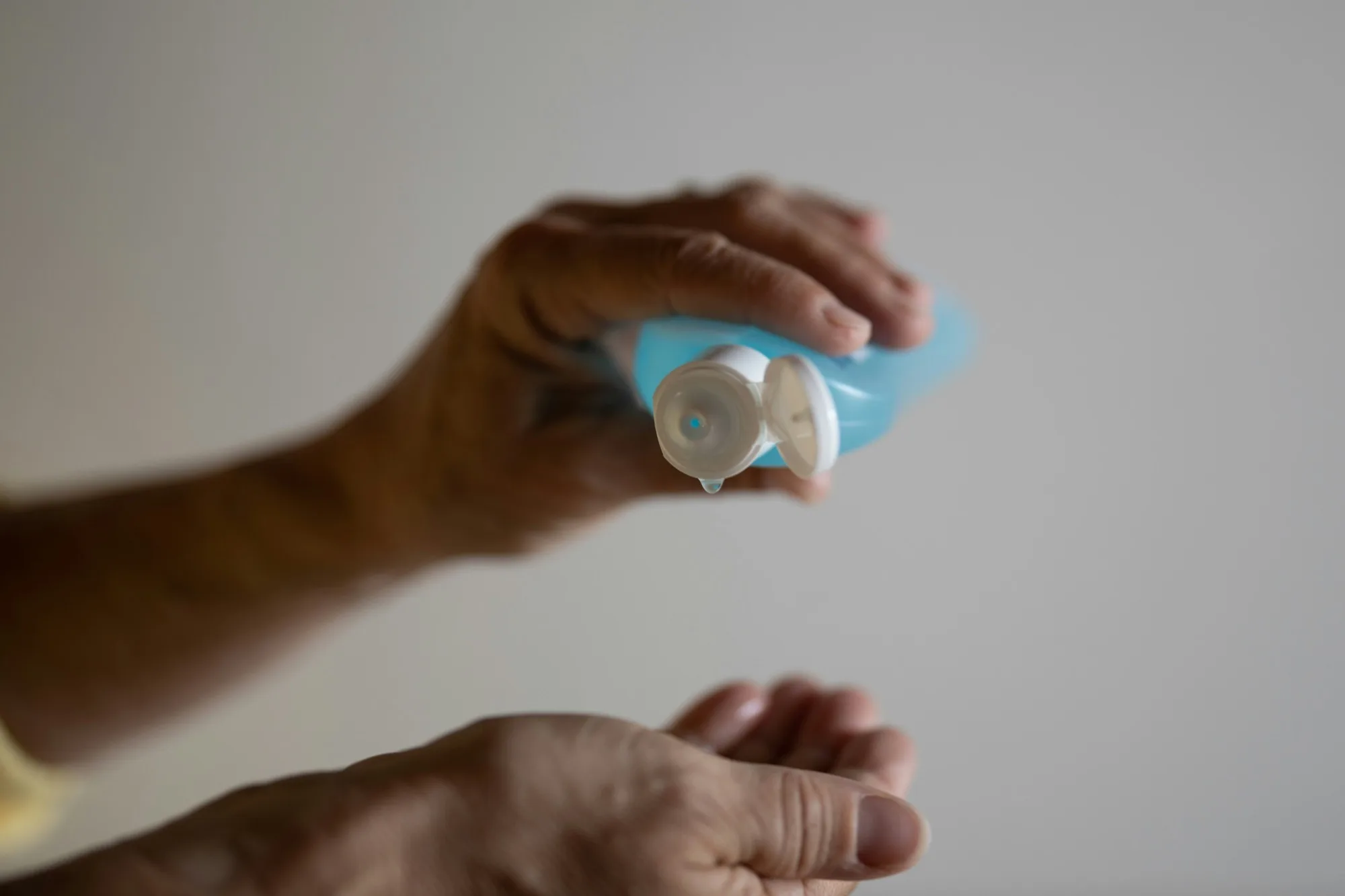
lead_image_alt: Woman dispensing clear moisturizing hand sanitizer gel from a sleek bottle onto palms
thumbnail: /images/stock/hands-dispensing-gel-from-bottle.webp
thumbnail_alt: Woman dispensing clear moisturizing hand sanitizer gel from a sleek bottle onto palms
author: Editorial Team
publish: true
Japanese Hand Sanitizers: Moisturizing Gel Hygiene Guide
In modern public spaces, frequent hand sanitizing has become an indispensable daily reflex. However, routine reliance on standard high-proof alcohol rubs often comes at a steep cosmetic price: stinging knuckles, rough peeling, and dry, cracked cuticles.
In Japan, where cleanliness and meticulous skin care are inextricably linked, hand sanitization evolved along a distinct trajectory. Rather than viewing sanitizers merely as harsh industrial disinfectants, Japanese cosmetic laboratories formulate hand sanitizers as dual-purpose barrier protectors. Classified as Quasi-Drugs (Iyakubugaihin), these portable gels and mists incorporate hydrating skincare humectants—such as sodium hyaluronate, botanical squalane, and soothing licorice extracts—ensuring that frequent hygiene never compromises soft, supple skin.
The Dual-Action Philosophy: Cleanliness Meets Barrier Protection
To understand the popularity of Japanese hand sanitizing gels, one must consider the everyday demands of Japanese commuting and workplace etiquette:
The High-Frequency Sanitizing Lifestyle: Japanese commuters routinely sanitize after boarding commuter trains, before enjoying bento lunches, and upon entering office lobbies or department stores. When hands are sanitized ten or more times daily, conventional drying alcohol rapidly compromises the lipid mantle.
The Quest for the "Sara-Sara" Finish: Japanese consumers dislike heavy, tacky residues that cling to phone screens, keyboards, or leather steering wheels. Japanese formulations feature quick-absorbing water-gel networks that evaporate cleanly, leaving fingertips silky (sara-sara) within seconds.
Micro-Pocket Portability: From mini mist pens to slim flat-squeeze bottles, Japanese sanitizers are engineered as elegant bag accessories rather than clinical medical equipment.
The Chemistry of Non-Drying Hand Gels and Mists
Achieving rigorous microbial control while preserving stratum corneum hydration requires sophisticated cosmetic engineering:
1. Optimized Alcohol Concentrations
While industrial rubs often push alcohol concentrations past 80%—causing severe moisture loss from epidermal surface cells—Japanese Quasi-Drug sanitizers typically calibrate pharmaceutical-grade ethanol between 60% and 75% by volume:
Provides reliable, broad-spectrum microbial suppression verified under Japanese health standards.
Minimizes the flash dehydration that pulls natural moisture out of delicate stratum corneum lipids.
Incorporates mild ethanol odor modulators to avoid sharp chemical fumes.
2. Multi-Polymer Hydro-Gel Networks
Rather than relying on basic synthetic thickeners that leave a gummy film, Japanese laboratories use lightweight carbomers and cellulose derivatives that break upon shear friction. As you rub your palms together, the gel matrix instantly liquifies into refreshing water droplets that absorb evenly.
The delicate lipid matrix of the epidermal stratum corneum experiences progressive natural functional deceleration over time[1], making moisture-retaining hygiene formulations essential for preserving delicate hand skin as we age.
Scroll horizontally to view more
Feature
Japanese Moisturizing Hand Gels
Standard High-Alcohol Rubs
Skin Feel
Silky, hydrated, non-sticky (*sara-sara*)
Tight, stinging, dry, or tacky residue
Key Moisturizers
Sodium Hyaluronate, Glycerin, Ceramide precursors
Minimal or none (often ethanol and water only)
Absorption Speed
Evaporates smoothly in 15 seconds without residue
Rapid evaporation leaving dry, chalky skin
Fragrance Profile
Subtle botanicals (Yuzu, Hinoki, Japanese mint)
Sharp medicinal alcohol or intense synthetic perfume
Packaging Aesthetic
Sleek, minimalist, portable, pocket-friendly
Bulky medical squeeze bottles or pump jugs
Key Skincare Ingredients in Japanese Hand Gels
What truly distinguishes Japanese hand sanitizers from standard drugstore disinfectants is the incorporation of skincare-grade active complexes:
1. Sodium Hyaluronate and Plant Glycerin
These powerful water-binding humectants draw moisture into the outer epidermal layers, forming a microscopic hydrating shield that counters the drying effects of evaporating alcohol.
2. Dipotassium Glycyrrhizate (GK2)
Extracted from licorice root (Glycyrrhiza glabra), GK2 is a renowned soothing agent found across Japanese Quasi-Drug formulations. It calms minor irritation around cuticles and finger webs caused by cold winter winds or frequent washing.
3. Natural Botanical Aromatics
Japanese sanitizers frequently feature authentic plant extracts such as Kochi yuzu, Japanese peppermint (hakka), and Uji green tea extract. These subtle botanical aromas provide a sensory reset without lingering obtrusively in professional environments.
Pairing daily daytime hand hygiene with diligent morning broad-spectrum UV protection safeguards exposed skin from cumulative environmental stress[2], preserving youthful firmness and even tone across vulnerable hand surfaces.
The On-the-Go Ritual: Proper Application for Protection and Softness
To maximize both sanitizing effectiveness and skin nourishment, follow this refined Japanese application ritual:
Step 1: Ensure Hands Are Free of Visible Soil
Alcohol sanitizers function most effectively on dry hands free of visible dirt, oils, or food particles. If your hands are visibly dirty, wash them first with mild soap and pat dry before sanitizing.
Step 2: Dispense a Nickel-Sized Amount
Dispense enough gel (approximately 1.5 to 2 mL) to thoroughly coat both hands. Rub palms together, interlace fingers to coat the webs, and run your fingertips over knuckles, thumbs, and wrists for at least 15 to 20 seconds until fully dry.
Step 3: Layer with a Lightweight Hand Cream During Winter
During dry winter months or in heavily air-conditioned offices, follow up your morning sanitizing routine with a drop of urea- or ceramide-infused Japanese hand cream to lock in moisture and reinforce the epidermal barrier.
Signs to Stop and When to Consult a Specialist
While Japanese moisturizing hand sanitizers prioritize skin tolerance, persistent skin reactions should not be ignored:
Erythema and Flaking: Repeated exposure to high-proof alcohol rubs and synthetic fragrances can trigger contact irritation in individuals with compromised skin barrier integrity[3]. Discontinue use if redness, stinging, or fissuring occurs around knuckles.
Stinging on Broken Skin: If you have active paper cuts, open abrasions, or weeping skin irritation, avoid alcohol-based sanitizers completely until the skin barrier recovers, opting for gentle hand washing with lukewarm water and mild soap instead.
True Alcohol Sensitivities: Individuals diagnosed with alcohol intolerance or contact allergy to ethanol should use alcohol-free benzalkonium chloride wipes or water-based cleansing foams.
If dermatitis, burning, or cracking persists for more than 7 days, seek professional consultation from a board-certified dermatologist.
FAQ
Q1. Are moisturizing hand sanitizers as effective as standard alcohol rubs?
A. Yes, Japanese Quasi-Drug formulations meet strict efficacy standards.(Details)
Formulations classified as Quasi-Drugs (*Iyakubugaihin*) in Japan undergo rigorous verification to ensure that moisturizing agents do not dilute or interfere with ethanol antimicrobial action.
Q2. Why do Japanese hand sanitizers leave no sticky feeling on the skin?
A. They utilize specialized hydro-gel networks that break cleanly upon friction.(Details)
Japanese cosmetic formulators select advanced micro-polymers that transform from gel to liquid water instantly upon skin contact, allowing full moisture absorption without gummy synthetic residues.
Q3. Can I use a Japanese hand sanitizer on children?
A. Yes, but low-alcohol or alcohol-free formulations are recommended for young children.(Details)
Because children have thinner skin and may accidentally touch their eyes or mouths, Japanese drugstores offer non-alcoholic or low-concentration Quasi-Drug sanitizers designed specifically for sensitive young hands.
Q4. Should I apply hand cream before or after using hand sanitizer?
A. Always apply hand sanitizer first, allow it to dry completely, and then apply cream.(Details)
Applying oil-rich hand cream before hand sanitizer creates a lipid barrier that can block alcohol from contacting skin microbes directly. Sanitizing first and locking in moisture afterward is the optimal sequence.
Q5. How long does a portable Japanese hand sanitizer bottle last?
A. A standard 30–50 mL travel bottle provides roughly 25 to 40 uses.(Details)
With an average application volume of 1 to 1.5 mL, a compact 50 mL pocket bottle easily covers one to two weeks of daily on-the-go commuting hygiene.
Conclusion: Effortless Cleanliness Without Sacrificing Soft Skin
Japanese moisturizing hand sanitizers epitomize the J-beauty principle that health and elegance should work in harmony. By infusing everyday sanitation products with high-performance skincare humectants, Japanese laboratories ensure that frequent hygiene never comes at the expense of comfortable, touchably soft hands. Adding a sleek, hydrating Japanese sanitizer to your pocket or work bag turns routine daily protection into a refreshing, skin-cherishing ritual.
References
The Japanese Dermatological Association. Sunburn Q&A on Photoaging and Biological Alterations in Aging Skin (Q5). https://www.dermatol.or.jp/qa/qa2/q05.html (Accessed 2026-11-23)
The Japanese Dermatological Association. Dermatological Q&A on Sunscreen Application for Long-Term Prevention (Q25). https://www.dermatol.or.jp/qa/qa3/q25.html (Accessed 2026-11-23)
The Japanese Dermatological Association. Dermatological Q&A on Contact Irritation and Scalp Friction Mechanisms (Q1). https://www.dermatol.or.jp/qa/qa4/q01.html (Accessed 2026-11-23)
Disclaimer: This article is for general information and education about Japanese cosmetics and their labels. It is not a substitute for professional medical advice, diagnosis, or treatment. Skincare results vary from person to person. Product formulas, availability, prices, and regulations change, and products sold in Japan can differ from versions sold elsewhere, so always check the current label. Do a patch test before introducing a new product, and consult a doctor or dermatologist if you have a skin condition or specific concerns.