Japanese Balm Moisturizers for Winter Moisture Sealing
HydrationBy Seibun Lab Editorial Team
title: Japanese Balm Moisturizers for Winter Moisture Sealing
slug: japanese-balm-moisturizer-multi-purpose-winter
category: hydration
published_at: '2026-11-27'
updated_at: '2026-11-27'
meta_description: Discover the Japanese winter moisture sealing technique using balms. Learn how micro-thin petrolatum layers lock in hydration without clogging pores.
keywords:
japanese balm moisturizer multi purpose winter
futa jutsu sealing technique
japanese petrolatum balm ihada
winter skin barrier occlusion
white petrolatum sun white japan
author: Seibun Lab Editorial Team
Japanese Balm Moisturizers for Winter Moisture Sealing
When winter descends upon Japan, crisp continental winds and dry indoor heating systems cause ambient relative humidity to plummet below 20%. For many skincare lovers, familiar hydrating routines suddenly fall short. Despite layering conditioning lotions (keshosui) and milky emulsions (nyueki), the complexion often feels parched and tight by early afternoon.
To counter this aggressive winter evaporation, Japanese dermatologists and beauty minimalists rely on a time-tested finishing method: the lid technique (futa-jutsu).
By concluding evening and morning routines with a micro-thin layer of high-purity balm or refined petrolatum, you create a physical barrier that prevents room air from siphoning away vital stratum corneum moisture. Supporting natural barrier resilience and moisture retention during harsh winter months requires establishing an impermeable protective seal.[1] Here is the science behind Japan's winter balm ritual, how to avoid heavy greasiness, and versatile multi-purpose uses for dry, chapped skin.
The Biophysics of Futa-Jutsu: Occlusion vs Winter Evaporation
To understand why standard moisturizers sometimes fail in deep winter, one must examine the dynamics of trans-epidermal water loss (TEWL):
1. The Winter Moisture Gradient
Skin hydration is a dynamic equilibrium. When indoor heating warms dry winter air, the vapor pressure differential between your moist skin cells and the surrounding room expands dramatically. Water molecules in your stratum corneum evaporate into the atmosphere at accelerated rates.
2. The Limitation of Water-Rich Emulsions
Standard hydrating lotions and lightweight emulsions contain 70% to 85% water. While they excel at saturating corneocytes with humectants (glycerin, hyaluronic acid, amino acids), their thin lipid phase cannot fully block high evaporative pull. Without an occlusive shield, water humectants can dry out, leaving skin tighter than before.
3. The Function of the "Lid" (Futa)
Hydrocarbon balms—such as high-purity white petrolatum (waserin) and microcrystalline plant balms—exhibit exceptionally low water-vapor permeability. Applying a microscopic occlusive veil traps water molecules beneath an impenetrable lipid roof, halting TEWL and giving fragile barrier lipids time to stabilize.
Scroll horizontally to view full comparison
Moisturizer Class
Occlusive Power
Texture Finish
Ideal Winter Role
Japanese Occlusive Balm
Exceptional (Near 98% TEWL reduction)
Protective micro-veil when warmed
Final sealing step (*futa*) for dry zones
Milky Emulsion (*Nyueki*)
Moderate (Balances water and oil)
Fluid, velvety, quick-absorbing
Intermediate barrier conditioning
Rich Face Cream
High (Contains emollient plant butters)
Dense, creamy, emollient
Full-face overnight lipid replenishment
Conditioning Lotion (*Keshosui*)
None (Zero occlusive lipids)
Watery, deeply saturating
Initial cellular humectant drenching
The "Micro-Veil" Technique: Hand-Pressing Without Clogging Pores
A widespread hesitation surrounding balms and petrolatum is fear of breakouts and greasy residue. In Japanese beauty practice, these issues are avoided through precise portioning and the palm-press application (tenohira press):
1. Measure Half a Rice Grain
The most critical mistake is scooping too much balm. For the entire face, you need only an amount equal to half a grain of uncooked rice (approximately the size of a sesame seed).
2. Melt Completely Between Warm Palms
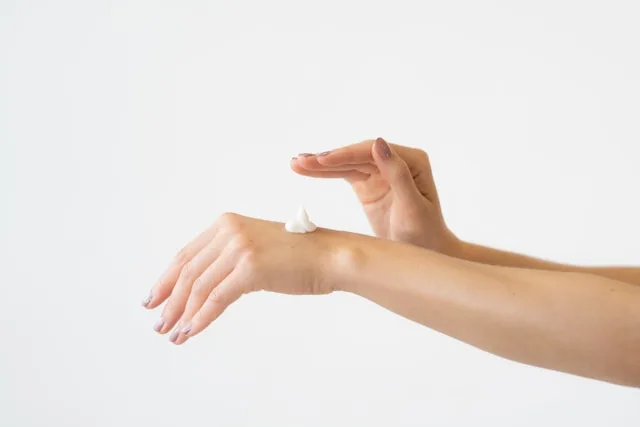
Deposit the tiny dab onto the center of one palm. Rub your palms firmly together for 5 to 10 seconds. The friction and warmth of your hands will melt the solid wax or petrolatum into a clear, ultra-thin liquid sheen covering your hands.
3. Gentle Hand Pressing (Zero Drag)
Do not rub your hands across your face. Instead, gently press your warm, balm-coated palms against your cheeks, forehead, and chin in slow, stationary motions:
The heat of your hands softens preceding skincare layers.
A microscopic film—measured in nanometers rather than thick layers—transfers uniformly onto the skin.
Pores remain unblocked, facial shine is minimized, and your skin feels protected by an invisible cashmere veil.
Multi-Purpose Winter Rescue: Beyond the Cheeks
In Japanese households, multi-purpose balms (such as Shiseido IHADA Medicated Balm, Curel Moisture Balm, or Sun White) serve as versatile winter problem-solvers across multiple delicate areas:
Perioral & Lip Shielding: Lips lack sebaceous glands and chap rapidly in cold air. Tapping a dot of balm over lip margins locks in moisture and prevents peeling.
Under-Eye Cushioning: The thin skin around the orbital bone produces little natural sebum. A delicate press of warmed balm softens the appearance of dry fine lines.
Nasal Wing Protection: During winter colds and seasonal allergies, repeated tissue wiping strips the delicate skin around nostrils. Coating the nasal wings with balm prevents friction chafing.
Cuticle and Knuckle Relief: Dry winter air frequently causes painful hangnails and cracked fingertips. Rubbing leftover balm into nail beds softens rough keratin instantly.
Signs to Stop and When to See a Doctor
While highly refined cosmetic balms are pore-conscious and biologically inert, improper use or underlying skin conditions can occasionally trigger adverse reactions.
Be alert to these warning signs:
Sudden emergence of small white pustules (folliculitis) or congested comedones around the chin and hairline.
Persistent itching, warmth, or diffuse red patches.
Excessive flaking accompanied by burning when applying simple topicals.
Discontinue use immediately and consult a medical professional if adverse contact dermatitis or balm-related irritation occurs.[2] If breakouts develop, temporarily pause heavy occlusives, wash with a mild gentle cleanser, and seek guidance from a qualified dermatologist.
FAQ
Q1. Will petroleum jelly or mineral balm cause acne breakouts?
A. High-purity cosmetic petrolatum is non-pore-clogging, but heavy layering can trap debris.(Details)
Medical-grade white petrolatum molecules are too large to enter pores, meaning they do not physically cause comedones. However, because petrolatum forms a tight seal, applying it over unwashed skin or trapped sweat can foster an anaerobic environment conducive to acne bacteria. Always apply balm over freshly cleansed, hydrated skin using a micro-thin hand press.
Q2. What is the difference between standard Vaseline and Japanese Sun White?
A. Sun White undergoes advanced purification to remove trace impurities and yellow discoloration.(Details)
Standard yellow or white petrolatum contains minute traces of aromatic hydrocarbons that can occasionally trigger reactions in hypersensitive skin. Japanese Sun White is refined to the highest optical purity, resulting in a snow-white, scent-free, non-oxidizing balm widely recommended by Japanese dermatologists for post-procedure and infant care.
Q3. Can I apply makeup over a winter balm seal?
A. Yes, provided you observe the micro-thin hand-press rule and allow two minutes to set.(Details)
If balm is rubbed on thickly, foundation will slide and separate. However, when applied via palm pressing in a rice-grain portion, the balm creates a velvety, smooth base that prevents powdery foundations from catching on dry winter flakes. Wait two minutes before applying sunscreen and liquid base.
Q4. Is a balm better than a heavy moisturizing cream?
A. Balms and creams serve distinct dermatological functions rather than competing.(Details)
Moisturizing creams contain emulsified water, humectants, and emollient oils that soften the cellular matrix. Balms are nearly 100% lipid occlusives designed to sit on top of the skin. In severe winter dryness, using an emulsion or cream followed by a rice-grain balm seal provides the ultimate two-tier defense.
Q5. Should I use balm sealing during summer or only in winter?
A. Balm sealing is primarily suited for dry winter conditions and air-conditioned environments.(Details)
During humid Japanese summers, natural sebum production and ambient moisture are generally high enough that occlusive balms feel uncomfortably heavy. Limit full-face balm sealing to late autumn through early spring, reserving spot application for chronically dry lips or cuticles in warmer months.
Summary and Key Takeaways
The Japanese winter balm technique (futa-jutsu) offers a refined, minimalist solution to severe seasonal dehydration:
The Sealing Principle: Halts rapid winter evaporation by placing an impermeable lipid shield over preceding water humectants.
Rice-Grain Proportion: Never apply balms thickly; use half a grain of rice for the entire face to avoid greasiness.
Palm-Press Application: Melt the balm fully between warm hands and press gently into the skin without friction.
Targeted Protection: Safeguard delicate winter areas, including lips, under-eyes, and chafed nasal contours.
Daytime Defense: Complement your winter moisture seal each morning with broad-spectrum daily sunscreen defense.[3]
By mastering this deliberate micro-veil technique, you can maintain dewy, resilient, and comfortable skin even against the harshest winter elements.
Disclaimer: This article is for general information and education about Japanese cosmetics and their labels. It is not a substitute for professional medical advice, diagnosis, or treatment. Skincare results vary from person to person. Product formulas, availability, prices, and regulations change, and products sold in Japan can differ from versions sold elsewhere, so always check the current label. Do a patch test before introducing a new product, and consult a doctor or dermatologist if you have a skin condition or specific concerns.