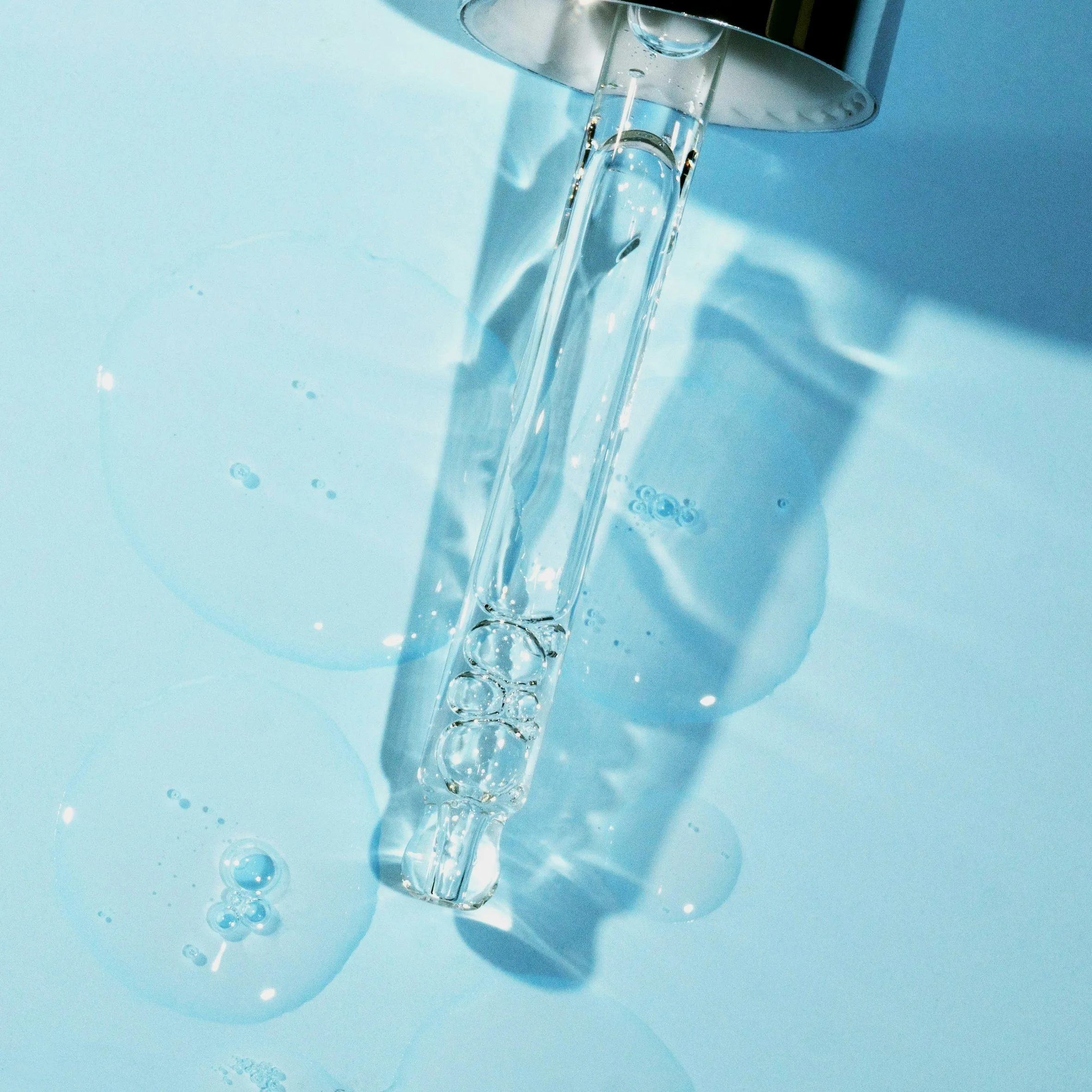
Japanese Facial Mists: Aerosol Micro-Spray vs Pump Guide
HydrationBy Seibun Lab Editorial Team
title: Japanese Facial Mists: Aerosol Micro-Spray vs Pump Guide
slug: japanese-facial-mist-fine-spray-aerosol-vs-pump
category: hydration
published_at: '2026-11-27'
updated_at: '2026-11-27'
meta_description: Discover how Japanese aerosol micro-mists and pumps differ. Learn droplet particle physics, midday makeup refreshing, and anti-drying techniques.
keywords:
japanese facial mist fine spray aerosol vs pump
curel deep moisture spray aerosol
elixir luminous glow mist biphasic
midday skincare touch up japan
micro mist droplet size skincare
author: Seibun Lab Editorial Team
Japanese Facial Mists: Aerosol Micro-Spray vs Pump Guide
In dry office cubicles, climate-controlled train cars, and winter heating zones across Japan, a familiar sound rings out throughout the afternoon: the soft hiss of a facial mist (misuto keshosui).
From iconic compressed-gas cans like Curel Deep Moisture Spray to bi-phase elixir mists from Shiseido and d Program, portable hydrating sprays are a staple in Japanese makeup pouches. Yet international skincare enthusiasts frequently voice a paradox: can misting your face in a dry room actually make your skin more dehydrated?
The answer hinges entirely on droplet particle dynamics, formula chemistry, and delivery hardware. Supporting natural barrier resilience and moisture retention during dry daytime hours requires choosing the correct dispensing mechanism.[1] Here is the fluid physics behind Japanese aerosol micro-sprays versus mechanical finger pumps, how to avoid flash evaporation, and professional midday makeup touch-up methods.
Aerosol Physics vs Mechanical Pumps: Droplet Micron Dynamics
When assessing why some facial mists enhance skin dewy softness while others cause foundation to dissolve into splotches, droplet diameter is the decisive metric:
1. Aerosol Micro-Sprays (Continuous Gas Dispersion)
Aerosol mists house cosmetic liquid alongside compressed, inert nitrogen or carbon dioxide gas under high pressure (typically 0.6 to 0.8 MPa):
Ultra-Fine Droplets: When the actuator is depressed, liquid is forced through a microscopic orifice, atomizing into a continuous, cloud-like fog with particle sizes averaging 20 to 30 microns.
Weightless Dispersion: Because individual droplets are smaller than the diameter of human pores (approx. 50 microns), the mist drifts gently onto facial contours without momentum.
Cosmetic Integrity: The micro-droplets settle between powder particles and foundation pigments without dislodging color or causing streaking.
2. Mechanical Finger Pumps (Piston Displacement)
Standard spray bottles rely on a manual plastic piston mechanism:
Variable Droplet Sizes: Finger pressure is uneven, generating larger, irregular droplet clusters ranging from 80 to over 150 microns.
Impact Splattering: Larger water drops carry mass and velocity, hitting the skin surface like miniature raindrops.
Puddle Formation: Heavy droplets coalesce into visible puddles on cheeks and forehead, dissolving foundation emulsions and creating uneven tide marks.
Scroll horizontally to view full comparison
Delivery Mechanism
Average Droplet Size
Tactile Sensation
Midday Makeup Fit
Aerosol Micro-Mist
20 to 30 microns
Weightless, atmospheric fog
Optimal (Zero pigment displacement)
Mechanical Finger Pump
80 to 150 microns
Targeted, wet droplet shower
Moderate (Can dissolve base powder)
Bi-Phase Shaking Pump
50 to 80 microns
Dewy, emollient micro-film
Good (Adds instant lipid glow)
Traditional Splash Lotion
Bulk fluid stream
Saturating, pooling liquid
Unsuitable over makeup
The Evaporation Paradox: Why Plain Water Mists Dehydrate Skin
A frequent consumer complaint is that spraying the face temporarily relieves tightness, only to leave skin feeling twice as dry twenty minutes later.
This counterproductive phenomenon is driven by flash evaporation:
If a mist consists solely of thermal spring water or plain mineral water with zero humectants or lipids, the ambient dry air rapidly siphons off the surface moisture.
Driven by vapor pressure gradients, evaporating water molecules draw intrinsic water out of the stratum corneum alongside them.
Japanese cosmetic chemists solved this evaporative dilemma through two breakthrough formulation strategies:
1. Micro-Dispersed Ceramide Technology
In products like Curel Deep Moisture Spray, Japanese formulators developed an advanced emulsification process that nanonizes pseudo-ceramides into microscopic capsules. When sprayed, the aerosol deposits both water humectants and functional barrier lipids uniformly, reinforcing intercellular moisture lamellae rather than evaporating into empty air.
2. Two-Phase Oil-in-Water Systems (Tsuya-Dama Mists)
Prestige Japanese mists (such as Elixir Superieur Luminous Glow Mist) feature a dual-layered structure: an aqueous serum tier rich in collagen humectants and an upper tier of fine cosmetic oils. When shaken before use, the phases form a temporary micro-emulsion. The spray deposits hydration while simultaneously coating the face in an ultra-sheer lipid shield that blocks daytime trans-epidermal water loss.
The 3-Step Japanese Midday Makeup Refresh Protocol
To recharge moisture without disrupting your morning foundation, follow this professional touch-up ritual:
1. Tissue-Blot Excess Sebum (Do Not Rub)
Before misting, separate a single ply of facial tissue. Press it lightly across your T-zone and nose to absorb oxidized midday sebum. Misting directly over pooled oil creates an unstable emulsion that cakes makeup.
2. The 20-Centimeter Halo Sweep
Hold your aerosol micro-spray approximately 20 to 25 centimeters away from your face:
Close your eyes and tilt your chin slightly upward.
Depress the actuator and sweep the continuous fog in a broad halo or circular motion around the perimeter of your face.
Let the falling mist drift naturally onto your complexion rather than spraying directly at close range.
3. Vertical Cushion Press
Do not wipe or fan your face dry. Take a clean, dry makeup sponge or the clean flats of your palms and gently press vertically into your skin for three seconds. The gentle pressure fuses the refreshed moisture veil with your underlying foundation, creating a smooth, revived finish.
Signs to Stop and When to See a Doctor
While micro-mists provide convenient relief, over-reliance or sensitivities to propellant gases or botanical fragrances can provoke adverse responses.
Be watchful for these warning signs:
Immediate stinging, eye tearing, or prickling sensations upon spraying.
Development of dry, flaky red patches around the mouth or eyelids from frequent re-misting.
Bumpy texture resembling small friction papules.
Discontinue use immediately and consult a medical professional if adverse contact dermatitis or mist-induced irritation develops.[2] If your barrier becomes sensitized, cease all aerosol mists, wash with plain lukewarm water, and consult a board-certified dermatologist.
FAQ
Q1. Why does spraying plain thermal spring water make my skin feel tighter?
A. Pure water evaporates without sealing, triggering flash dehydration of stratum corneum cells.(Details)
Thermal spring waters without added humectants or lipids cannot bind moisture to the skin. In dry environments, surface water evaporates rapidly, pulling intrinsic cellular moisture into the air. Always follow plain water sprays with an emulsion, or choose Japanese mists formulated with ceramides or humectants.
Q2. Can I carry Japanese aerosol mist sprays on an airplane?
A. Yes, provided the canister complies with international airline liquid and pressure regulations.(Details)
For carry-on luggage, aerosol containers must typically be 100 ml (3.4 oz) or smaller and placed within a clear, resealable quart-sized bag. Most Japanese brands produce convenient 60 g travel-size aerosol cans specifically designed to meet airline carry-on security guidelines.
Q3. What is the benefit of shaking a two-phase Japanese mist before spraying?
A. Shaking temporarily blends the separate oil and serum layers into a balanced micro-emulsion.(Details)
In two-phase formulations, the lipid layer naturally floats on top of the water serum. Shaking the bottle vigorously disperses the oil into microscopic droplets throughout the fluid. This ensures that every spray delivers an equal proportion of hydrating water and sealing lipids onto your face.
Q4. Is an aerosol spray safe to use over mineral sunscreen?
A. Yes, ultra-fine aerosol droplets settle softly without displacing mineral UV filters.(Details)
Because aerosol mists emit tiny 20-micron particles with negligible impact force, they do not disrupt physical zinc oxide or titanium dioxide filter films. However, wait for the mist to absorb naturally before lightly patting with a powder SPF if re-applying sun protection.
Q5. How many times a day can I use a facial mist?
A. Two to three times daily is generally ideal for maintaining comfortable skin hydration.(Details)
Misting once around midday and once in the late afternoon provides optimal moisture reinforcement. Misting every 30 minutes is unnecessary and can potentially wash away natural barrier lipids if done excessively. Focus on quality application rather than continuous spraying.
Summary and Key Takeaways
Japanese facial mists deliver reliable daytime barrier support when matched with correct engineering:
Aerosol Superiority: Compressed nitrogen aerosols atomize liquid into 20-micron micro-fogs that never smudge makeup.
Beware Flash Evaporation: Avoid mists of plain water; choose formulas enriched with ceramides, amino acids, or bi-phase oils.
Halo Application: Spray from 20 to 25 cm in a gentle circular sweep, letting the mist settle weightlessly.
Preserve Sun Defense: Ensure daytime hydration is supported every morning by applying broad-spectrum daily sunscreen defense before heading out.[3]
By adopting a sophisticated Japanese micro-mist, you can defend your skin against dry air and maintain a fresh, luminous complexion from morning to evening.
Disclaimer: This article is for general information and education about Japanese cosmetics and their labels. It is not a substitute for professional medical advice, diagnosis, or treatment. Skincare results vary from person to person. Product formulas, availability, prices, and regulations change, and products sold in Japan can differ from versions sold elsewhere, so always check the current label. Do a patch test before introducing a new product, and consult a doctor or dermatologist if you have a skin condition or specific concerns.