slug: glycylglycine-japanese-skincare-visible-pores title: Glycylglycine in Japanese Skincare: The Secret to Minimizing Visible Pores meta_description: Discover how glycylglycine targets enlarged pores in Japanese skincare. Learn the science of unsaturated fatty acids, ionic balance, and smoothing lotions. category: ingredients tags: [Japanese Skincare, Glycylglycine, Enlarged Pores, Pore Care, Peptides, J-Beauty Science] author: Editorial Team published_at: 2026-11-22 updated_at: 2026-11-22 reading_time: 6 publish: true
Glycylglycine in Japanese Skincare: The Secret to Minimizing Visible Pores
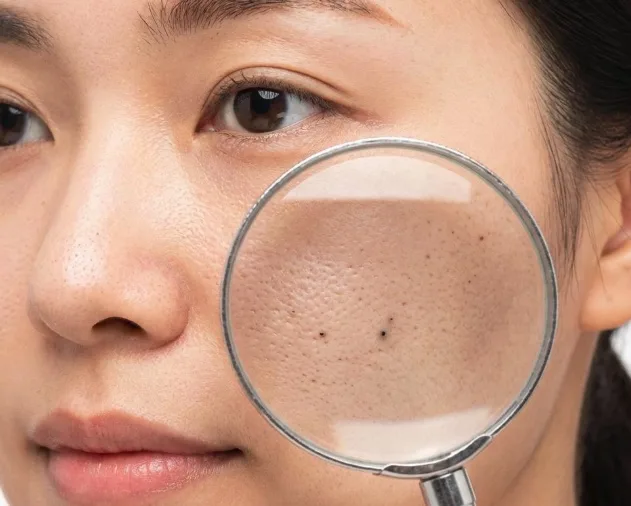
Among skincare enthusiasts browsing Japanese beauty forums like @cosme and Lipscosme, one humble dipeptide has attained near-legendary status for addressing stubborn open pores: Glycylglycine (commonly referred to in Japan simply as GG). While many Western routines rely heavily on astringent alcohol toners, physical scrubs, or high-strength clay masks to temporarily tighten skin, Japanese dermatological research took a profoundly different path. By investigating why pores actually appear enlarged on a cellular level, Japanese scientists uncovered that visible pores are often geometric indentations caused by abnormal cellular turnover, which glycylglycine uniquely helps normalize.
Quick answer: What is glycylglycine and how does it work?
Glycylglycine is an ultra-simple dipeptide composed of two glycine amino acids linked together. In Japanese cosmetics, it is celebrated for its ability to block calcium ion influx in epidermal cells triggered by unsaturated fatty acids in sebum (such as oleic acid). By restoring normal keratinocyte maturation around the hair follicle rim, glycylglycine prevents the surrounding skin from sloping into a wide "cone" or funnel shape. This smooths epidermal texture and visibly shrinks the apparent diameter of open pores.
The cone pore discovery: Why sebum makes pores look cratered
For decades, common beauty wisdom assumed that enlarged facial pores were simply overstretched openings packed with dirt and hardened sebum plugs. While clogged pores or an oily complexion can make pores look larger[2], Japanese dermatologists noticed that many clean, unclogged pores still appeared noticeably wide and shadowed under ambient light.
Using high-resolution dermatological imaging, Shiseido researchers discovered that visible pores exhibit a "funnel-shaped" or "mortar-shaped" (suribachi) slope around the pore opening. The skin perimeter around the follicle is not flat; it dips inward like a tiny crater.
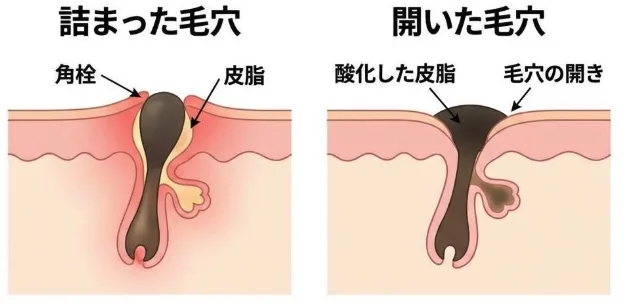
Through rigorous chemical profiling, Shiseido established that unsaturated fatty acids stimulate keratinocytes to promote the influx of calcium ions, disrupting ionic balance within cells and causing abnormal stratum corneum turnover[1]. When sebum with high ratios of free unsaturated fatty acids bathes the pore rim, keratinocytes retain their nuclei (a state termed parakeratosis). This causes the skin cells around the pore opening to thin and collapse into a reflective crater, making the pore look dramatically larger than its actual anatomical diameter.
Award-winning IFSCC science: How glycylglycine blocks the trigger
Once researchers identified that excess calcium influx drove abnormal parakeratosis, they screened hundreds of amino acid compounds to find an ionic antagonist.
The breakthrough came with glycylglycine. The research confirmed that this process triggers visible pore enlargement and discovered that the amino acid dipeptide glycylglycine is useful for reducing visible pore area[1].
Because of its global scientific impact on dermatological cosmetics, this research achievement won the highest award for poster presentation at the 24th IFSCC Osaka Congress in 2006[1]. By acting as an NMDA-receptor and ion-channel modulator on epidermal keratinocytes, glycylglycine prevents the calcium surge caused by sebum fatty acids, allowing the skin cells around the pore rim to cornify evenly and lie completely flat.
Scroll horizontally to view full table
| Pore Approach | Primary Mechanism | Skin Sensation | Long-Term Result |
|---|---|---|---|
| Glycylglycine (J-Beauty) | Suppresses parakeratosis; restores flat cellular rim geometry | Hydrating, zero stinging, non-drying watery veil | Smooths conical pore slope, refines texture with continuous use |
| Alcohol Astringents | Temporarily denatures surface proteins to tighten skin | Sharp cooling sensation; potential rebound oiliness | Temporary tightening that fades within hours |
| Physical Facial Scrubs | Mechanically removes surface dead stratum corneum cells | Can trigger friction micro-tears and inflammatory redness | Can worsen rim inflammation and enlarge pore visibility |