How to Introduce a New Japanese Product into Your Routine: Step-by-Step
RoutinesBy Miho Tanaka
title: How to Introduce a New Japanese Product into Your Routine: Step-by-Step
description: Safely integrate Japanese lotions, emulsions, serums, and sunscreens into your current regimen. Master patch testing, order of application, and 14-day pacing.
published_at: "2026-11-15"
updated_at: "2026-11-15"
fact_checked_at: "2026-11-15"
author: "Miho Tanaka"
category: "routines"
thumbnail: "/images/stock/hero-woman-white-bathrobe-morning-skincare-routine.jpg"
thumbnail_alt: "Woman in white bathrobe preparing her morning skincare routine in natural light"
How to Introduce a New Japanese Product into Your Routine: Step-by-Step
Quick answer: Safely integrate Japanese lotions, emulsions, serums, and sunscreens into your current regimen. Master patch testing, order of application, and 14-day pacing.
Discovering Japanese skincare (J-Beauty) often begins with a single compelling product—perhaps a cult-favorite hyaluronic acid lotion (keshosui), an ultra-light watery sunscreen, or a soothing rice ferment essence. However, enthusiasm can quickly turn into frustration when products are swapped in carelessly, layered in the wrong sequence, or introduced all at once, leading to sudden breakouts, stinging, or product pilling.
Japanese formulations are designed around a delicate philosophy of physiological balance: delivering abundant micro-hydration first, followed by bio-compatible lipids, all protected under weightless UV defense. Incorporating these formulas into an established Western or international routine requires thoughtful integration. This step-by-step guide covers how to patch test, where each Japanese product category slots into your existing regimen, and how to pace additions over a safe 14-day timeline.
Where Japanese Products Slot into Your Existing Routine
When combining Japanese skincare with Western cleansers, acids, or retinoids, the fundamental rule is: apply from thinnest, most water-dense liquid to thickest, most occlusive lipid:
Scroll horizontally to view full table
Routine Step
Product Type
Japanese vs. Western Function
Where to Place in Current Regimen
1. First Cleanse
Cleansing Oil or Balm
Dissolves waterproof sunscreen and sebum without stripping lipids.
Evening only; apply to dry face before water-based foaming wash.
2. Exfoliating Acid
Western AHA/BHA Toner
Chemical exfoliant (pH-dependent).
Directly after cleansing on dry skin; wait 5 minutes before hydration.
3. Water Hydration
Japanese Lotion (*Keshosui*)
Infuses water deep into the stratum corneum cells.
Immediately after cleansing (or after acid); replace astringent Western toners.
Use in place of lightweight day lotion, or beneath heavier evening cream.
6. Barrier Shield
Japanese Cream (*Kurimu*)
Occlusive lipid barrier to prevent water evaporation during sleep.
Evening final step, or morning cold-climate step before sunscreen.
7. UV Defense
Japanese Sunscreen (Milk/Gel)
Broad-spectrum SPF50+ PA++++ photoprotection.
Strictly the final skincare step of the morning before makeup.
The 14-Day Pacing Protocol: One Product at a Time
The single most common mistake when starting J-Beauty is overhauling an entire regimen overnight. Introducing four or five new formulas simultaneously makes it impossible to identify which item triggers an allergic reaction or which one is delivering visible radiance.
Week 1: The Essential Patch Test (Days 1–3)
Japanese skincare formulas frequently incorporate botanical extracts, fermented yeast broths (sake kasu, galactomyces), or next-generation organic UV filters that your skin has never encountered:
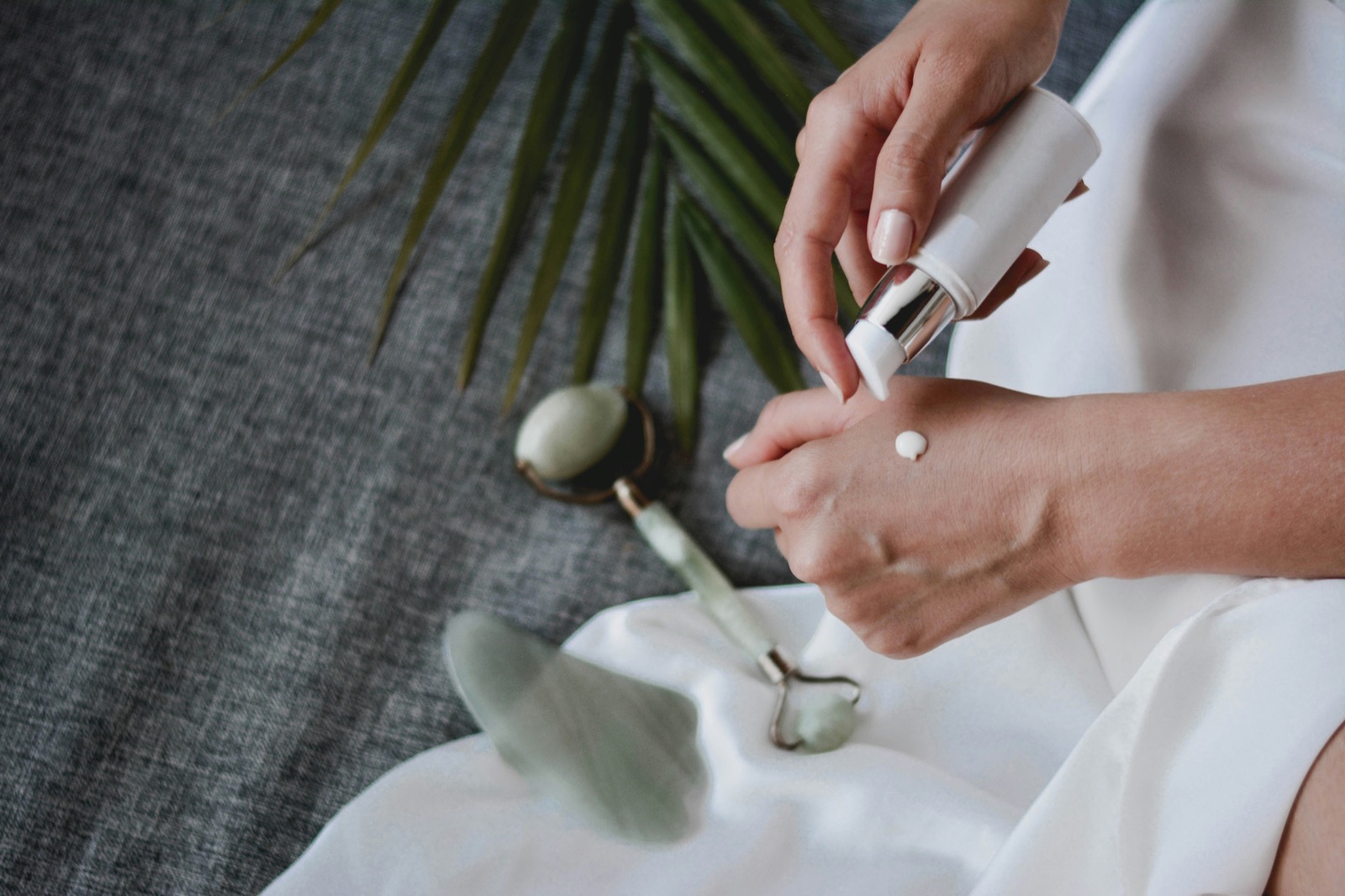
Inner Forearm (Day 1): Apply a coin-sized patch of product to your inner forearm. Leave untouched for 24 hours. Check for redness, hives, or itching.
Behind the Ear or Jawline (Days 2–3): If the forearm test is clear, apply a small dab behind your ear or along your lower jawline. Facial skin is significantly more reactive than body skin; testing the jawline confirms facial barrier tolerance.
Week 2: Initial Introduction (Days 4–10)
Introduce the new product every other day in its designated routine slot. Observe your skin closely for:
Negative signs: Small closed comedones, localized stinging, itchy micro-bumps, or excessive heat.
Day 11 Onward: Full Integration
If no adverse reactions occur by day 10, transition to daily use (morning, evening, or both, depending on product type). Wait an additional 7 to 10 days before introducing another new formula.
Navigating Ingredients: Synergies and Potential Clashes
Formulators at Japan's premier beauty houses—including Shiseido, Kao Corporation, and KOSÉ Corporation—prioritize barrier gentleness. However, pairing Japanese products with potent Western actives requires strategic pairing:
1. Fermented Essences and Strong Exfoliating Acids
Japanese fermented lotions (rich in sake filtrate, rice koji, or bifida ferment) are packed with natural amino acids, vitamins, and mild organic acids. While highly nourishing, pairing them immediately with high-concentration glycolic acid or 2% salicylic acid peels can overwhelm sensitive barriers. Use exfoliating acids on alternating evenings, reserving fermented lotions for barrier recovery nights.
2. Quasi-Drug Brighteners: Tranexamic Acid and Dipotassium Glycyrrhizate
Unlike hydroquinone or strong retinoids, Japanese certified quasi-drug brightening actives are non-cytotoxic and exceptionally soothing:
Tranexamic Acid: Safely pairs with almost every active ingredient, including vitamin C, niacinamide, and retinol.
Dipotassium Glycyrrhizate: An anti-inflammatory licorice derivative that actually buffers against retinoid peeling and sunburn redness, making it an ideal companion to aggressive acne treatments.
Application Mechanics: Respecting the Japanese Technique
Introducing a product successfully depends not only on what you apply, but on how you handle your skin:
Discard Abrasive Cotton for Rich Lotions: Unless using a specific clarifying wipe-off toner (fukitori), apply hydrating lotions using clean, cupped palms. Gentle pressing (osae-komi) prevents microscopic mechanical tearing that causes redness.
Allow 45 Seconds of Absorption: Give watery lotions time to sink into the stratum corneum before applying emulsions. Layering an oil-in-water milk over pooling water causes formulation slip and prolongs stickiness.
Do Not Skimp on Sunscreen: When introducing a Japanese sunscreen, apply the full recommended dose (approximately one-quarter teaspoon for the face) to achieve the verified SPF50+ PA++++ broad-spectrum defense.
FAQ
Q1. Can I use a Japanese watery lotion if I already use a Western hydrating serum?
A. Yes, apply the Japanese watery lotion first to prime the skin, followed by your hydrating serum. (Details)
Japanese lotions are low-viscosity fluids designed to soften the outer stratum corneum and replenish cellular water. Applying lotion first dramatically boosts the absorption and spreadability of thicker Western hyaluronic acid or niacinamide serums applied immediately afterward.
Q2. Should I replace my daily moisturizer with a Japanese emulsion (nyueki)?
A. For oily and combination skin, an emulsion easily replaces a traditional moisturizer. (Details)
Japanese emulsions (*nyueki*) contain 15% to 25% fine lipids balanced with water, providing sufficient barrier sealing for normal, combination, and oily skin types without heavy occlusives. If you have very dry skin or live in a cold climate, you can layer a rich cream over your emulsion for extra protection.
Q3. How do I know if a breakout is purging or an allergic reaction?
A. Purging only occurs with ingredients that speed cell turnover, such as retinoids or exfoliating acids. (Details)
Hydrating Japanese lotions, emulsions, and sunscreens do not accelerate cell turnover. If you develop red bumps, itching, or breakouts in areas where you do not normally get acne after using a hydrating lotion, it is a reaction or pore clogging, not purging. Discontinue use immediately.
Q4. Can I use Japanese cleansing oil if I do not wear makeup?
A. Yes, cleansing oil is essential for removing modern water-resistant and friction-proof Japanese sunscreens. (Details)
High-tenacity Japanese sunscreens use specialized silicone film formers that resist sweat and water. Water-based cleansers alone struggle to dissolve these polymers, leading to congested pores. A gentle evening oil cleanse breaks down sunscreen films cleanly without stripping skin moisture.
Q5. What is the best first Japanese skincare product to try for a beginner?
A. A fragrance-free hyaluronic acid lotion or a lightweight daily sunscreen gel is the ideal entry point. (Details)
Both products showcase the pinnacle of Japanese formulation chemistry: hydrating lotions offer instant plumping hydration without irritation, while Japanese sunscreen gels provide invisible, broad-spectrum UV defense with an imperceptible, featherlight texture that outclasses traditional formulas.
Summary and Key Takeaways
Integrating Japanese skincare into your existing routine is simple and rewarding when guided by patience:
Follow the Viscosity Rule: Slot products from thinnest water (keshosui) to medium fluid (nyueki) to rich cream (kurimu), with sunscreen strictly last in the morning.
Pace Additions by 14 Days: Introduce only one new formula at a time, performing a 48-hour patch test before full facial application.
Pair Actives Thoughtfully: Alternate strong chemical exfoliating acids with gentle Japanese fermented essences and soothing quasi-drugs like tranexamic acid.
Embrace Friction-Free Touch: Dispense products into cupped palms and press gently (osae-komi) to maximize absorption and preserve barrier integrity.
Japan Cosmetic Industry Association (JCIA). (n.d.). Cosmetic and Quasi-Drug Regulatory Standards and Guidelines. Tokyo, Japan.
Disclaimer: This article is for general information and education about Japanese cosmetics and their labels. It is not a substitute for professional medical advice, diagnosis, or treatment. Skincare results vary from person to person. Product formulas, availability, prices, and regulations change, and products sold in Japan can differ from versions sold elsewhere, so always check the current label. Do a patch test before introducing a new product, and consult a doctor or dermatologist if you have a skin condition or specific concerns.