Japanese Skincare for Hard Water: Cleansing & Barrier Guide
RoutinesBy Miho Tanaka
slug: japanese-skincare-for-hard-water-areas
title: Japanese Skincare for Hard Water: Cleansing & Barrier Guide
meta_description: How to adapt Japanese skincare for hard water: preventing mineral soap scum, micellar cleansing waters, chelating agents, and pH-balancing lotions.
date: "2026-11-17"
category: routines
tags:
hard water skincare
Japanese skincare
cleansing routines
soap scum prevention
barrier care
Japanese Skincare for Hard Water: Cleansing & Barrier Guide
Many travelers and expatriates observe a perplexing phenomenon: the exact Japanese foaming cleanser, hydrating lotion, and moisturizer that gave them radiant, supple skin in Tokyo suddenly leaves their complexion feeling tight, dry, and irritated when used in London, Paris, Munich, or Chicago.
The root cause of this sudden change is rarely a defective product or climate change alone. Instead, it is the fundamental chemistry of tap water. In Japan, municipal tap water is naturally very soft (nansui), averaging a mineral hardness of approximately 50 to 60 mg/L. Most Japanese cleansing formulas are engineered specifically to lather luxuriously and rinse effortlessly in soft water environments. In contrast, many regions across Europe and North America feature hard water (kousui) containing high concentrations of dissolved calcium and magnesium ions. Understanding how these minerals interact with Japanese formulas allows you to adapt your routine for comfortable, glowing skin anywhere in the world.
Quick answer: How do you use Japanese skincare in hard water areas?
Japanese cleansers are traditionally engineered for Japan's naturally soft water. In hard water areas, dissolved calcium and magnesium react with traditional fatty acid soaps to form insoluble mineral precipitates ("soap scum") that deposit on the skin barrier. To adapt your J-beauty routine abroad, replace alkaline foaming soaps with non-soap amino acid cleansers or cleansing oils, consider micellar wiping waters, and immediately apply a weakly acidic hydrating lotion (keshosui) to neutralize mineral alkalinity and restore stratum corneum hydration.
The chemistry of hard water: Why cleansers behave differently
Water hardness is defined by the concentration of dissolved multivalent cations, primarily calcium (Ca²⁺) and magnesium (Mg²⁺) ions, measured as calcium carbonate equivalents (mg/L or ppm)[1].
Soft Water (0–60 mg/L): Standard throughout Japan. Soap lather whips up generously and rinses away thoroughly without chemical binding.
Moderately Hard Water (61–120 mg/L): Found in parts of North America and Asia. Lathering requires slightly more effort.
Hard to Very Hard Water (121–300+ mg/L): Typical across Western Europe, the UK, and large portions of the United States. Dissolved minerals aggressively interact with surfactant molecules.
Neutralizes hard water alkalinity; chelates trace surface minerals
Essential immediate post-cleansing step applied with palms
The formation of insoluble "Soap Scum" (Calcium Salts)
The primary reason Japanese foaming facial washes feel stripping abroad is the formation of insoluble fatty acid salts[2].
Traditional Japanese whip-foam cleansers rely on saponified fatty acids (such as potassium myristate and potassium stearate). When rinsed with soft water, these lather molecules dissolve completely. However, when rinsed with hard water, the divalent calcium ions displace potassium ions, converting the soluble soap into an insoluble, waxy precipitate—identical to the "soap scum" that coats bathroom shower tiles.
These microscopic calcium salts adhere tenaciously to the stratum corneum. Rather than washing away, they remain deposited on the skin, physically disrupting intercellular lipid bilayers, exacerbating transepidermal water loss (TEWL), and triggering uncomfortable tightness and micro-inflammation.
Disruption of the skin's natural acid mantle
Healthy human skin maintains a weakly acidic surface pH between 4.5 and 5.5, known as the acid mantle[3]. This acidic environment is crucial for:
Activating beta-glucocerebrosidase and sphingomyelinase, the enzymes responsible for synthesizing barrier ceramides.
Inhibiting pathogenic bacterial colonization (such as Staphylococcus aureus).
Regulating natural desquamation and epidermal shedding.
Hard water carries a high alkaline buffering capacity (typically pH 7.5 to 8.5). Rinsing facial skin with alkaline hard water temporarily shifts cutaneous surface pH upward. In healthy individuals, returning to physiological pH can take several hours in hard water zones, leaving the skin barrier vulnerable to moisture evaporation and environmental irritation.
Step-by-step: Adapting your Japanese routine for hard water
You do not need to abandon your favorite Japanese beauty products when living in or traveling through hard water regions. Instead, make these four strategic adjustments:
1. Shift from soap-based foams to amino acid cleansers
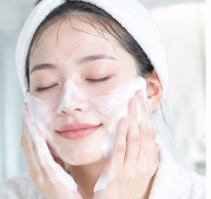
Review your cleanser's ingredient panel. If the first several ingredients list potassium hydroxide paired with stearic, myristic, or palmitic acid, it is a traditional saponified soap. In hard water, switch to cleansers formulated with amino acid surfactants (such as sodium cocoyl glutamate, potassium cocoyl glycinate, or lauroyl methyl beta-alanine sodium). Amino acid surfactants do not precipitate into insoluble salts in the presence of calcium and rinse cleanly.
2. Prioritize Japanese cleansing oils
Japanese cleansing oils—formulated with non-ionic emulsifiers—are naturally immune to hard water precipitation. The oil dissolves sunscreen, sebum, and pigments effortlessly, and when water is introduced, the non-ionic emulsifiers form a fine milky emulsion that rinses away cleanly, carrying makeup with it before calcium can interfere.
3. Incorporate micellar water or filtered post-rinse
If your municipal tap water has an extreme hardness rating (above 200 mg/L), consider minimizing tap water contact:
Use a cotton pad soaked in Japanese micellar cleansing water (kurenjingu wota) for your morning cleanse, skipping the sink entirely.
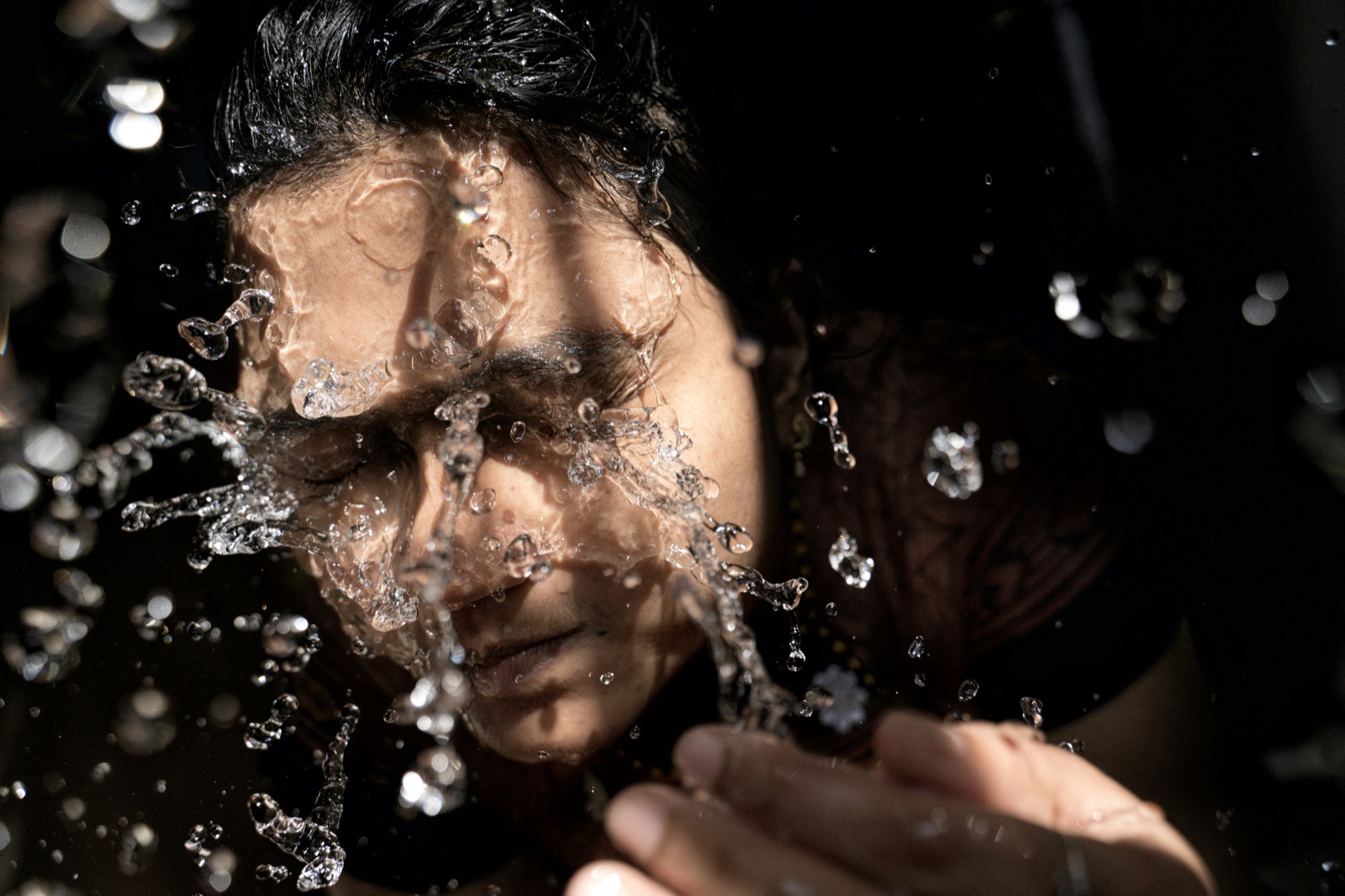
In the evening, after rinsing your cleanser with tap water, do a final gentle splash with bottled spring water, filtered pitcher water, or thermal spring water mist to rinse away residual tap minerals.
4. Drench immediately with a weakly acidic lotion (Keshosui)
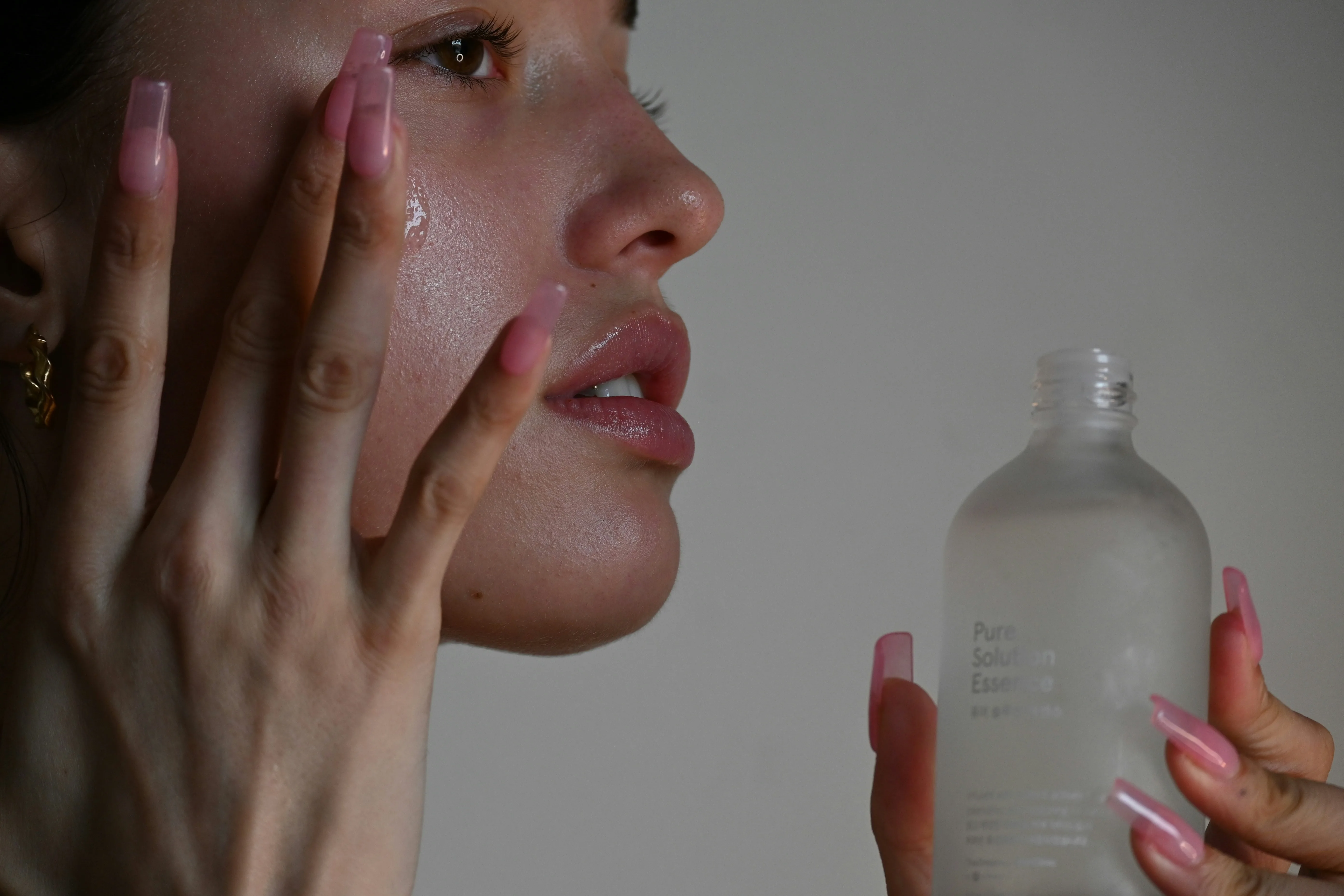
Never allow hard water to air-dry on your face, which concentrates mineral deposits on the epidermis. Pat skin lightly with a clean towel and immediately apply a generous amount of Japanese hydrating lotion (keshosui):
Look for formulas containing citric acid or chelating agents (such as EDTA or sodium citrate), which bind residual trace calcium and swiftly reset surface pH back to a healthy 5.0.
Layer humectants (glycerin, hyaluronic acid, amino acids) to rehydrate stratum corneum cells, followed immediately by an emulsion (nyueki) to lock in moisture.
Signs to stop and when to see a doctor
While adjusting your cleansing technique resolves most hard-water-induced discomfort, severe barrier disruption can trigger dermatological conditions. Discontinue harsh cleansing steps and consult a board-certified dermatologist if you experience:
Persistent erythematous eczema flares: Severe redness, scaling, cracking, or burning sensations around the mouth, cheeks, or eyelids following tap water contact, which may signal hard-water-induced atopic dermatitis[4].
Follicular pustules or sudden widespread breakouts: A sudden eruption of tiny whiteheads or tender papules caused by mineral soap scum clogging follicular openings.
Signs of secondary bacterial infection: Crusted yellow weeping, swelling, or localized heat on skin fissures that require prescription antibiotic ointments.
Severe ocular irritation or periorbital dermatitis: Itching, flaking, or eyelid swelling that does not resolve with barrier-restoring creams.
Water adjustments support daily comfort, but acute inflammatory dermatoses require professional dermatological care[5].
FAQ: Japanese Skincare for Hard Water
Q1. Why does my favorite Japanese foaming cleanser feel tight and drying abroad?
A. Traditional Japanese foaming cleansers react with dissolved calcium in hard water to form drying soap scum.(Details)
Many classic Japanese foaming washes are soap-based formulas designed for Japan's ultra-soft water. When mixed with the calcium and magnesium found in Western hard water, these soaps chemically precipitate into insoluble calcium salts that stick to your skin, disrupting the moisture barrier and causing intense post-wash tightness.
Q2. Does installing a shower filter solve hard water skin problems?
A. Standard carbon shower filters remove chlorine, but only true ion-exchange water softeners remove calcium.(Details)
Most inexpensive screw-on shower filters contain KDF and activated carbon, which excel at filtering chlorine, sediment, and heavy metals. However, they do not soften water; removing dissolved calcium and magnesium requires an ion-exchange resin softener. If you cannot install a whole-house softener, modifying your skincare products is far more effective.
Q3. Can I use Japanese cleansing oil if my tap water is extremely hard?
A. Yes, Japanese cleansing oils use non-ionic emulsifiers that do not form precipitates with hard water minerals.(Details)
Cleansing oils and balms are among the most effective choices for hard water areas. Their non-ionic emulsifiers (like PEG-20 glyceryl triisostearate) break down makeup and sebum without reacting with calcium or magnesium ions, allowing the oil to rinse away cleanly without leaving waxy residues.
Q4. What ingredients in Japanese lotions help counteract hard water minerals?
A. Look for chelating agents like citric acid, sodium citrate, and EDTA, which neutralize mineral ions.(Details)
Japanese hydrating lotions (*keshosui*) often contain mild organic acids like citric acid and chelating agents (disodium EDTA or phytic acid). These ingredients bind to residual calcium ions on the skin surface, preventing them from irritating the barrier while swiftly resetting the skin's natural acidic pH.
Q5. Should I stop washing my face with tap water entirely in hard water cities?
A. It is rarely necessary to stop completely; switching to amino acid cleansers or doing a filtered post-rinse is sufficient.(Details)
You do not need to wash exclusively with bottled water. Simply avoid harsh alkaline soaps, rinse with lukewarm rather than hot tap water, and consider a final splash of filtered water or a swipe of micellar water before applying your hydrating toner to remove mineral residues comfortably.
Summary
Soft vs. Hard Chemistry: Japanese cleansers are formulated for Japan's soft water; hard water minerals react with soap to form drying calcium residues.
Insoluble Soap Scum: Divalent calcium ions bind to traditional fatty acid soaps, creating precipitates that disrupt stratum corneum lipid bilayers.
Alkaline pH Shift: Hard tap water elevates skin surface pH, slowing down natural ceramide synthesis and barrier cellular recovery.
Smart Product Swaps: Switch to non-soap amino acid cleansers and cleansing oils that rinse cleanly without mineral precipitation.
Immediate Post-Wash Care: Pat skin dry and apply a weakly acidic hydrating lotion (keshosui) immediately to chelate trace minerals and restore moisture.
References
World Health Organization (WHO). Hardness in Drinking-water: Background document for development of WHO Guidelines for Drinking-water Quality. Published 2011.
Warren R, Ertel KD, Bartolo RG, Levine MJ. The influence of hard water on surfactant-induced skin irritation. Dermatology. 1996;193(4):301-308.
Danby SG, Brown K, Wigley AM, et al. The effect of water hardness on normal and atopic skin: An observational study. J Invest Dermatol. 2018;138(3):567-577.
Perkin MR, Craven J, Logan K, et al. Association between domestic water hardness, chlorine, and atopic dermatitis risk in early life: A population-based cross-sectional study. J Allergy Clin Immunol. 2016;138(2):509-516.
American Academy of Dermatology (AAD). Environmental triggers and barrier restoration guidelines for sensitive and dry skin. Published 2023.
Disclaimer: This article is for general information and education about Japanese cosmetics and their labels. It is not a substitute for professional medical advice, diagnosis, or treatment. Skincare results vary from person to person. Product formulas, availability, prices, and regulations change, and products sold in Japan can differ from versions sold elsewhere, so always check the current label. Do a patch test before introducing a new product, and consult a doctor or dermatologist if you have a skin condition or specific concerns.