Japanese Hair Oil vs Hair Milk Differences: How to Choose & Layer
RoutinesBy Miho Tanaka
title: Japanese Hair Oil vs Hair Milk Differences: How to Choose & Layer
description: Discover the differences between Japanese hair oil and hair milk. Learn internal hydration vs surface sealing, how to match your hair porosity, and layering rules.
author: "Miho Tanaka"
fact_checker: "Miho Tanaka"
category: "routines"
published_at: "2026-11-15"
updated_at: "2026-11-15"
featured_image: "/images/stock/amber-glass-oil-bottles-trio.webp"
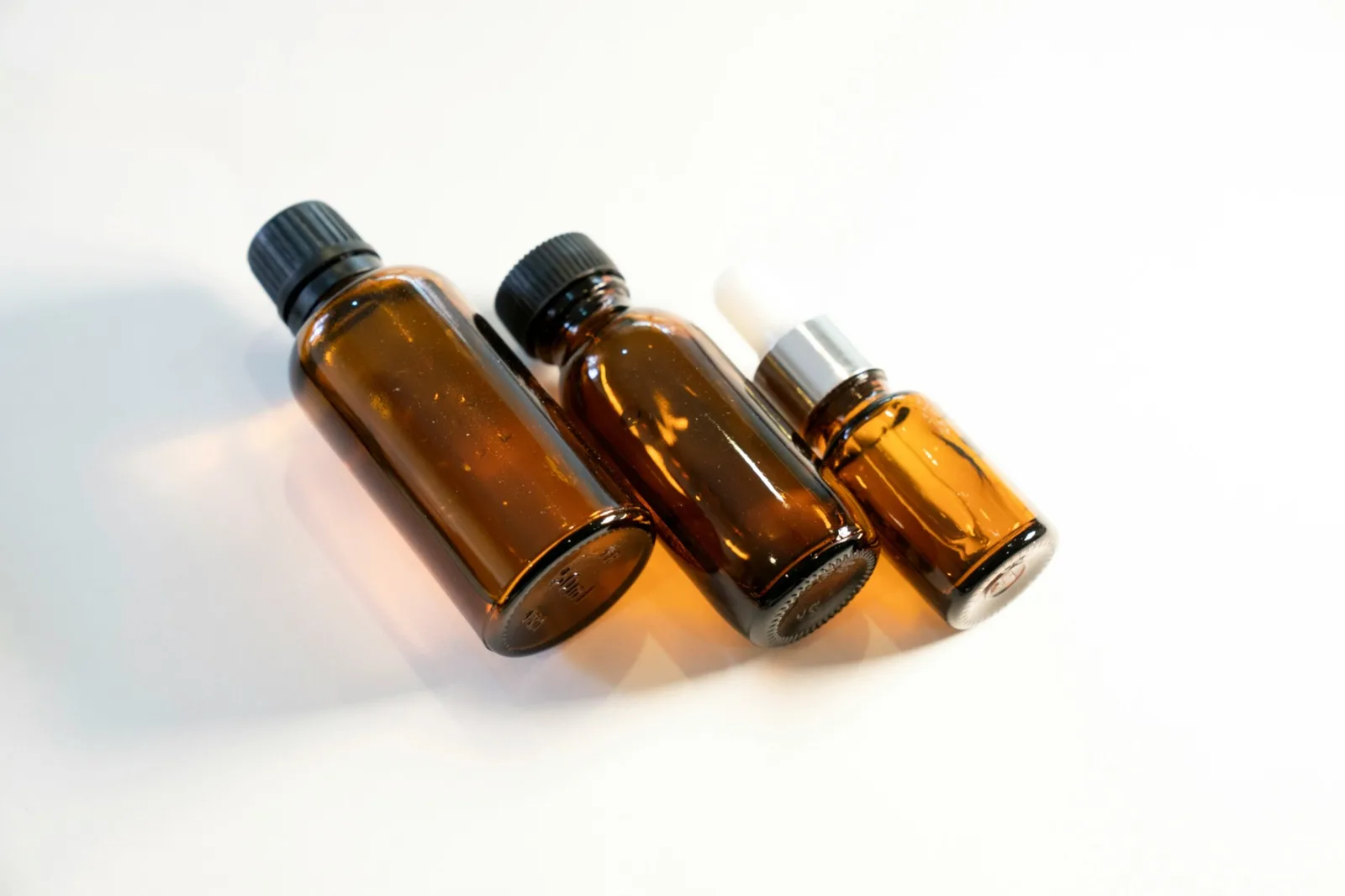
featured_image_alt: "Minimalist trio of amber cosmetic bottles showcasing Japanese leave-in hair treatments on white surface"
Japanese Hair Oil vs Hair Milk Differences: How to Choose & Layer
When browsing Japanese beauty aisles or salon styling menus, leave-in hair treatments (out-bath treatments) occupy an entire wall of specialized formulas. Among the wide array of options, two categories dominate everyday routines: hair milk (hea miruku) and hair oil (hea oiru). While both promise silky texture and frizz reduction, they function on fundamentally different biochemical principles.
Choosing the wrong product often leads to frustrating results: dry ends that remain stiff despite slathering on heavy oils, or fine strands that collapse and turn greasy under excessive silicone weight. Understanding the structural distinction between milk and oil allows you to achieve balanced moisture, effortless bounce, and lasting protection.
Quick answer: The fundamental difference lies in water and lipid distribution: Hair milk is an oil-in-water emulsion loaded with humectants, water, and hydrolyzed proteins that penetrate into the inner hair cortex to soften stiffness and restore internal moisture. Hair oil is an anhydrous or lipid-dense formula composed of botanical oils and silicones that coat the outer cuticle layer, locking in moisture, smoothing roughness, and shielding hair from blow-dryer heat and friction. For severely dry or heat-damaged hair, Japanese salons recommend layering both: apply hair milk first on towel-dried hair for deep hydration, followed by hair oil to seal the surface.
Core Differences at a Glance: Formulation & Mechanism
Hair consists of three concentric layers: the innermost medulla, the structural cortex (which holds moisture, melanin, and keratin bonds), and the outermost shingle-like cuticle (which regulates porosity and protects internal proteins).
Hair milk and hair oil target different structural depths within this anatomical framework:
Scroll horizontally to view full table
Comparison Factor
Japanese Hair Milk (Emulsion)
Japanese Hair Oil (Lipid/Serum)
Base Formulation
Oil-in-water (O/W) emulsion with humectants and ceramides
Pure plant lipids, mineral oils, or volatile dimethicone/cyclopentasiloxane blends
Target Depth
Inner cortex and damaged cellular membrane complex (CMC)
Outer cuticle layer and external surface lipid film (18-MEA)
Primary Benefit
Internal softening, rehydration, and pliant flexibility
Cuticle smoothing, brilliant shine, heat shielding, and anti-friction
Application Timing
Immediately after towel-drying on damp, absorbent strands
Before blow-drying as a thermal buffer, or on dry hair as a finishing polish
Best Suited For
Coarse, stiff, dry, or chemically dehydrated strands
Fine hair prone to tangles, high-frizz humidity, or heat-styled hair
Hair Milk: Internal Cortex Hydration and Softening
In Japanese cosmetic science, hair milk is classified as an emulsion (nyu-eki for hair). Just as a facial emulsion hydrates skin by combining moisture with mild emollients, hair milk introduces water-binding molecules directly into porous strands.
1. Key Biochemical Actives in Japanese Hair Milks
Japanese formulations prioritize biomimetic repair agents that replicate natural hair structure:
Hydrolyzed Keratin and Silk Proteins: Low-molecular-weight amino acid chains that penetrate small fissures in damaged hair shafts to bolster tensile strength.
Biomimetic Ceramides and CMC Lipids: Lipids that replenish the Cell Membrane Complex (CMC), the intercellular cement that holds cortical cells together.
Polyols (Glycerin, Propylene Glycol, Sorbitol): Powerful humectants that draw atmospheric water into dry keratin fibers, restoring softness (ju-nan-sei).
2. When Hair Milk Is Indispensable
If your hair feels crunchy, brittle, or stiff like straw after washing, it lacks internal water rather than surface lubrication. Applying pure oil over dehydrated hair merely forms a waterproof barrier over a parched core. Hair milk softens the internal fiber, making the hair pliable, touchable, and receptive to movement.
Hair Oil: Cuticle Coating, Shine, and Heat Defense
Japanese hair oils are formulated with exquisite precision, balancing natural plant triglycerides (such as camellia seed oil, argan oil, and jojoba oil) with featherlight cosmetic silicones.
1. How Hair Oil Shields the Cuticle
A healthy hair shaft possesses a natural protective lipid layer composed largely of 18-methyleicosanoic acid (18-MEA). Chemical coloring, perming, and heat styling strip away 18-MEA, leaving cuticles raised, porous, and prone to snagging.
Friction Reduction: Japanese hair oils fill microscopic gaps between lifted cuticle scales, creating a slick surface that prevents mechanical breakage during brushing.
Thermal Buffering: Volatile silicones (such as cyclopentasiloxane) disperse evenly across the shaft, moderating temperature spikes from hair dryers and flat irons without burning the hair cortex.
Moisture Evaporation Barrier: An oil barrier prevents environmental dry air from sapping inner hair hydration while simultaneously blocking external humidity from entering and causing unruly frizz.
2. When Hair Oil Is Indispensable
Hair oil excels when you need surface reflectivity, instantaneous detangling, flyaway control, or protection before using heated styling tools.
How to Match Your Hair Type, Porosity, and Concerns
Choosing between milk and oil depends on your individual hair diameter, natural curl pattern, and chemical processing history.
1. Fine or Limp Hair
The Challenge: Easily weighed down; susceptible to root collapse and grease accumulation.
Recommended Choice: A lightweight hair milk or a dry, fast-absorbing volatile hair oil (1 to 2 drops max).
Application Tip: Keep product strictly concentrated on the lower third of the hair shaft (mid-lengths to tips), entirely avoiding the scalp and root zone.
2. Thick, Coarse, or Wire-Like Hair
The Challenge: Inflexible, unruly, and difficult to shape due to rigid cortical protein bonds.
Recommended Choice: Rich hair milk containing lipid-rich plant butters, followed by a dense finishing oil.
Application Tip: Apply milk generously to damp hair sections to restore flexibility before blow-drying.
3. Bleached, Colored, or Heat-Damaged Hair
The Challenge: Stripped 18-MEA lipid layer combined with porous, hollowed cortical fibers.
Recommended Choice: Both products layered together (W-Care Technique).
Application Tip: Replenish lost internal protein moisture with milk, then shield exposed cuticles with oil.
The Ultimate Layering Ritual: Milk First, Oil Second (W-Care Technique)
In Tokyo salons, professional stylists frequently employ the W-Care (Double Care) Technique for clients with persistent dryness or color damage. The sequence mirrors Japanese facial skincare: lotion and milk first to supply water, followed by oil or cream to seal.
Towel-Drying (Gentle Patting)
        ↓
Step 1: Hair Milk Application (Internal Hydration to Mid-Lengths & Ends)
        ↓
Step 2: Wide-Tooth Comb Distribution (Even Coverage)
        ↓
Step 3: Hair Oil Application (Surface Cuticle Sealing & Heat Buffer)
        ↓
Step 4: Blow-Drying (Downward Airflow Along Cuticle Growth)
        ↓
Optional: 1 Drop of Oil on Dry Hair (Gloss Finishing Polish)
1. Step-by-Step Layering Routine
Gentle Towel Blotting: Remove excess surface moisture by gently pressing a microfiber towel against hair. Avoid vigorous rubbing, which frays vulnerable cuticles.
Dispense Hair Milk: Take a coin-sized amount of hair milk into your palms. Rub hands together to distribute product evenly across fingers.
Internal Fiber Infusion: Work the milk through mid-lengths and ends using a gentle raking motion. Smooth hair downward between pressed palms.
Detangle with a Wide-Tooth Comb: Comb through once to ensure every strand absorbs the emulsion without clustering.
Layer Hair Oil: Dispense one pump (or a few drops) of hair oil. Warm it between your palms and smooth it over the outer canopy and tips to lock in the milk.
Blow-Dry with Downward Airflow: Direct the dryer nozzle downward from roots to ends at a distance of 15 to 20 centimeters. This aligns the cuticles, maximizing mirror-like light reflection.
FAQ
Q1. Can I use hair oil and hair milk together every day?
A. Yes, layering hair milk and hair oil together is completely safe and highly effective for dry hair.(Details)
Layering both products—known as double leave-in care in Japanese salon practice—is ideal for hair that suffers from bleaching, frequent heat styling, or environmental dryness. Apply hair milk first to deliver moisture into the inner cortex, then layer a small quantity of hair oil on top to lock in hydration and create a heat-protective shield. If your hair is fine, adjust the dosage to avoid excess weight.
Q2. Should hair milk be applied to wet or dry hair?
A. Hair milk delivers optimal results when applied to clean, towel-dried, damp hair.(Details)
When hair is damp, the cuticle scales are slightly open, allowing water-binding humectants and hydrolyzed proteins in the milk to penetrate deeply into the cortex. While hair milk can be lightly applied to dry hair in the morning to tame bedhead, applying it immediately after shampooing and towel-drying provides the greatest long-term softening benefits.
Q3. Will hair oil repair split ends permanently?
A. No cosmetic oil can permanently reattach split ends; trimming remains the only definitive cure.(Details)
Hair is non-living keratinized tissue without cellular regenerative capacity. Hair oils smooth the cuticle, temporarily bind fraying split ends together through surface tension, and prevent existing splits from traveling further up the hair shaft. However, this is a temporary cosmetic masking effect. A professional trim is required to permanently eliminate damaged ends.
Q4. Does hair oil make fine hair greasy or flat?
A. It can cause flatness if heavy formulas are applied too close to the scalp or roots.(Details)
Heavy mineral oils or dense vegetable triglycerides can weigh down fine hair textures. If you have fine hair, choose a lightweight, silicone-based hair oil or volatile dry oil formula, use only 1 to 2 drops, and apply exclusively from the mid-lengths down to the very ends. Never apply leave-in oils near the scalp or roots.
Q5. Can I apply hair oil before using a flat iron or curling wand?
A. Only use oils specifically rated for high-heat iron styling, and never apply to damp hair before ironing.(Details)
Applying standard finishing oils to damp or insufficiently dry hair before using hot irons can cause water trapped inside the hair shaft to boil rapidly, leading to permanent internal bubbling damage (bubble hair). If you use a flat iron or curling iron, ensure your hair is 100% dry, and check that your styling product is explicitly formulated as a thermal styling heat protectant.
Key Takeaways & Summary
Hair Milk Equals Moisture: Formulated as an oil-in-water emulsion with amino acids and ceramides, hair milk replenishes the inner cortex, eliminating stiffness and restoring natural elasticity.
Hair Oil Equals Sealing & Shielding: Formulated with silicones and botanical lipids, hair oil seals the cuticle, creates high shine, prevents friction damage, and acts as a blow-dry heat buffer.
The Golden Order: When using both, follow the principle of Milk First, Oil Second to ensure internal hydration is locked securely beneath an outer lipid barrier.
Tailor to Texture: Fine hair thrives on lightweight milks or subtle finishing drops, while thick, processed, or coarse hair benefits from generous double-layering.
References
Japan Hair Science Association (JHSA) — Hair Structure, Cuticle Integrity, and Leave-in Treatment Fundamentals, Official Educational Compendium.
Society of Cosmetic Chemists of Japan (SCCJ) — Emulsion Chemistry and Lipid Barrier Science in Modern Hair Cosmetics, Technical Review.
Journal of Cosmetic Dermatology — Investigation of the Protective Effects of Cosmetic Oils and Silicones Against Blow-Dryer Thermal Damage, Peer-Reviewed Clinical Study.
Ministry of Health, Labour and Welfare (MHLW) — Cosmetic and Quasi-Drug Ingredient Standards for Hair Care Formulations, Regulatory Documentation.
Disclaimer: This article is for general information and education about Japanese cosmetics and their labels. It is not a substitute for professional medical advice, diagnosis, or treatment. Skincare results vary from person to person. Product formulas, availability, prices, and regulations change, and products sold in Japan can differ from versions sold elsewhere, so always check the current label. Do a patch test before introducing a new product, and consult a doctor or dermatologist if you have a skin condition or specific concerns.