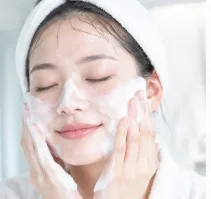
Which Japanese Skincare Routine Fits You? Self-Assessment Guide
RoutinesBy Miho Tanaka
title: Which Japanese Skincare Routine Fits You? Self-Assessment Guide
description: Unsure how to build your J-Beauty regimen? Take our interactive self-assessment guide to find the perfect Japanese skincare routine for your skin type and lifestyle.
published_at: "2026-11-15"
updated_at: "2026-11-15"
fact_checked_at: "2026-11-15"
author: "Miho Tanaka"
category: "routines"
thumbnail: "/images/stock/hero-woman-smiling-natural-makeup-glowing-face.jpg"
thumbnail_alt: "Radiant woman smiling gently with healthy balanced bare skin in natural daylight"
Which Japanese Skincare Routine Fits You? Self-Assessment Guide
Quick answer: Unsure how to build your J-Beauty regimen? Take our interactive self-assessment guide to find the perfect Japanese skincare routine for your skin type and lifestyle.
The world of Japanese skincare (J-Beauty) is celebrated for its scientific rigor, pharmaceutical certifications, and sensory textures. Yet for newcomers, standing in a Tokyo drugstore or browsing an international retailer can feel overwhelming. With hundreds of bottles categorized by subtle viscosity grades (sarasara, shittori, toromi), specialized quasi-drug actives, and varying emulsion ratios, where should you begin?
Unlike aggressive Western routines that treat every complexion with high-percentage exfoliating acids or retinoids, Japanese beauty is built on customized physiological matching: diagnosing your stratum corneum's specific water-to-lipid ratio and tailoring a 3- to 4-step ritual that restores natural barrier equilibrium. This self-assessment guide helps you identify your skin profile through a simple diagnostic framework and provides a customized, step-by-step Japanese skincare blueprint.
The 4-Question Self-Assessment Matrix
To find your tailored routine, answer these four fundamental diagnostic questions regarding how your bare skin behaves throughout the day:
Question 1: How does your skin feel 15 minutes after washing your face without applying products?
A: Tight, taut, and uncomfortable, especially around the cheeks and mouth.
B: Comfortable at first, but oil begins pooling along the forehead and nose within minutes.
C: Stinging, blotchy, or slightly red from water contact or towel friction.
D: Lacking bounce, with visible fine expression lines around the eyes and smile folds.
Question 2: What is your primary midday skin frustration?
A: Flaky patches, rough texture, or a dull, tight feeling under makeup.
B: Heavy shine, greasy T-zone, and makeup sliding or separating around the nose.
C: Sudden irritation, heat sensitivity, or itching triggered by temperature shifts.
D: Loss of facial firmness, sagging contour lines, and dehydration creasing.
Question 3: How does your skin react to rich moisturizing creams?
A: Drinks them up instantly; feels relieved and soft.
B: Feels suffocated, heavy, and prone to clogged pores or small whiteheads.
C: Frequently reacts with burning, tingling, or localized contact dermatitis.
D: Appreciates the emollience, but still feels dry beneath the surface.
Question 4: What is your ideal skincare texture preference?
A: Cushioning, bouncy essences (toromi) followed by comforting velvety lotions.
B: Ultra-light, watery splashes (sarasara) and oil-free, cooling gel creams.
If you scored mostly C, your skin reacts to seasonal shifts and harsh surfactants (yuragi-hada).
Step 1 (Cleanse): Wash using a hypoallergenic, fragrance-free foam with zero friction.
Step 2 (Hydrate): Use a minimalist, additive-free Japanese conditioning water (teishigeki) certified as a soothing Quasi-Drug.
Step 3 (Seal): Apply a gentle pseudo-ceramide milk formulated specifically for atopic or easily flushed skin.
Step 4 (Protect): Use an alcohol-free, fragrance-free physical/hybrid sunscreen labeled for baby or sensitive skin.
Blueprint D: Longevity & Firmness (Haritsuki)
If you scored mostly D, focus on cellular longevity, antioxidant defense, and photoaging prevention.
Step 1 (Cleanse): Dissolve surface pollutants and makeup with a nourishing antioxidant cleansing oil.
Step 2 (Hydrate): Saturate the skin with fermented sake filtrate (rice koji) or galactomyces broth rich in amino acids and peptides.
Step 3 (Seal): Layer a firming emulsion fortified with niacinamide or soy isoflavones to stimulate collagen synthesis.
Step 4 (Protect): Strictly apply an SPF50+ PA++++ broad-spectrum sunscreen 365 days a year to block dermal elastin breakdown.
FAQ
Q1. Can I combine products from different archetypes?
A. Yes, customized combination routines are common, such as pairing oily-zone lotions with dry-zone milks. (Details)
Many individuals have combination skin with an oily T-zone (Archetype B) and dry cheeks (Archetype A). In Japanese beauty, you can use a refreshing *sappari* lotion all over, then apply a lighter gel to the T-zone and a richer ceramide emulsion only to the cheeks.
Q2. How often should I re-evaluate my skin archetype?
A. Re-evaluate your skin profile seasonally, particularly when transitioning between summer and winter. (Details)
Japanese skincare is deeply seasonal. A person who is Archetype B (Oily/Congested) during humid Tokyo summer monsoons often transitions into Archetype A (Dehydrated/Dry) during cold, arid winter months. Adjusting viscosity and emulsion weight twice a year maintains skin stability.
Q3. Do I need to buy an entire matching line from one brand?
A. No, while branded lines are formulated to complement each other, mixing trusted Japanese brands is completely safe. (Details)
You can seamlessly pair a popular drugstore hyaluronic lotion with a premium luxury ceramide emulsion and a sport-grade sunscreen milk. As long as you adhere to the order of thinnest liquid to richest lipid, cross-brand routines perform exceptionally well.
Q4. What if my skin feels both oily and flaky at the same time?
A. This indicates "inner dryness" (in-na-dorai); follow Archetype A for water, but Archetype B for lightweight sealing. (Details)
Flakiness paired with midday grease is classic surface-oily dehydration. Your sebaceous glands are over-compensating because deeper cell layers lack water. Layer multiple thin coats of watery hydrating lotion, followed by a light emulsion (*nyueki*) rather than heavy pore-clogging butter creams.
Q5. How long will it take to see visible results after starting my tailored routine?
A. Improved suppleness occurs within days, while full barrier stabilization aligns with the 28-day skin cycle. (Details)
Immediate surface hydration and softness (*shittori*) are felt within the first 48 hours of proper lotion layering. Significant improvements in barrier resilience, pore appearance, and natural glow typically emerge after one full epidermal renewal cycle (roughly 28 to 40 days).
Summary and Key Takeaways
Finding your ideal Japanese skincare routine requires matching formulation mechanics to your biological barrier:
Assess Your Baseline: Identify whether your primary barrier need is water infusion (Archetype A), oil control (Archetype B), calming sensitivity (Archetype C), or cellular longevity (Archetype D).
Stick to the Core Sequence: Build around the timeless Japanese framework: Gentle Cleanse → Hydrating Lotion (Keshosui) → Balancing Emulsion (Nyueki) → High-Grade Sunscreen.
Adjust Seasonally: Shift between light sarasara textures in summer humidity and rich toromi emulsions in winter dryness.
Prioritize Consistency Over Excess: Three targeted products applied with mindful, friction-free palm pressing outperform ten mismatched formulas every time.
Japan Cosmetic Industry Association (JCIA). (n.d.). Cosmetic and Quasi-Drug Regulatory Standards and Guidelines. Tokyo, Japan.
Disclaimer: This article is for general information and education about Japanese cosmetics and their labels. It is not a substitute for professional medical advice, diagnosis, or treatment. Skincare results vary from person to person. Product formulas, availability, prices, and regulations change, and products sold in Japan can differ from versions sold elsewhere, so always check the current label. Do a patch test before introducing a new product, and consult a doctor or dermatologist if you have a skin condition or specific concerns.