Japanese Foaming Cleanser Pump vs Tube Lather Guide
CleansingBy Seibun Lab Editorial Team
title: Japanese Foaming Cleanser Pump vs Tube Lather Guide
slug: japanese-foaming-cleanser-pump-vs-tube-lather
category: cleansing
published_at: '2026-11-27'
updated_at: '2026-11-27'
meta_description: Compare Japanese self-foaming pump cleansers and tube pastes. Learn why self-foaming pumps lead morning routines with friction-free cleansing and speed.
keywords:
japanese foaming cleanser pump vs tube lather
self-foaming pump cleanser
japanese face wash
foaming net lather
morning friction-free cleansing
author: Seibun Lab Editorial Team
Japanese Foaming Cleanser Pump vs Tube Lather Guide
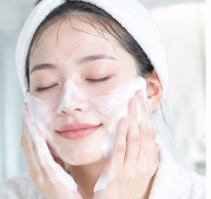
In Japanese skincare culture, how you wash your face matters just as much as what you apply afterward. Japanese dermatologists and beauty editors frequently emphasize one cardinal rule: never let your bare fingers rub against facial skin (masatsu-resu, or friction-free care). Instead, you are taught to create a thick cushion of cloud-like foam (awa) that acts as a physical shock absorber between your palms and your epidermis.
To achieve this protective lather, Japanese bathrooms traditionally rely on concentrated paste cleansers paired with specialized foaming nets (awa-date netto). However, for busy morning routines, a modern rival has taken over drugstore shelves: self-foaming pump bottles (awa de deru taipu). Here is the comparative engineering between self-foaming pumps and tube paste lather, and why Japanese consumers choose pumps to protect their morning moisture barrier.
The Science of Lather: Mesh Pumps vs Whipped Net Paste
The fundamental difference between these two cleansing formats lies in their internal physics and surfactant viscosities:
1. Self-Foaming Pump Architecture
A self-foaming pump bottle is an ingenious fluid-mechanics device. The bottle does not contain compressed aerosol gases; instead, it holds an ultra-watery liquid surfactant solution:
The Air-Liquid Mixing Chamber: When you press the wide pump nozzle, a calibrated chamber pulls precise proportions of liquid cleanser and ambient air simultaneously.
Micro-Mesh Screens: The pressurized mixture is forced through two ultra-fine synthetic mesh strainers (typically 200 to 300 mesh pores per square inch).
Instant Aerated Micro-Foam: As the watery fluid shears through the microscopic mesh, it emulsifies into millions of uniform, lightweight micro-bubbles that billow instantly into your palm.
Mechanical Agitation Needed: Because the paste is highly concentrated and viscous, it cannot generate foam on its own.
The Foaming Net Accelerator: Japanese foaming nets incorporate ruffled layers of polyethylene mesh that rapidly incorporate water and air as you rub the paste between your palms, generating an extraordinarily dense, elastic meringue-like lather.
Scroll horizontally to view full comparison
Cleansing Attribute
Self-Foaming Pump Bottle
Tube Paste + Foaming Net
Lather Preparation Time
1 second (Instant press)
30 to 60 seconds (Manual net whipping)
Bubble Density & Elasticity
Light, airy, cloud-like softness
Ultra-dense, firm meringue, high bounce
Surfactant Base
Mild amino acids (Glutamates, Taurates)
Saponified fatty acids or hybrid syndets
Primary Cleansing Target
Oxidized night sebum, dust, dead cells
Heavy evening grime, sunscreen, oil residue
Friction Reduction Ease
Effortless (No preparation errors)
High cushion, but requires net technique
Why Self-Foaming Pumps Dominate Japanese Morning Skincare
While thick meringue whipped from a tube remains the gold standard for evening showers, Japanese consumers overwhelmingly prefer self-foaming pumps for morning routines:
1. Preventing Morning "Half-Asleep" Friction
When waking up rushed before school or work, few people take 60 seconds to whip a tube paste into an adequate cushion with a foaming net. Instead, rushed consumers often rub under-foamed paste directly onto their faces. This causes harsh surfactant streaks and physical dragging that damages natural barrier resilience and moisture retention[1] over time. A pump bottle delivers a perfect, pre-aerated cushion in a single stroke, making friction-free washing effortless even before your morning coffee.
2. Matching Morning Biological Needs
Your skin in the morning has fundamentally different cleansing requirements than your skin in the evening:
Evening Needs: Requires robust lipid dissolution to melt mineral sunscreen filters, makeup pigments, city particulate matter, and heavy daytime sebum.
Morning Needs: Simply needs to sweep away oxidized nighttime sebum, sloughed cellular turnover, and microscopic dust from bed linens.
Using high-potency saponified tube soaps in the morning can strip newly synthesized intercellular lipids. Mild self-foaming pumps rinse cleanly with zero residue, leaving the acid mantle intact.
3. Hygiene and Net Maintenance
Foaming nets must be thoroughly rinsed and hung in well-ventilated areas to dry. In damp Japanese bathrooms, hanging a wet net introduces potential bacterial growth if neglected. Self-foaming pump bottles keep the cleansing liquid sealed in a sterile chamber with zero damp accessories required.
Formulation Profiles: Amino Acid Surfactants vs Fatty Acid Soaps
The physical format of the bottle directly dictates what chemistry Japanese formulators can use inside:
Liquid Pumps: Gentle Amino-Acid Chemistry
To pass smoothly through a pump's microscopic mesh screens without clogging, the solution must remain low in viscosity. Japanese chemists formulate pump washes with gentle, water-soluble amino-acid surfactants:
Sodium Cocoyl Glutamate & Potassium Cocoyl Glycinate: Derived from coconut fatty acids and natural amino acids, these cleansers selectively bind to excess sebum while leaving stratum corneum moisture factors untouched.
Hydration Boosters: Because the liquid is light, formulators enrich it with high concentrations of glycerin, diglycerin, hyaluronic acid, and dipotassium glycyrrhizate to soothe morning redness.
Tube Pastes: Saponified Deep-Pore Resilience
Tube pastes rely on high concentrations of potassium soaps. While exceptionally satisfying for lifting stubborn oiliness from the T-zone during humid summer nights, their alkaline pH (typically pH 8.5 to 9.5) can provoke adverse contact dermatitis or cleansing irritation[2] if used twice daily on dry, mature, or eczema-prone complexions.
Signs to Stop and When to See a Doctor
Even mild foaming cleansers can cause reactivity if misused or paired with water that is too hot:
Post-Wash Tightness (Tsupparikan): If your face feels tight, shiny, or parched within 60 seconds of towel drying, switch to a more moisturizing amino-acid pump formula.
Stinging Upon Lotion Application: Burning when you pat on your toner indicates that your morning wash stripped too much protective lipid barrier.
Flaking Around Cheeks: Concentrated morning foaming can over-dry non-oily facial zones; restrict lather strictly to the T-zone.
[!WARNING]
If you develop acute facial swelling, weeping contact eczema, or persistent hives after cleansing, wash thoroughly with lukewarm water, discontinue usage immediately, and consult a dermatologist. For daytime ultraviolet defense, always complete your morning regimen with broad-spectrum daily sunscreen defense[3].
FAQ
Q1. Is pump foam as dense as foam whipped with a Japanese foaming net?
A. No, net-whipped paste produces a denser, firmer meringue lather than a pump.(Details)
Foaming nets allow you to control water volume, whipping fatty acid pastes into an ultra-dense, elastic meringue that can support a coin without collapsing. Pump foam is lighter, fluffier, and airier, but it still provides ample friction-free cushioning for morning use.
Q2. Can self-foaming pump cleansers remove sunscreen or light makeup?
A. They remove everyday non-waterproof sunscreen, but water-resistant types need an oil cleanser first.(Details)
Self-foaming pump washes easily dissolve everyday urban sunscreens and light tinted lotions. However, if you wear high-durability waterproof sunscreen or full makeup, perform double cleansing with a gentle cleansing oil or balm first.
Q3. Will using a self-foaming cleanser in the morning strip dry skin?
A. Most Japanese pump formulas are amino-acid based and formulated specifically not to strip moisture.(Details)
Unlike old-fashioned foaming washes, modern Japanese pump cleansers use mild amino-acid surfactants (such as sodium methyl cocoyl taurate) that respect the skin's natural moisturizing factors, leaving dry barriers soft and calm.
Q4. Can I refill a self-foaming pump bottle with regular tube cleanser mixed with water?
A. No, diluting tube cleanser will clog the microscopic mesh and invite bacterial growth.(Details)
Self-foaming pump heads require precisely calibrated liquid viscosity and surface tension to produce micro-bubbles. Diluting a thick cream paste with tap water clogs the fine internal mesh and dilutes the preservative system, spoiling the product.
Q5. Why is friction-free morning cleansing so emphasized in Japanese dermatology?
A. Physical friction weakens the delicate stratum corneum and triggers chronic sensitivity.(Details)
The human facial stratum corneum is only 10 to 15 layers of cells thick. Rubbing the face with bare hands or rough washcloths twice daily degrades intercellular lipid sheets, accelerating moisture loss and worsening redness.
Summary and Key Takeaways
Choosing between a self-foaming pump and a tube paste cleanser comes down to daily timing and your skin's biological needs:
Morning Speed and Cushion: Self-foaming pump bottles deliver instant micro-bubble lather, preventing hurried morning friction with zero prep time.
Evening Deep Cleansing: Tube pastes whipped with a foaming net create dense, elastic meringue foam ideal for sweeping away heavy evening grime and sunscreen.
Mild Amino-Acid Bases: Liquid pump washes use gentle amino-acid surfactants that cleanse nighttime sebum while preserving critical moisture factors.
Friction-Free Philosophy: Both methods serve the primary J-Beauty mandate: letting rich foam do the cleansing work so your hands never drag across delicate skin.
By stocking a gentle self-foaming pump by your sink for busy mornings and reserving rich tube lather for evening unwinding, you give your skin the exact balance of gentleness and clarity it needs every day.
Disclaimer: This article is for general information and education about Japanese cosmetics and their labels. It is not a substitute for professional medical advice, diagnosis, or treatment. Skincare results vary from person to person. Product formulas, availability, prices, and regulations change, and products sold in Japan can differ from versions sold elsewhere, so always check the current label. Do a patch test before introducing a new product, and consult a doctor or dermatologist if you have a skin condition or specific concerns.