title: Japanese Micellar Water Cleansing Sheets Guide
slug: japanese-micellar-water-cleansing-sheets-guide
category: cleansing
published_at: '2026-11-27'
updated_at: '2026-11-27'
meta_description: Discover how Japanese micellar water cleansing sheets remove makeup right after arriving home without friction, keeping skin calm before your evening bath.
keywords:
japanese micellar water cleansing sheets guide
micellar makeup wipes japan
kitaku go makeup removal
friction free cleansing sheet
post commute skincare
author: Seibun Lab Editorial Team
Japanese Micellar Water Cleansing Sheets Guide
In many Western households, makeup removal is postponed until right before getting into bed. In Japan, however, an entirely different cultural ritual prevails: post-commute makeup removal (kitaku-go meiku-ofu). The moment Japanese urbanites step through their front doors and take off their shoes, they prioritize cleansing their faces immediately.
Walking through humid train stations, dry air-conditioned offices, and crowded city streets coats facial skin in a cocktail of oxidized sebum, airborne pollen, fine particulate matter (PM2.5), and makeup pigments. Leaving this oxidized film suffocating pores for four or five extra hours while cooking or lounging stresses the skin barrier.
To make immediate makeup removal effortless without needing a full sink wash, Japanese drugstores pioneered lotion-infused micellar cleansing sheets (miserā wōtā kurenjingu shīto). Here is the formulation science behind Japanese micellar sheets, how they differ from abrasive Western makeup wipes, and how to use them without causing friction damage.
The "Kitaku-Go" Ritual: Why Japanese Remove Makeup Right Away
Understanding the Japanese habit of kitaku-go (immediately upon returning home) clarifies why cleansing sheets are a staple in Japanese beauty:
1. Halting Sebum Oxidation and Lipid Peroxidation
By 6:00 or 7:00 PM, daytime sebum has mixed with foundation pigments and sunscreen filters for over ten hours. Under ambient oxygen and indoor lighting, this mixture undergoes lipid peroxidation, generating irritating squalene peroxides that trigger micro-inflammation and pore dilation. Sweeping away this degraded layer the minute you walk in the door halts oxidation promptly.
2. The Commute Allergen Shield
Japan's urban seasons bring heavy loads of cedar pollen (kafun), yellow dust (kōsa), and vehicle exhaust. Allowing these microscopic particles to sit on your skin throughout the evening increases the risk that adverse contact dermatitis or mechanical friction[2] will develop.
3. The "Bridge Care" Concept
Taking a complete shower immediately upon arriving home is often impractical. Cleansing sheets provide an ideal "interstitial bridge": removing surface grime in 30 seconds and depositing a light layer of hydrating humectants that keeps skin comfortable until late-night bathing.
Scroll horizontally to view full comparison
Cleansing Format
Application Setup
Rinse Requirement
Primary Strength
Barrier Impact
Japanese Micellar Sheet
Instant (Pre-saturated cloth)
Zero (Lotion-infused finish)
Immediate post-commute relief
Ultra-low if folded & unrubbed
Liquid Micellar Water + Cotton
Requires bottle & cotton pads
Zero to optional splash
Customizable drench volume
Low (Depends on cotton saturation)
Traditional Cleansing Oil
Requires sink & running water
Mandatory water rinse
Heavy makeup & waterproof mascara
Nourishing, requires full routine
The Science of Micellar Sheets: Micelles and Fiber Friction
Not all cleansing wipes are created equal. The notorious reputation of Western "makeup wipes" causing stinging and premature wrinkles stems from poor formulation design: thin, scratchy polyester sheets soaked in harsh alcohol and drying foaming surfactants.
Japanese cosmetic manufacturers re-engineered the wipe into an advanced bio-textile:
1. Non-Ionic Micellar Surfactant Chemistry
Japanese sheets use gentle polyglyceryl fatty acid esters (such as PEG-6 or polyglyceryl-10 laurate). In watery solution, these molecules assemble into micelles—microscopic spherical structures with hydrophilic heads facing outward and lipophilic tails tucked inward. Upon contacting the skin, the lipophilic cores encapsulate oils, wax-based foundations, and sebum, lifting them cleanly without requiring lather or rinsing.
Rather than rough woven plastics, Japanese sheets utilize thick, layered non-woven cellulose or 100% natural cotton. Crucially, each sheet is saturated with up to 5 to 6 milliliters of watery conditioning lotion (keshosui-shitate). This high fluid volume creates a physical liquid cushion between the cloth and the epidermis, ensuring fibers glide effortlessly without dragging.
3. Preserving Natural Moisturizing Factors (NMF)
Formulated at a skin-neutral pH (typically pH 5.5 to 6.5) and enriched with hyaluronic acid, amino acids, and green tea polyphenols, Japanese micellar sheets remove makeup while leaving natural barrier resilience and moisture retention[1] intact.
The Origami Sheet Fold: The Professional Friction-Free Technique
The golden rule of using cleansing sheets is simple: never scrunch the sheet into a ball and scrub back and forth. Aggressive scrubbing grinds captured makeup back into pores and abrades the stratum corneum.
Japanese beauty professionals practice the Four-Fold Origami Method:
Step 1: Fold into Quarters
Unfold the large sheet and fold it neatly in half, then in half again. This creates a compact palm-sized square with eight distinct fresh surfaces (four on the front, four on the back).
Step 2: The 5-Second Press-and-Melt
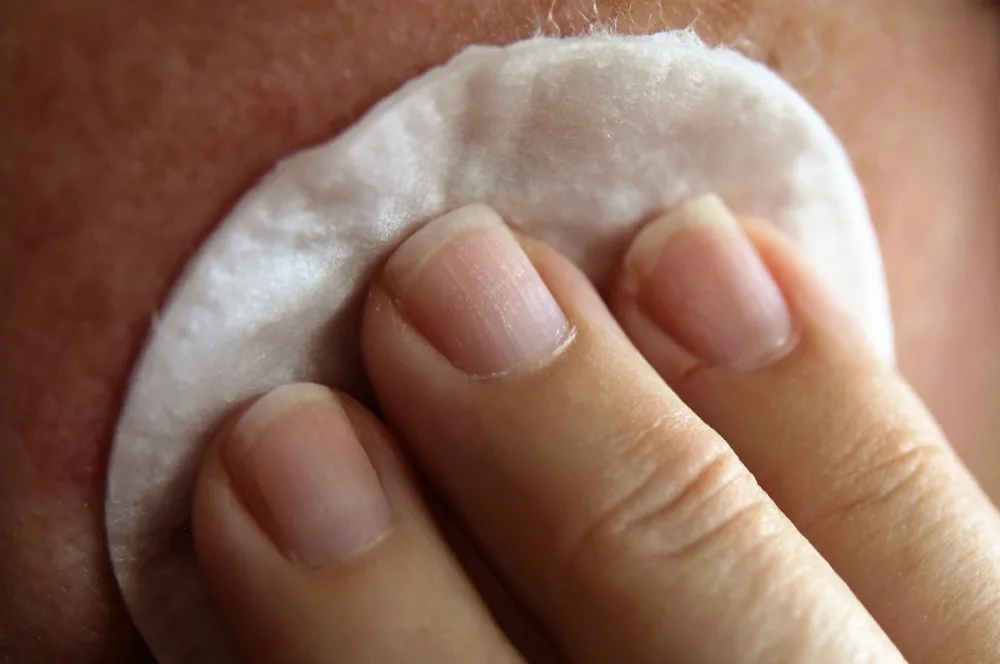
Lay the flat folded sheet over your eye area or cheek. Gently press with your entire palm for 5 seconds without moving. The body warmth and micellar fluid soften foundation and eye shadow, breaking down cosmetic binders before any movement occurs.
Step 3: Single-Direction Gliding
Glide the sheet softly from the center of the face outward in one smooth, sweeping motion. Never scrub back and forth.
Step 4: Turn to a Fresh Quadrant
Flip the fold over to a clean, unused surface for the forehead, another for the nose and chin, and another for the neck. Using a fresh surface ensures you never redeposit dirt across clean facial zones.
Signs to Stop and When to See a Doctor
While high-grade Japanese micellar sheets are formulated for daily gentleness, misuse or individual ingredient sensitivities can occur:
Stinging Around the Eyelids: If wiping causes eye-area burning, switch to a dedicated biphasic eye-makeup remover for dense mascaras.
Redness Along Cheekbones: Chronic redness indicates excessive physical hand pressure; let the sheet's liquid cushion do the work.
Surface Dryness: If skin feels tight 10 minutes after wiping, mist your face with a hydrating toner or press on a drop of milky emulsion to reinforce hydration.
[!WARNING]
If you experience severe contact dermatitis, facial hives, acute swelling, or persistent chemical irritation, wash your face gently with lukewarm water, discontinue sheet usage, and consult a board-certified dermatologist. For daytime outdoor exposure, always pair evening cleanliness with broad-spectrum daily sunscreen defense[3].
FAQ
Q1. Do I need to wash my face with water after using Japanese cleansing sheets?
A. No, Japanese micellar sheets are formulated as leave-on lotion bridges.(Details)
Most Japanese micellar cleansing sheets are formulated with skin-conditioning toners (keshosui) and mild non-ionic surfactants that require no rinsing. They leave skin clean and lightly hydrated until you take your evening shower or bath.
Q2. Are micellar sheets safe for sensitive, rosacea-prone skin?
A. Yes, provided you choose alcohol-free formulas and avoid rubbing.(Details)
Sensitive skin types should select fragrance-free, alcohol-free Japanese sheets designed for delicate barriers. Use the flat press-and-melt method rather than wiping forcefully to prevent physical fiber irritation.
Q3. Can micellar sheets remove waterproof Japanese mascara?
A. Standard micellar sheets struggle with stubborn waterproof mascara; use an oil-infused type.(Details)
Water-based micellar sheets easily dissolve foundation, blush, and regular mascara. However, ultra-resilient Japanese waterproof mascaras require a specialized biphase oil-in-sheet formula or a dedicated point-makeup remover wand.
Q4. Will using cleansing sheets daily cause premature wrinkles?
A. Only if you scrub aggressively with dry, under-saturated wipes.(Details)
Premature wrinkling from wipes is caused entirely by mechanical friction from rough rubbing. Japanese sheets are drenched in fluid to glide friction-free, protecting skin elasticity when used with soft, single-direction sweeping motions.
Q5. How do Japanese "lotion-infused" sheets differ from Western makeup wipes?
A. Japanese sheets function as liquid toners, avoiding harsh foaming detergents.(Details)
Traditional Western wipes often use drying surfactant detergents designed to be rinsed off, leaving skin tight if unwashed. Japanese sheets are formulated like bottled hydrating lotions (keshosui), prioritizing barrier suppleness and post-cleansing comfort.
Summary and Key Takeaways
Japanese micellar cleansing sheets offer a smart, civilized bridge between your busy workday and nighttime relaxation:
The Post-Commute Reset: Remove oxidized daytime sebum, pollution, and foundation immediately upon arriving home to protect pore health.
Superior Sheet Engineering: Japanese sheets combine thick, plush cotton with rich micellar lotion cushions that glide without friction.
The Four-Fold Origami Technique: Fold sheets into quarters to access eight fresh, clean surfaces, pressing gently rather than scrubbing back and forth.
Convenient Barrier Defense: Keeps the skin clean, calm, and hydrated until your full evening skincare ritual.
By adopting this mindful Japanese habit, you give your skin immediate relief from urban environmental stress, preserving a calm, radiant, and healthy complexion every single evening.
Disclaimer: This article is for general information and education about Japanese cosmetics and their labels. It is not a substitute for professional medical advice, diagnosis, or treatment. Skincare results vary from person to person. Product formulas, availability, prices, and regulations change, and products sold in Japan can differ from versions sold elsewhere, so always check the current label. Do a patch test before introducing a new product, and consult a doctor or dermatologist if you have a skin condition or specific concerns.