Japanese Nose Pore Strips vs Gentle Clay and Enzyme Masks
CleansingBy Seibun Lab Editorial Team
title: Japanese Nose Pore Strips vs Gentle Clay and Enzyme Masks
slug: japanese-nose-pore-strips-vs-gentle-clay-mask
category: cleansing
published_at: '2026-11-27'
updated_at: '2026-11-27'
meta_description: Discover why Japanese skincare shifted from adhesive pore strips to gentle clay and enzyme masks. Protect delicate follicles from mechanical damage.
keywords:
japanese nose pore strips vs gentle clay mask
pore pack damage strawberry nose
okinawa kucha clay mask pore care
enzyme powder pore cleansing vs strips
japanese pore care routine gentle
author: Seibun Lab Editorial Team
Japanese Nose Pore Strips vs Gentle Clay and Enzyme Masks
In the late 1990s and early 2000s, adhesive nose pore strips (pōa pakku) originating in Japan became a worldwide sensation. The visceral satisfaction of pulling away a hardened strip to reveal dozens of extracted sebum plugs captivated skincare consumers across the globe.
Fast-forward two decades, and the consensus within Japanese dermatological and aesthetic circles has undergone a profound shift. While the instant gratification was undeniable, long-term observation revealed troubling outcomes: enlarged follicular openings, broken capillaries, chronic redness, and rebound congestion.
Supporting natural barrier resilience and moisture retention around the delicate nasal contour requires avoiding severe physical detachment forces.[1] Here is the biomechanical evidence against adhesive pore strips, why modern Japanese skincare transitioned to gentle clays and enzymes, and how to decongest stubborn pores safely.
The Biomechanical Trauma of Adhesive Pore Strips
Adhesive pore strips utilize synthetic polymers (such as polyquaternium derivatives) that adhere firmly to wet nasal skin. As the water evaporates, the polymer hardens into a rigid, plastic-like cast.
When peeled away, the strip exerts tremendous tensile force across the skin surface. While it does extract some sebum plugs, the indiscriminate adhesive creates substantial collateral tissue damage:
1. Epidermal Stripping (Corneocyte Avulsion)
The adhesive cannot differentiate between dead sebum plugs (kakusen) and vital, healthy corneocytes that form the protective stratum corneum. Tearing the strip off rips away upper cellular layers, causing immediate barrier disruption and elevating trans-epidermal water loss (TEWL).
2. Pore Margin Stretching (Crater Formation)
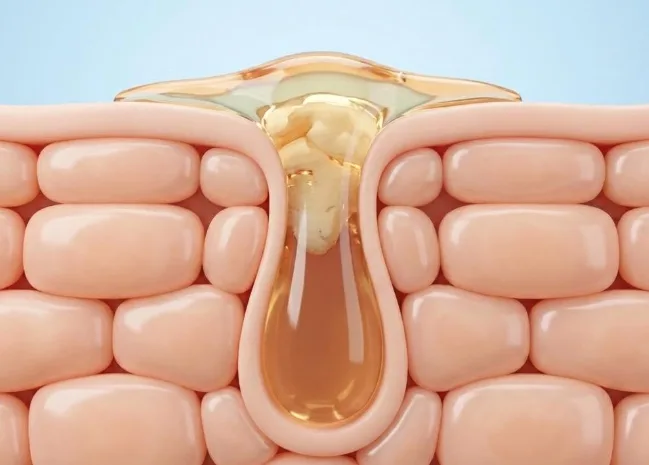
Pore openings are ringed with delicate collagen and elastic fibers that maintain structural tone. When an adhesive strip yanks hardened plugs out by brute force, it mechanically stretches the follicular rim. Repeated over months or years, this physical traction slackens pore margins, leaving pores visibly wider and crater-like (suribachi-jo keana).
3. Capillary Damage and Telangiectasia
The skin covering the nasal bridge and nostrils is thin and densely vascularized. The aggressive pulling motion frequently ruptures fragile micro-capillaries, leading to persistent redness (sekiryū) and visible broken spider veins that require medical laser intervention to reduce.
4. The Rebound Congestion Cycle
When the skin barrier is stripped, the body mounts an acute defensive response: inflammation triggers hyperkeratinization and compensatory sebum production. Within three to five days, new oxidized keratin plugs reform—often larger and more dense than before.
The Modern Japanese Alternative: Gentle Clays and Enzyme Hydrolysis
Recognizing the harm of adhesive strips, Japanese cosmetic chemists pivoted toward non-traumatic biochemical and ionic purification. Today, J-beauty pore care is founded on two core mechanisms:
1. Natural Mineral Clays (Negative Charge Adsorption)
Japanese formulations utilize indigenous, ultra-purified mineral clays:
Okinawa Marine Silt (Kucha): Ancient sea-floor mud ground into microscopic particles measuring under 5 microns. Because it carries a strong negative ionic charge, it naturally attracts positively charged oxidized sebum, heavy metals, and environmental impurities without requiring mechanical scrubbing.
Tanagura Clay: Sourced from mineral-rich prehistoric seabeds in Fukushima, containing dozens of trace minerals that condition the skin while lifting excess oil.
Kaolin & Bentonite: Provide a soft, velvety paste that absorbs lipid secretions without stripping foundational barrier moisture.
2. Enzymatic Hydrolysis (Protease & Lipase)
Because biophysical research proves that pore plugs consist of 70% keratin protein and only 30% sebum, surfactants and oils alone cannot break them down. Water-activated Japanese enzyme powders deploy:
Protease: Gently cleaves peptide bonds in the dead cellular matrix binding the plug together.
Lipase: Dissolves fatty acid esters, loosening the plug so it floats free during a gentle rinse.
The 3-Step Japanese Gentle Pore Protocol
Rather than ripping out plugs in a single violent motion, Japanese dermatologists recommend cultivating gradual, sustainable pore clarity through a three-step weekly ritual:
1. Soften Keratin with a Warm Towel (Mushi Taoru)
Before applying cleansing agents, hold a warm, damp cotton towel over your face for 60 to 90 seconds. The gentle warmth and steam soften rigid stratum corneum keratin and liquefy thick sebum, opening access to follicular canals without physical pinching.
2. Apply Clay Mask or Whipped Enzyme Foam
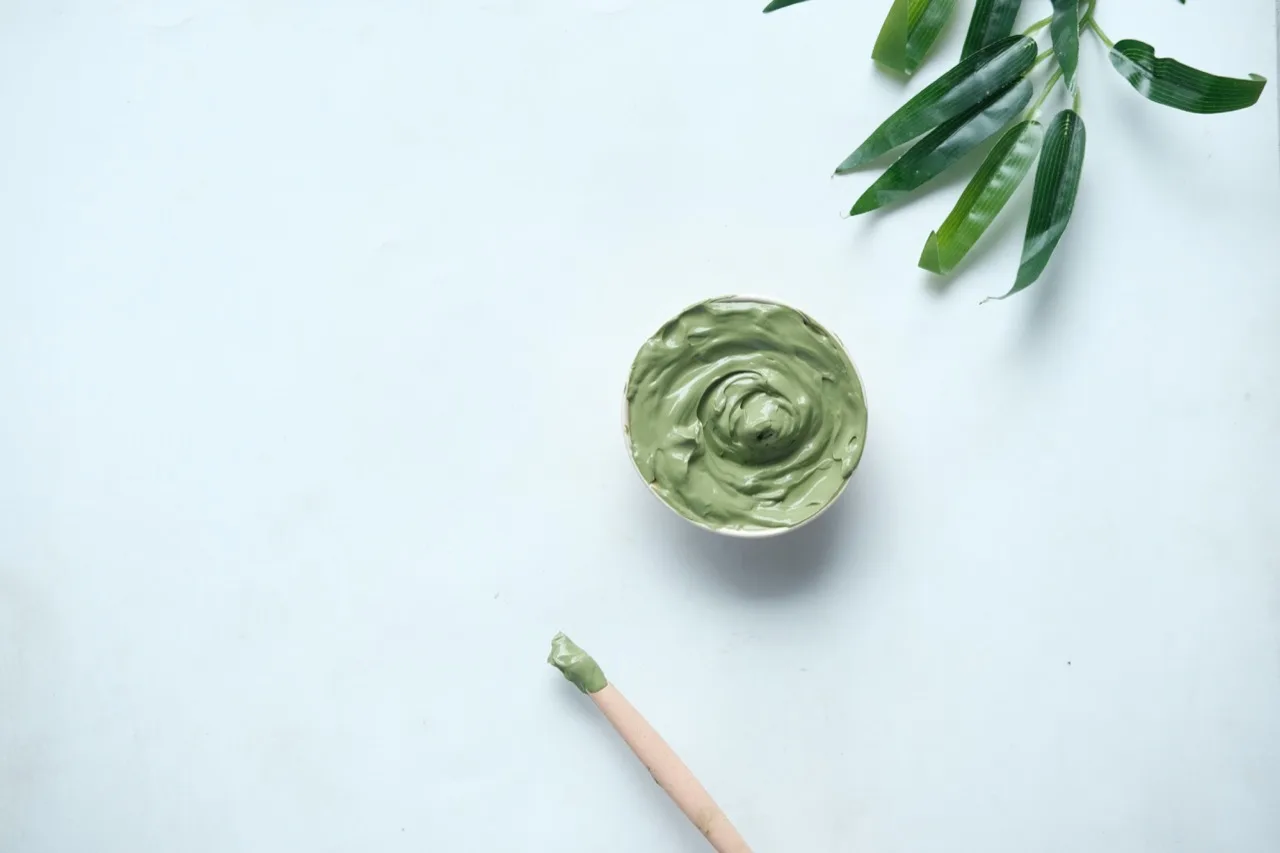
If using a mineral clay mask, spread a uniform layer over your T-zone. Leave on for 5 to 7 minutes; rinse thoroughly before the clay completely hardens or cracks.
If using an enzyme powder wash, whip into a dense cloud of micro-bubbles using a foaming net. Roll the lather over the nose for 20 to 30 seconds without letting fingertips touch skin.
3. Immediate Pore Conditioning and Moisture Seal
Rinse completely with lukewarm water (32°C). While the skin is damp, immediately apply a pore-conscious conditioning lotion (keshosui) enriched with soothing botanical humectants or glycylglycine—an amino acid peptide widely utilized in Japanese dermatology to counteract sebum-induced pore wall thickening. Finish with a lightweight milky emulsion (nyueki) to lock in moisture.
Signs to Stop and When to See a Doctor
Transitioning away from harsh strips allows the skin barrier to normalize, but active inflammation requires cautious care.
Be watchful for these warning signs:
Lingering stinging or throbbing following any mask application.
Red, inflamed papules or pustules clustered around the nasal crevices.
Persistent broken capillaries that do not improve after several weeks of gentle care.
Discontinue use immediately and consult a medical professional if adverse contact dermatitis or mechanical pore damage develops.[2] If your nasal skin feels raw or sensitized, cease all clay masks and exfoliants, apply high-purity white petrolatum, and consult a board-certified dermatologist.
FAQ
Q1. Are nose pore strips ever safe to use occasionally?
A. Most dermatologists advise against them entirely due to mechanical trauma risks.(Details)
Even single applications can strip superficial corneocytes and aggravate fragile facial capillaries. The short-lived visual payoff is simply not worth the cumulative risk of stretched pore rims and long-lasting vascular redness. Gentle ionic clay masks and daily cleansing oils achieve superior, long-term pore cleanliness safely.
Q2. How often should I use a Japanese gentle clay mask?
A. Once or twice weekly for oily zones, and once every two weeks for dry or sensitive skin.(Details)
Because quality mineral clays like Okinawa Kucha adsorb oils efficiently, using them too frequently can deplete necessary intercellular lipids. Limiting application to once or twice weekly ensures stubborn sebum is cleared while preserving natural moisture balance.
Q3. Can clay masks change pore size indefinitely?
A. No cosmetic product can physically close pore openings, as they are essential skin structures.(Details)
Pores are biological channels necessary for sebum secretion and thermoregulation. Their diameter is determined largely by genetics, age, and dermal collagen support. However, keeping pores free from oxidized dark sebum and supporting surrounding moisture makes them appear noticeably tighter, cleaner, and refined.
Q4. What is the difference between blackheads and sebaceous filaments?
A. Blackheads are oxidized plugs, while sebaceous filaments are normal oil-flow structures.(Details)
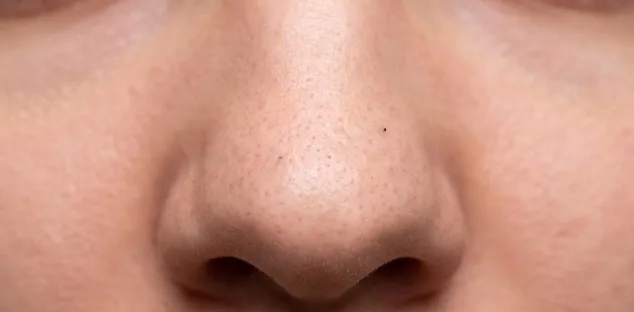
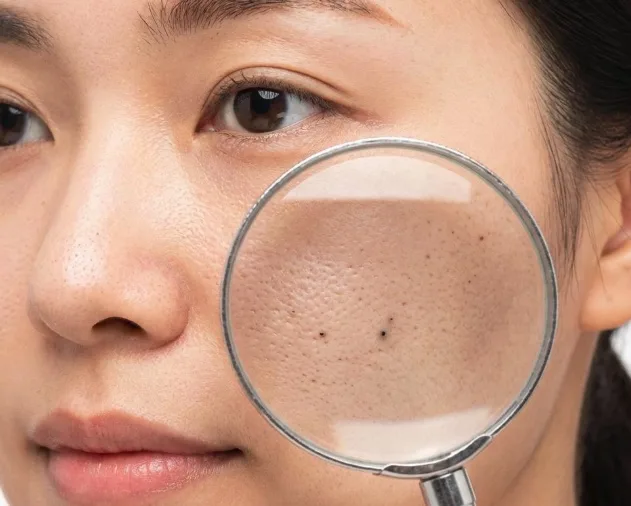
True blackheads (open comedones) are solitary, hardened plugs composed of dark oxidized keratin and dead cells. Sebaceous filaments are tiny, uniform, greyish-yellow pinpoints lining the nose that naturally guide sebum to the surface. Attempting to rip out normal sebaceous filaments with adhesive strips damages healthy tissue; gentle clay washes keep them soft and inconspicuous.
Q5. Why do Japanese dermatologists recommend glycylglycine for pore care?
A. Glycylglycine suppresses cellular signaling that causes crater-like pore expansion.(Details)
Research pioneered by Japanese cosmetic scientists demonstrated that unsaturated fatty acids in sebum trigger abnormal calcium influx in follicular cells, causing epidermal thickening around the pore rim. Glycylglycine acts as a natural peptide peptide buffer, calming this cellular signal and helping restore smooth pore contours.
Summary and Key Takeaways
The evolution of Japanese pore care highlights a crucial principle of modern skincare: patience and biology always surpass aggressive force:
Harness Ionic Adsorption: Okinawa Kucha and mineral clays lift oxidized surface sebum naturally without mechanical drag.
Enzyme Precision: Protease and lipase dissolve dead keratin and sebum biochemically within a protective foam cushion.
Hydrate Promptly: Follow clay cleansing immediately with soothing lotions and conditioning emulsions to safeguard the skin barrier.
Daily Photoprotection: Shield refined nasal skin every morning with broad-spectrum daily sunscreen defense.[3]
By shifting from abrasive stripping to mindful mineral conditioning, you protect the long-term elasticity of your pores while achieving a smooth, calm, and naturally radiant complexion.
Disclaimer: This article is for general information and education about Japanese cosmetics and their labels. It is not a substitute for professional medical advice, diagnosis, or treatment. Skincare results vary from person to person. Product formulas, availability, prices, and regulations change, and products sold in Japan can differ from versions sold elsewhere, so always check the current label. Do a patch test before introducing a new product, and consult a doctor or dermatologist if you have a skin condition or specific concerns.