Japanese Skincare Philosophy: Why Prevention Comes First
How Japan WorksBy Miho Tanaka
In many global beauty markets, skincare routines operate as reactionary damage control. Consumers frequently wait until fine lines, stubborn sun spots, or rough flaking appear before turning to high-strength chemical peels, abrasive scrubs, or potent exfoliants to force rapid visible turnover.
In Japanese beauty (J-Beauty), the mindset is fundamentally inverted. Skincare is practiced as an art of daily preservation and gentle maintenance known as yobou biyou (preventive beauty). By shielding the delicate stratum corneum from external stressors before damage takes hold, Japanese formulations prioritize long-term skin health over temporary overnight fixes.
Quick answer: The Japanese skincare philosophy centers on yobou biyou (preventive beauty)—an approach prioritizing daily barrier defense, gentle friction-free cleansing, and year-round sun protection over aggressive damage correction. Rather than waiting for irritation or premature aging to appear before applying harsh corrective treatments, J-Beauty focuses on consistent, gentle habits that protect natural barrier lipids and maintain skin homeostasis over decades.
What Is Preventive Beauty (Yobou Biyou)?
At its core, yobou biyou means nurturing the skin so thoroughly that chronic dryness, premature dullness, and mechanical barrier damage are averted before they surface.
In traditional Japanese skincare education, healthy skin is likened to delicate Japanese paper (washi). Just as fine paper weakens and tears when exposed to friction, harsh scrubbing, and dry air, facial skin loses its protective lipids when subjected to aggressive cleansing or unprotected ultraviolet exposure. The objective of daily care is hadazukuri—carefully conditioning the skin matrix so that its natural protective barrier functions smoothly without external interference.
This preventive ethos is codified into Japanese cosmetic law. The Japanese Pharmaceuticals and Medical Devices Agency (PMDA) notes that: "products contain active ingredients are generally classified as quasi-drugs in Japan"[5]. Under this quasi-drug framework (yakuyou), active ingredients are licensed specifically for their ability to prevent skin roughness, soothe environmental irritation, and suppress melanin accumulation before visible hyperpigmentation forms.
Preventive vs Corrective Skincare: Key Differences
Understanding the contrast between preventive and corrective paradigms clarifies why Japanese products look, feel, and perform differently from Western alternatives.
Scroll horizontally to view full table
Dimension
Japanese Preventive Model
Western Corrective Model
Primary Philosophy
Long-term barrier defense and daily hydration homeostasis
Rapid visible correction of existing discoloration, lines, or texture
Active Ingredient Strategy
Mild, consistent concentrations formulated for gentle daily application
High-potency cycling of concentrated acids, peels, and spot treatments
Sun Protection View
Mandatory 365-day shield against incidental indoor and outdoor UV rays
Frequently viewed as seasonal or tied primarily to direct outdoor sun
Cleansing Method
Cushioned, low-friction cleansing that preserves natural ceramides
Astringent, deep pore-purging washes often creating a squeaky finish
Ultimate Goal
Calm, translucent bare skin resilient against environmental stressors
Rapid resurfacing and accelerated surface cell exfoliation
Where corrective skincare relies on periodic intervention, preventive skincare relies on unrelenting daily consistency. Japanese dermatological formulators emphasize that micro-trauma from harsh scrubbing and sporadic sun exposure accumulates invisibly in the dermal layers long before surface signs become apparent.
The Three Pillars of Japanese Prevention
The preventive framework of J-Beauty rests upon three non-negotiable daily principles:
1. Relentless Photoprotection Every Single Day
In Japan, sunscreen is not viewed as outdoor gear reserved for beach trips or midsummer afternoons; it is practiced as an essential morning habit as fundamental as brushing one's teeth.
The American Academy of Dermatology (AAD) confirms the scientific foundation for this daily preventive habit, warning that: "Your skin is exposed to the sun's harmful UV rays every time you go outside, even on cloudy days and in the winter. So whether you are on vacation or taking a brisk walk in your neighborhood, remember to use sunscreen."[1]
Japanese skincare regimens embody this guidance by concluding every morning routine with a dedicated UV shield. Rohto Hada Labo Tokyo summarizes this progression in its regimen guidelines, instructing users: "Always end with applying a sunscreen lotion to protect the skin from premature aging and help prevent skin cancer."[3]
2. Friction Reduction (Mimasatsu)
Perhaps the most culturally distinct aspect of Japanese beauty is mimasatsu—the conscious avoidance of mechanical friction. Rubbing the face with abrasive washcloths, roughly pulling at towels, or vigorously spreading thick creams stretches delicate collagen fibers and causes micro-inflammation.
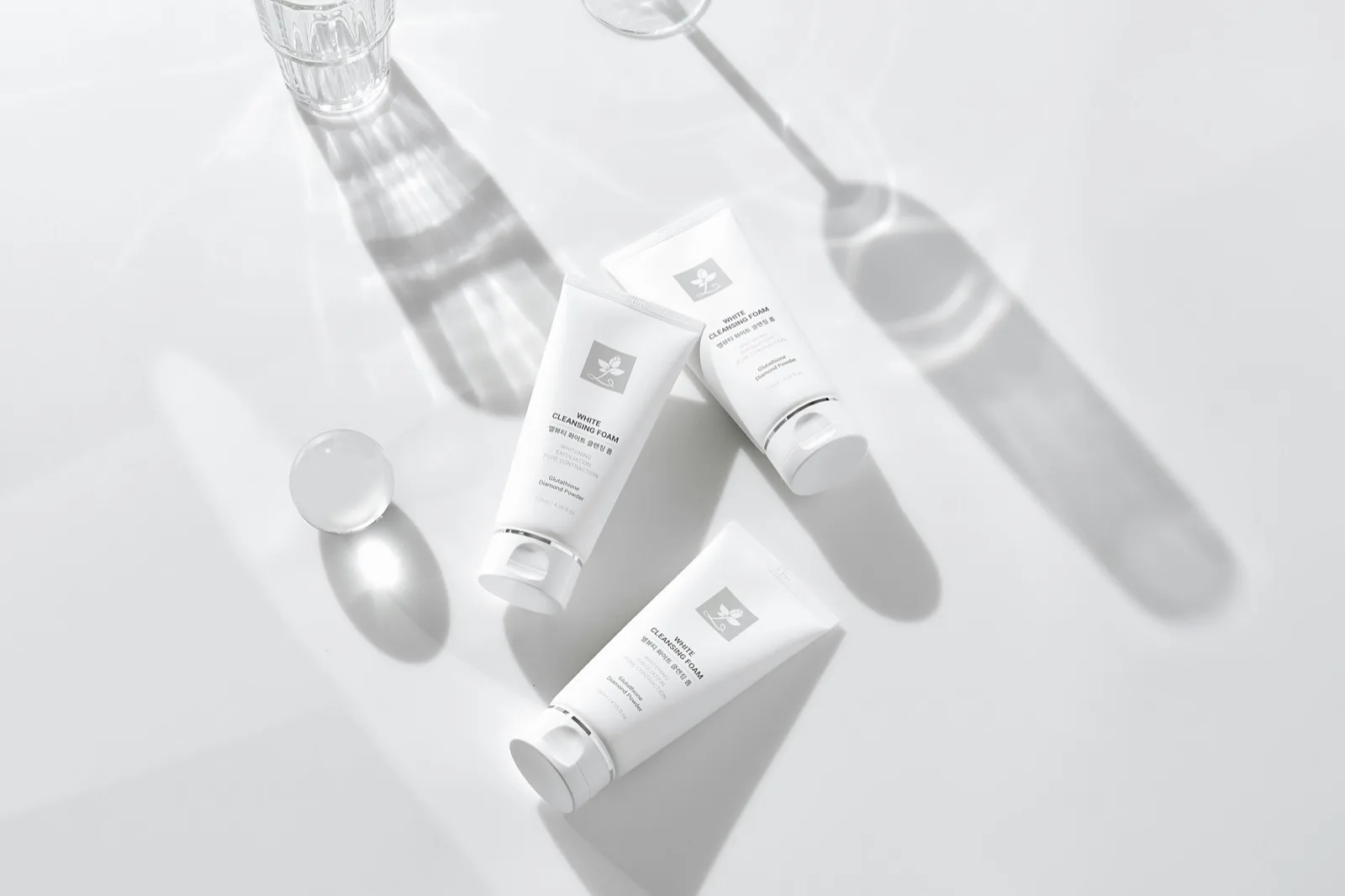
Over time, this mechanical drag triggers post-inflammatory hyperpigmentation and disrupts the fragile intercellular lipid matrix. Japanese application techniques emphasize foaming cleansers into rich airy cushions so fingers glide without directly dragging across the epidermis, and pressing liquid products into the skin using soft, warm palms.
3. Preserving Natural Barrier Lipids
Rather than aggressively stripping away the skin's natural moisture mantle and attempting to replenish it later with heavy balms, Japanese routines protect native lipids from the first step.
Curél (Kao Corporation) summarizes this balance on its facial milk formulation documentation, stating: "Japanese skincare is rooted in two-step cleansing and moisturizing rituals that work gently to prepare skin for hydration, while preserving its natural ceramides."[2]
When the skin barrier requires additional support in cold seasons, layering rich textures seals hydration without suffocating the stratum corneum. As the AAD points out in its dry skin guidance: "Ointments and creams add more moisture to skin and are more effective than lotions."[4]
How to Adopt a Preventive Mindset at Home
Transitioning from a corrective cycle to a preventive routine does not require an overwhelming 10-step shelf. It requires shifting your daily habits toward gentleness and consistent protection.
Adopt Cushion Cleansing: Create a dense lather with your facial wash in your hands before it touches your face. The foam should act as a shock-absorbing buffer between your fingertips and your skin.
Hydrate in Thin Layers: Follow the universal principle of molecular weight when layering formulas, building your routine by "starting with the lightest weight product."[3] Flooding clean skin with a humectant-rich watery lotion provides deep surface hydration before you seal it with a light emulsion. To see how Japanese lotions differ from astringent toners, read our guide on Japanese lotion vs Western toner.
Practice Patting Over Rubbing: Dispense milky emulsions or serums into your palms and gently press them into your cheeks, forehead, and chin. Warm palms encourage absorption without dragging the skin.
Wear Broad-Spectrum UV Protection Year-Round: Apply a generous coin-sized amount of SPF every single morning, regardless of season or cloud cover. To explore how daily steps connect harmoniously, explore our breakdown of Japanese skincare routine steps.
Prioritize Barrier Stability Over Quick Fixes: If your skin feels tight or sensitive, pause exfoliating acids and give your skin barrier time to normalize. For an in-depth look at traditional values, consult our overview of what is J-Beauty.
Signs to Stop and When to See a Doctor
Adopting a preventive routine means listening closely to your skin's biological feedback and avoiding overuse of irritating formulas.
Signs of over-exfoliation and barrier distress: If your skin develops a tight, glass-like plastic shine, stings when applying mild hydrating lotions, or exhibits patchy redness, you may have compromised your protective lipid barrier. Immediately suspend all exfoliating acids and aggressive cleansers.
Signs of excess occlusion: If you notice small white bumps (milia) or unexpected congestion around your jawline, your sealing creams may be overly heavy for your climate or skin type. Switch to a lightweight milky emulsion to maintain barrier balance without suffocating pores.
Medical consultation guidance: If severe stinging, persistent swelling, burning, or contact dermatitis occurs after trying any new skincare product, stop use immediately. Consult a board-certified dermatologist or qualified healthcare provider if irritation fails to subside after several days.
Safe patch testing protocol: When introducing any new Japanese skincare product into your daily ritual, apply a pea-sized amount behind your ear or along your jawline for 48 hours to confirm tolerability.
Summary
Prevention over correction: Japanese skincare (yobou biyou) focuses on fortifying the skin barrier and shielding against environmental damage before issues emerge, rather than aggressively reacting to damage after it occurs.
Three core pillars: Daily year-round broad-spectrum sun defense, low-friction gentle handling (mimasatsu), and preserving natural ceramides form the foundation of lifelong skin health.
Quasi-drug regulation: Japan's formal quasi-drug (yakuyou) regulatory system evaluates active ingredients specifically on their ability to prevent roughness and pigment buildup.
Sustainable daily habits: Consistency, gentle cushion cleansing, and lightweight layer-by-layer hydration deliver greater long-term skin resilience than harsh cyclical treatments.
FAQ
Q1. Does preventive skincare mean I cannot use active ingredients like retinol or vitamin C?
A. No, preventive skincare welcomes active ingredients when formulated at gentle, stable concentrations.(Details)
Japanese formulations frequently incorporate vitamin C, [tranexamic acid](/en/ingredients/tranexamic-acid-in-japanese-skincare), and mild retinoids. The key distinction lies in dosing and delivery: J-Beauty prioritizes moderate, non-irritating concentrations designed for sustainable daily application rather than high-percentage shock treatments that compromise the stratum corneum.
Q2. At what age should someone adopt a Japanese preventive routine?
A. A preventive skincare routine can be adopted at any age, ideally starting in early adulthood.(Details)
Because preventive care focuses on sun defense, non-stripping cleansing, and proper barrier hydration, it benefits teenage, young adult, and [mature skin](/en/concerns/japanese-skincare-routine-for-mature-aging-skin) alike. Establishing daily sunscreen habits and friction-free cleansing early in life minimizes accumulated photo-damage and preserves skin elasticity over time.
Q3. Why is friction considered so harmful in Japanese beauty?
A. Mechanical friction causes micro-inflammation that accelerates barrier degradation and hyperpigmentation.(Details)
The stratum corneum is only a fraction of a millimeter thick. Aggressive rubbing with rough towels, cotton pads, or abrasive scrubs physically disrupts intercellular lipids, triggering low-grade chronic inflammation that can lead to post-inflammatory hyperpigmentation, redness, and accelerated loss of firmness.
Q4. Is wearing sunscreen indoors truly necessary for preventive care?
A. Yes, ultraviolet A (UVA) rays pass through standard window glass and contribute to cumulative photo-aging.(Details)
While UVB rays (which cause visible sunburn) are largely blocked by glass, UVA rays (responsible for deep dermal damage, collagen breakdown, and pigmentation) pass through home and office windows. In the Japanese philosophy, daily morning application of a lightweight, cosmetically elegant sunscreen ensures uninterrupted photoprotection.
Q5. How long does it take to see results from a preventive skincare approach?
A. Initial hydration and comfort improve within days, while structural resilience builds over months.(Details)
Because the skin epidermal renewal cycle takes approximately 28 to 40 days, improved barrier softness and reduced redness typically become apparent within one full skin cycle. The profound benefits of preventive care—such as even skin tone, minimal fine lines, and strong barrier resilience—compound progressively over years of consistent daily care.
Disclaimer: This article is for general information and education about Japanese cosmetics and their labels. It is not a substitute for professional medical advice, diagnosis, or treatment. Skincare results vary from person to person. Product formulas, availability, prices, and regulations change, and products sold in Japan can differ from versions sold elsewhere, so always check the current label. Do a patch test before introducing a new product, and consult a doctor or dermatologist if you have a skin condition or specific concerns.