"I keep seeing J-beauty everywhere, but what does it actually mean?" Rather than a rigid set of rules or a legal category, J-beauty is an overarching approach to skincare rooted in hydration and barrier support. This guide breaks down its core philosophy, how routines are structured, and how to read a Japanese cosmetic label.
Quick answer
In short: One skincare brand describes J-beauty as an "umbrella term" for Japanese skincare and beauty products.[1] We did not find an official definition or a regulated category, and the sources we reviewed describe a style rather than a single method. For Japanese products, the label is the most practical thing to learn first.
- Best for: anyone curious about Japanese skincare, or about to buy a Japanese product
- Key takeaway: sources describe J-beauty as a style, not a rulebook, so check each product's label instead of relying on the term
- What to check on the label: the product category (in Japan, cosmetic or quasi-drug, a Japanese regulatory category separate from ordinary cosmetics), the SPF and PA marks on sunscreens (PA is the Japanese UVA protection grade), and the ingredient list
What is J-beauty? (and what it is not)
Bottom line: One brand's page calls J-beauty an "umbrella term," and we did not find a regulated definition or a fixed method.
One skincare brand describes J-beauty as an "umbrella term" for Japanese skincare and beauty products that has become popular in recent years.[1] That page is owned by the brand, so we use it only to show how the term is used, not as evidence of what any product does.
We did not find an official definition of J-beauty. That matters in practice: we did not find a rule that a product using the term must be made in Japan, and we could not identify an authority that decides what counts. When a label or ad says "J-beauty," regard it as a marketing description and look at the product details instead.
4 ideas the sources we reviewed associate with J-beauty
Bottom line: The two sources we reviewed on the term itself describe J-beauty through four ideas, but these describe a style, not rules.
- An umbrella term. It covers many brands and product types rather than one method.[1]
- A "preserve the skin" mindset. An aesthetician quoted by NewBeauty contrasts Japanese skincare, which assumes skin should be preserved, with the Korean approach.[2] This is an expert's opinion, not a tested finding.
- A routine built around softening and hydrating. The skincare brand cited in item 1 describes a typical Japanese routine as "five or six steps" focused on softening and hydrating.[1]
- Daily sun protection. The brand cited in item 1 ends its routine with sunscreen.[1]
A typical Japanese routine in 6 steps (one brand's version)
Bottom line: One brand lays out six steps, but it is one company's description and not a standard.

Here is the sequence that brand describes:[1]
- Cleanse. The brand describes this step as removing makeup and impurities without stripping away moisture.
- Soften. The brand describes applying a watery product to prepare the skin for the products that follow. The term keshosui (a Japanese hydrating lotion; a watery step often used like a toner or essence water) refers to this kind of step.
- "Strengthen" step. The brand uses this label for a serum applied after cleansing and softening, before other serums or moisturizers. This describes the order the brand uses, not a tested effect or a standard.
- Targeted serums. The brand lists serums chosen for specific concerns.
- Moisturize. The brand layers products from the lightest texture to the heaviest.
- Protect. The brand finishes with a sunscreen that covers UVA and UVB.
The brand's own products appear throughout that page, so read it as a description of a routine, not as a shopping recommendation. For a full breakdown of what each step accomplishes and how morning routines differ from nighttime regimens, see our dedicated guide on Japanese Skincare Routine Steps. If you want practical guidance on product textures and preventing formula pilling, see How to Layer Japanese Skincare Products.
3 things the label tells you
Bottom line: Three label details are worth checking first: the product category, the sun-protection marks, and the ingredient list.
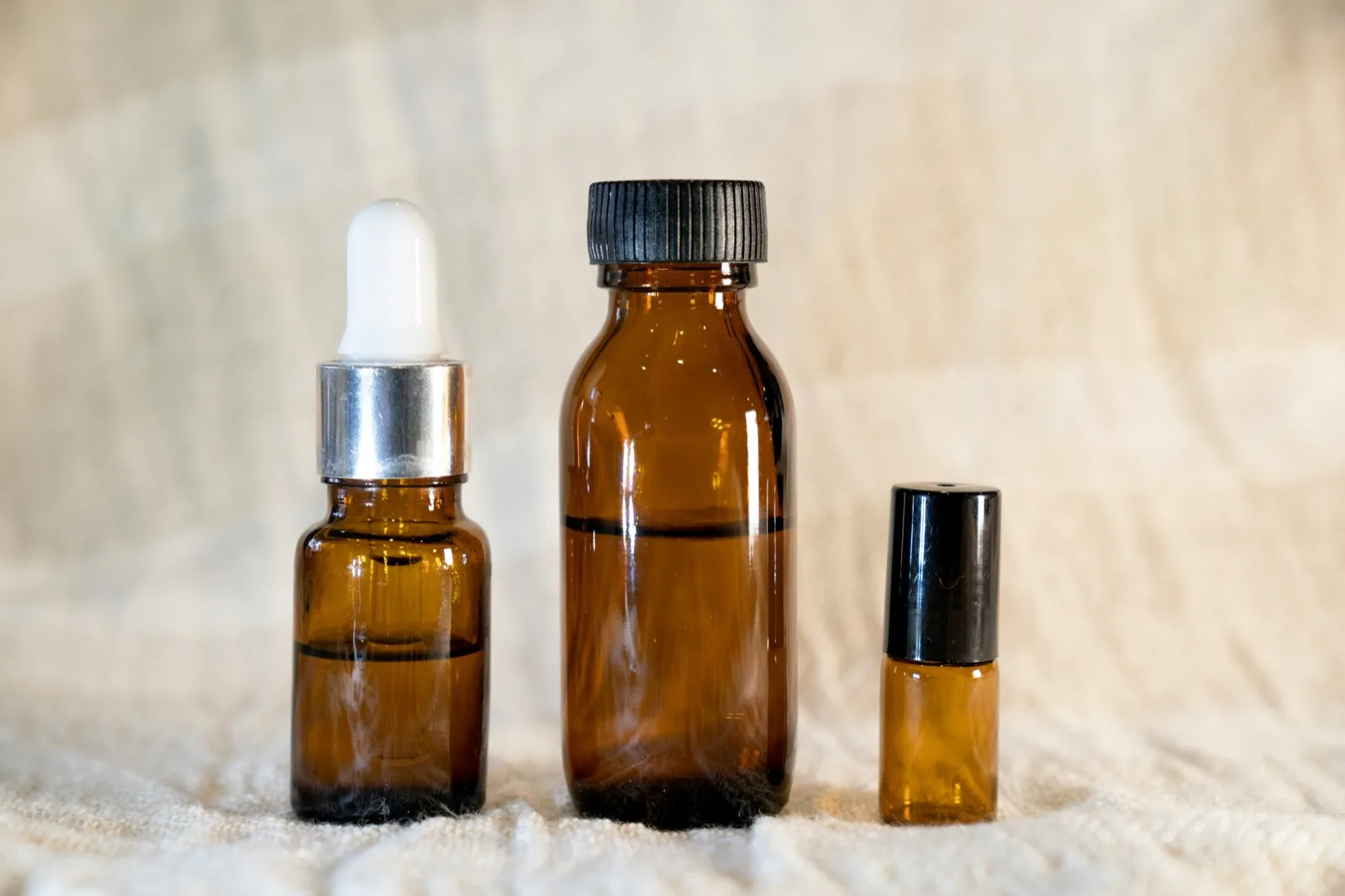
In a drugstore aisle or on an online product page, Japanese packaging can be hard to read, and the marketing words can be less useful than the details on the pack. These three details are easier to compare.
Product category: cosmetic or quasi-drug
In Japan, cosmetics do not need marketing approval but must comply with the Standards for Cosmetics. Products that contain active ingredients are generally classified as quasi-drugs, which do need regulatory approval, according to Japan's Pharmaceuticals and Medical Devices Agency (PMDA), as of November 9, 2026.[3] A quasi-drug (iyakubugaihin) is therefore a Japanese regulatory category that is separate from ordinary cosmetics.
This tells you how a product is regulated in Japan. It does not tell you whether it suits your skin, or how the same product is regulated in your country.
SPF and PA
Japanese sunscreens show SPF and PA (the Japanese UVA protection grade). A 2013 review in the Journal of Society of Cosmetic Chemists of Japan describes both as industry standards set by the Japan Cosmetic Industry Association (JCIA), not national standards.[4] The same review notes that PA++++ labeling was introduced in 2013 to show the highest level of UVA protection at that time.[4] We did not verify the current grades, so check the manufacturer's current product page.
The ingredient list
The full ingredient list on the pack is a useful way to compare two products, because it does not depend on marketing claims. On Japanese packaging it is written in Japanese, so you may need a translation tool, and names may be written differently from the ones you know. Compare the list with the manufacturer's own product page, and note the date you checked.
J-beauty vs. K-beauty: how one published comparison describes them
Bottom line: One published comparison contrasts J-beauty's "preserve" mindset with K-beauty's layering, but these are generalizations and products vary.
NewBeauty (January 2026) quotes two aestheticians comparing the two. Their descriptions, summarized below, are opinions, not test results.[2]
Scroll horizontally to view full table
Scroll horizontally to view full table
| As described by two aestheticians in NewBeauty[2] | J-beauty | K-beauty |
|---|---|---|
| Routine length | Fewer steps | Often many steps |
| Product feel | Lightweight products | Layered hydration |
| Mindset | Preserve the skin | Described as more open to change |
We did not find a regulated or standardized definition for either term, and the aestheticians describe general tendencies, so individual brands may differ. One of the experts suggested borrowing from each approach rather than following one strictly.[2] For a deeper look at how the two styles compare across skin types, exfoliation, and product categories, see our guide to J-Beauty vs. K-Beauty Differences.
How many steps do you really need?
Bottom line: We did not find a required number of steps; the sources we reviewed describe anything from a minimal routine to six steps.
After a long day, a six-step routine can sound like too much. One brand describes five or six steps, while the experts in NewBeauty describe J-beauty routines as minimal.[1][2]
In our reading, the six steps include cleansing, softening and hydrating, and sun protection, and the others are additional layers. If you add new products, introducing them one at a time can make it easier to tell which one bothers your skin.
- For oily or combination skin: A 3-step routine (gentle cleanser, hydrating keshosui, and lightweight sunscreen) is often plenty for daytime.
- For dry or mature skin: Layering a hydrating lotion (keshosui), a milk emulsion (nyuueki), and an occlusive cream helps lock in moisture.
3 common mistakes to avoid
Bottom line: Most mix-ups come from reading a loose term as a rule.
- Reading J-beauty as one rulebook. The sources we reviewed describe a style, not a rulebook.
- Assuming a Japanese category means the same elsewhere. "Quasi-drug" describes how a product is regulated in Japan, not an approval or effect in your country.
- Choosing by the buzzword. "J-beauty" on a product page is a description, not a quality mark. Check the category, the SPF and PA marks, and the ingredient list.
Signs to stop and when to see a doctor
Bottom line: Stop using a product if it bothers your skin, and ask a doctor or dermatologist if the problem continues.
Do a patch test before introducing a new product. If you notice persistent redness, burning, itching, swelling, or blistering, stop using it. Reactions vary from person to person. If a reaction does not settle, or if you have a skin condition or specific concerns, see a doctor or dermatologist. This guide cannot diagnose or manage a skin condition.
FAQ
Q1. What is the difference between J-beauty and K-beauty?
A. One published comparison describes J-beauty as more minimal and K-beauty as more layered, but these are generalizations. NewBeauty's two aestheticians describe J-beauty as fewer steps and lightweight products, and K-beauty as often many steps with layered hydration.[2] Individual products vary. (Details)
One published comparison describes J-beauty as more minimal and K-beauty as more layered, but these are generalizations.** NewBeauty's two aestheticians describe J-beauty as fewer steps and lightweight products, and K-beauty as often many steps with layered hydration.[2] Individual products vary.
Q2. What does "quasi-drug" mean on a Japanese skincare product?
A. It is a Japanese regulatory category that is separate from ordinary cosmetics. According to PMDA, products with active ingredients are generally classified as quasi-drugs and need regulatory approval in Japan, as of November 9, 2026.[3] It does not tell you how the product is regulated elsewhere. (Details)
It is a Japanese regulatory category that is separate from ordinary cosmetics.** According to PMDA, products with active ingredients are generally classified as quasi-drugs and need regulatory approval in Japan, as of November 9, 2026.[3] It does not tell you how the product is regulated elsewhere.
Q3. What do SPF and PA mean on Japanese sunscreen?
A. They are the two sun-protection marks used on Japanese sunscreens, and a 2013 review describes both as industry standards set by JCIA.[4] That review describes PA++++ as the highest UVA protection level at that time; we did not verify the current grades, so check the manufacturer's current page. (Details)
They are the two sun-protection marks used on Japanese sunscreens, and a 2013 review describes both as industry standards set by JCIA.**[4] That review describes PA++++ as the highest UVA protection level at that time; we did not verify the current grades, so check the manufacturer's current page.
Q4. How many steps does a Japanese skincare routine really need?
A. We did not find a required number. One brand describes five or six steps, and two aestheticians describe minimal routines.[1][2] The six-step example includes cleansing, hydrating, and sun protection.[1] (Details)
We did not find a required number.** One brand describes five or six steps, and two aestheticians describe minimal routines.[1][2] The six-step example includes cleansing, hydrating, and sun protection.[1]
Q5. Do I need Japanese products to follow a J-beauty routine?
A. We did not find a rule that requires Japanese products; the sources we reviewed describe J-beauty as a style, not a certification. It describes a style of routine and a group of products.[1] We did not find an official definition, so whatever you use, check the label. (Details)
We did not find a rule that requires Japanese products; the sources we reviewed describe J-beauty as a style, not a certification.** It describes a style of routine and a group of products.[1] We did not find an official definition, so whatever you use, check the label.
Summary
One brand calls J-beauty an "umbrella term," we did not find a regulated definition, and the label is the most practical thing to check.
- The term: it describes a style of Japanese skincare, and we did not find a regulated definition.
- The routine: one brand describes five or six steps; two aestheticians describe minimal routines.
- The label: check the product category, the SPF and PA marks, and the ingredient list.
- The limits: sources here are descriptions and opinions, not test results.
Results vary from person to person.
References
- Shiseido Co., Ltd., "What is J-Beauty? Japanese skincare routine & products", https://www.shiseido.com/us/en/skincare-blog/J-Beauty.html, accessed 2026-11-09. (Manufacturer's page; used only to show how the term is described.)
- Jessica Fields, "K-Beauty vs. J-Beauty: Two Approaches to Great Skin, Explained", NewBeauty, January 20, 2026, https://www.newbeauty.com/k-beauty-vs-j-beauty-explained/, accessed 2026-11-09.
- Pharmaceuticals and Medical Devices Agency (PMDA, Japan), "Frequently Asked Questions (FAQ)", Q12-2, https://www.pmda.go.jp/english/about-pmda/0004.html, accessed 2026-11-09.
- Makoto Mizuno, "Current Conditions of Sun Protection Test Methods for Sunscreen Products", Journal of Society of Cosmetic Chemists of Japan, 47(4), 271–277, 2013, https://www.jstage.jst.go.jp/article/sccj/47/4/47_271/_article/-char/en, accessed 2026-11-09.
Disclaimer: This article is for general information and education about Japanese cosmetics and their labels. It is not a substitute for professional medical advice, diagnosis, or treatment. Skincare results vary from person to person. Product formulas, availability, prices, and regulations change, and products sold in Japan can differ from versions sold elsewhere, so always check the current label. Do a patch test before introducing a new product, and consult a doctor or dermatologist if you have a skin condition or specific concerns.