"In what order should I apply these Japanese skincare bottles?" Holding multiple newly purchased products can feel intimidating, but more layers do not automatically mean better results. This guide explains how two Japanese brands describe layering from thinnest to thickest consistency, what each formula does, and how those steps compare with American Academy of Dermatology (AAD) guidance. If you are still deciding which products you need in your daily lineup, see our companion guide on Japanese Skincare Routine Steps or start with our foundational overview on What Is J-Beauty?.
Quick answer
In short: Two Japanese skincare brand guides we reviewed, from Shiseido and Rohto's Hada Labo Tokyo, describe layering products in order of consistency, starting from the lightest, watery formula and finishing with heavier creams and daytime sunscreen.[1][2] Two American Academy of Dermatology (AAD) pages, covering face washing and sunscreen, outline a simpler core: wash gently, apply moisturizer if skin is dry or itchy, and wear sunscreen outdoors.[3][4] Extra steps like softeners and serums are additions within multi-step routines.
- Best for: anyone organizing Japanese skincare products into a clear morning or evening application order
- Key takeaway: the general layering rule moves from watery hydration to richer seals, with sunscreen as the final daytime step
- What to check on the label: product category names such as keshosui (a Japanese hydrating lotion; a watery step often used like a toner or essence water) and nyuueki (Japanese emulsion or milk lotion)
What layering means in Japanese skincare (and the core texture rule)
Bottom line: Two Japanese brand guides we reviewed describe layering as applying products in order of texture, starting with the thinnest watery liquid and ending with richer moisturizers and sunscreen.
In Japanese skincare routines, layering refers to applying lightweight hydrating formulas first so moisture reaches the outer layer of the skin (stratum corneum), followed by slightly denser fluids, and finishing with an occlusive cream or emulsion to trap moisture. Shiseido states that products in a Japanese routine should always be layered from the lightest texture to the heaviest.[1] Similarly, Rohto's Hada Labo Tokyo page describes layering as applying products all over the face beginning with the lightest weight product, building upon each layer with an all-over face cream, and ending with sunscreen.[2]
This sequence follows a physical logic. Water-based liquids spread easily over clean skin, while thicker creams and oils contain emollients and occlusive ingredients designed to seal the surface. If a heavy oil or dense cream is applied first, it creates a lipid coating that makes it harder for a watery lotion to wet the skin evenly.
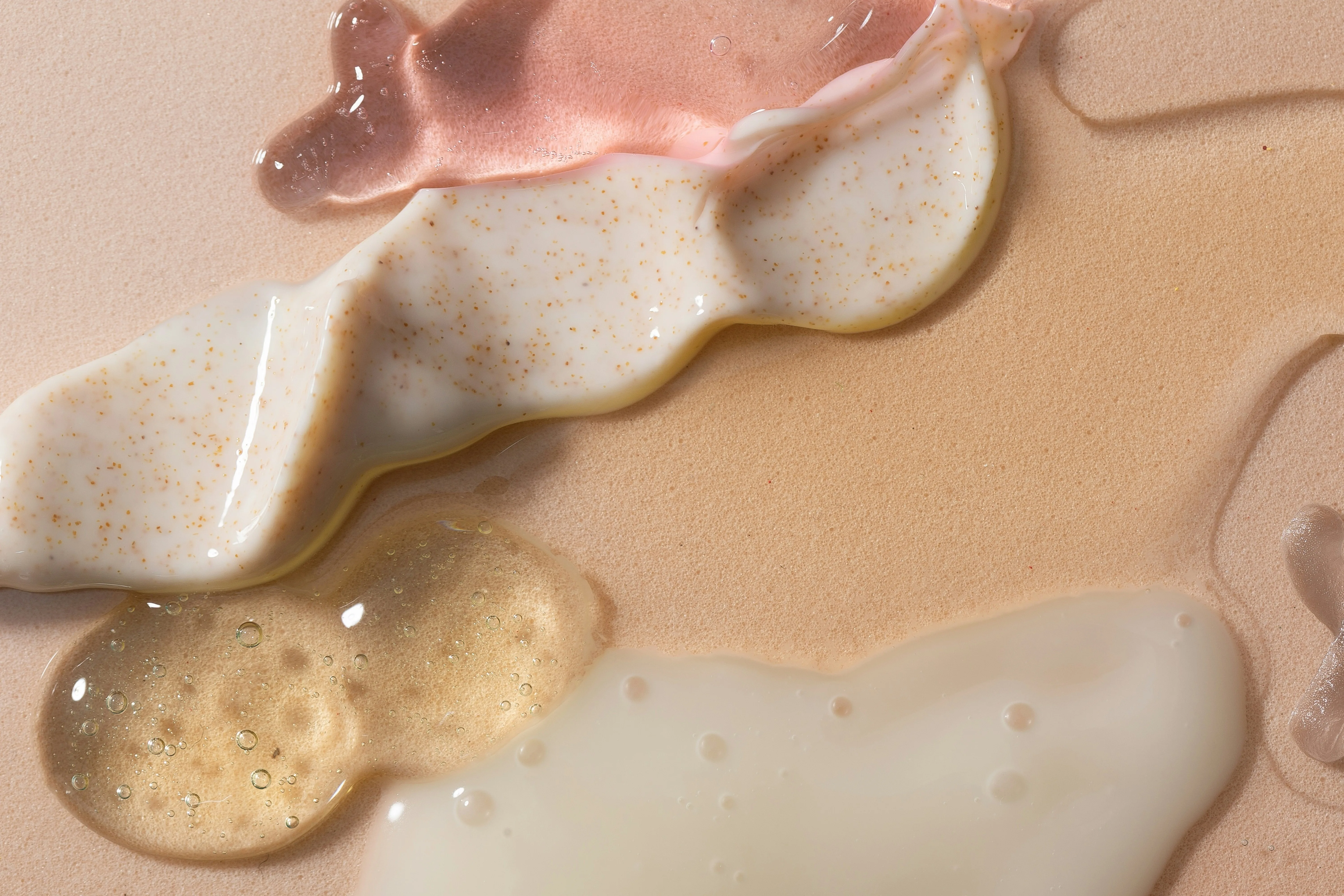
The 5 standard layering steps from thinnest to thickest
Bottom line: The five general steps described by the sources we reviewed move from cleansing, to watery lotion, targeted serums, moisturizing emulsion or cream, and daytime sunscreen.
The table summarizes the typical application sequence based on the two manufacturer pages we examined, with category names commonly seen on Japanese product packaging.
Scroll horizontally to view full table
Scroll horizontally to view full table
| Step | Product type | Texture | Role described by manufacturers |
|---|---|---|---|
| 1. Cleanse | Makeup remover and facial wash | Oil, balm, or foam | Dissolves surface residue and washes away dirt without harsh stripping[1] |
| 2. Hydrate | Keshosui (hydrating lotion) | Watery liquid | Delivers hydration to prepare the surface for subsequent products[1][2] |
| 3. Target | Essence or serum | Fluid or light gel | Provides concentrated care for specific concerns such as dullness or fine lines[1] |
| 4. Seal | Nyuueki (emulsion) or cream | Milk, emulsion, or rich cream | Balances moisture and seals hydration into the skin surface[1][2] |
| 5. Protect | Sunscreen (daytime only) | Milk, gel, or essence | Protects against ultraviolet radiation (UVA and UVB)[1][4] |
Step 1: Cleanse the skin
Shiseido's routine begins with cleansing to wash away makeup, dirt, and impurities from the skin surface while seeking to preserve moisture.[1] For makeup wearers, the brand describes dissolving makeup residue first before cleansing.[1] The AAD face-washing page advises using a gentle, non-abrasive cleanser that does not contain alcohol, applying it with fingertips rather than washcloths, and rinsing with lukewarm water.[3]
Step 2: Hydrate with keshosui (watery lotion)
After cleansing, the first leave-on step in many Japanese routines is a watery product labeled keshosui (a Japanese hydrating lotion; a watery step often used like a toner or essence water). Shiseido describes softeners as the initial moisturizing step meant to prepare the skin for products that follow.[1] Hada Labo Tokyo emphasizes applying its watery lotion all over the face directly after cleansing.[2] In English, the word "lotion" usually refers to a creamy formula, so check the product description to confirm whether it is a watery fluid.
Step 3: Target with essence or serum
Once the watery lotion has wetted the skin surface, targeted serums are layered next. Shiseido describes an initial strengthening step followed by targeted serums formulated to address specific concerns, such as the appearance of fine lines or uneven tone.[1] If you choose to use more than one serum, applying the thinnest fluid before a thicker gel follows the general consistency rule.[1][2] The two AAD pages we reviewed do not discuss serums, indicating that serums are optional additions rather than universal requirements.[3][4]

Step 4: Seal moisture with nyuueki (emulsion) or cream
To help keep moisture in the skin, a moisturizing emulsion or cream is applied after lighter serums. On Japanese labels, you will frequently see nyuueki (Japanese emulsion or milk lotion), which has a fluid, milky consistency lighter than a conventional jar cream. Shiseido notes that moisturizers and creams belong among the last steps of a routine to seal in hydration.[1] If your skin feels adequately moisturized with an emulsion alone, a heavier cream may not be necessary.
Step 5: Protect with sunscreen (daytime only)
Sunscreen is the final step in any morning skincare sequence. Shiseido places sunscreen as the last step to protect against UVA and UVB exposure.[1] The AAD recommends broad-spectrum sunscreen with SPF 30 or higher and water resistance, applied daily on skin not covered by clothing if outdoors, and reapplied approximately every two hours when outside.[4] Mizuno's 2013 review explains that Japanese sunscreens carry SPF (sun protection factor) for UVB and PA (the Japanese UVA protection grade) marks established by the Japan Cosmetic Industry Association (JCIA), with PA++++ representing the highest UVA level introduced in 2013.[5]
Morning vs. evening: how to adjust your layers
Bottom line: Hada Labo Tokyo suggests a lighter layering routine in the morning focused on hydration and sunscreen, and a more intensive routine at night.
Your skincare layering does not need to look identical twice a day. Hada Labo Tokyo notes that daytime layering can be lighter—such as cleanser, hydrator, and sunscreen—while an evening routine can incorporate richer creams to care for skin while sleeping.[2]
Below is our own editorial example of how to adjust layers for day and night, based on the manufacturers' texture sequence and the AAD's washing and sunscreen guidance, not a recommendation from either source:[1][2][3][4]
Morning routine:
- Wash gently with water or a mild cleanser.[3]
- Apply keshosui (watery lotion) by gently patting it across the face.[1][2]
- Apply a lightweight emulsion (nyuueki) if your skin feels dry.[1][3]
- Finish with broad-spectrum sunscreen on all exposed skin before heading outdoors.[4]
Evening routine:
- Remove makeup if worn, then cleanse with a gentle cleanser and lukewarm water.[1][3]
- Apply keshosui (watery lotion) to clean skin.[1][2]
- Add a targeted serum if you use one.[1]
- Apply an emulsion or cream to seal moisture overnight.[1][2]
4 common layering mistakes to avoid (and how to prevent pilling)
Bottom line: Rushing product application, using conflicting textures, rubbing vigorously, and applying too many active formulas at once can cause pilling or skin irritation.
When layering multiple skincare formulas, four common missteps can compromise comfort and texture:
- Rushing between layers: Applying a thick cream or silicone-based product over soaking-wet skin can cause formulas to slide rather than settle. Giving watery products a moment to feel absorbed before applying an emulsion helps prevent sliding.
- Heavy rubbing and tugging: Vigorously rubbing delicate facial skin can cause friction and redness. Japanese brand pages generally suggest pressing or gently smoothing products onto the skin with palms or clean fingertips rather than tugging.[1][3]
- Product pilling: Pilling occurs when skincare formulas roll into small flakes or balls on the skin surface. This often happens when high-polymer gels, heavy silicones, or physical sunscreen powders are rubbed over incompletely settled layers. To minimize pilling, reduce product amounts, allow each layer to settle, and pat sunscreen into place instead of rubbing.
- Over-layering too many concentrated formulas: Piling multiple strong active formulas together increases the chance of skin sensitivity. Introducing new products one at a time makes it easier to identify which formula is responsible if an adverse reaction occurs.
How Japanese layering steps compare with basic dermatologist guidance
Bottom line: Japanese brand routines feature up to six detailed steps, whereas the AAD guidance we reviewed emphasizes a core three-step baseline: cleanse, moisturize if dry, and protect with sunscreen.
The table contrasts the multi-step structure described by Shiseido with the general skin-care recommendations from the two AAD pages we reviewed. The step labels in the first column are our editorial grouping to highlight how the approaches align.
Scroll horizontally to view full table
Scroll horizontally to view full table
| Step focus | Shiseido 6-step outline[1] | AAD guidance from face-washing and sunscreen pages[3][4] |
|---|---|---|
| Cleansing | Cleanse (dissolve makeup first, then cleanse) | Wash gently twice a day (morning and night) and after sweating |
| Watery hydration | Soften (watery formula applied to prep skin) | Not specified in the pages we reviewed |
| Targeted serums | "Strengthen" serum plus targeted serums | Not specified in the pages we reviewed |
| Moisture seal | Moisturize from lightest texture to heaviest | Apply moisturizer after washing if skin is dry or itchy |
| Sun protection | Protect with sunscreen against UVA and UVB | Broad-spectrum SPF 30 or higher, water-resistant, daily outdoors |
Both frameworks include gentle cleansing, moisturizing, and sun protection. The Japanese method subdivides hydration into watery layers (keshosui), fluid emulsions (nyuueki), and targeted serums. These extra steps can offer customized comfort, but none of the sources we reviewed state that every person requires all five or six steps daily.
Signs to stop and when to see a doctor
Bottom line: Stop using a product if you notice persistent redness, burning, itching, or swelling, and consult a doctor or dermatologist if symptoms continue.
Do a patch test on a small area of skin before introducing any new Japanese cosmetic formula into your routine. A multi-layer routine increases the total number of ingredients coming into contact with your face, raising the potential for allergic contact dermatitis or irritation.
If your skin develops persistent stinging, burning, redness, flaking, swelling, or blistering, stop using the newest product immediately. Simplify your routine to a mild cleanser, a basic moisturizer, and sun protection. If irritation does not settle within several days, or if you have an underlying skin condition or specific concerns, consult a board-certified dermatologist or medical doctor. This guide provides cosmetic and educational information and cannot diagnose or manage medical skin conditions.
FAQ
Q1. In what order should I layer Japanese skincare products?
A. Two Japanese brand guides we reviewed describe applying products from the thinnest, most watery texture to the thickest.[1][2] The typical sequence starts with cleansing, followed by keshosui (watery lotion), optional serums, a moisturizing emulsion (nyuueki) or cream, and daytime sunscreen.[1][2][4] The AAD outline focuses on cleansing, moisturizing if dry, and sunscreen outdoors, without mandating extra intermediate steps.[3][4] (Details)
Two Japanese brand guides we reviewed describe applying products from the thinnest, most watery texture to the thickest.**[1][2] The typical sequence starts with cleansing, followed by keshosui (watery lotion), optional serums, a moisturizing emulsion (nyuueki) or cream, and daytime sunscreen.[1][2][4] The AAD outline focuses on cleansing, moisturizing if dry, and sunscreen outdoors, without mandating extra intermediate steps.[3][4]
Q2. How long should I wait between layers when applying Japanese skincare?
A. None of the manufacturer or AAD sources we reviewed prescribe a mandatory clock-timed waiting period between layers. Brand instructions generally suggest pressing each product onto the skin until it feels absorbed or comfortable before applying the next texture.[1][2] If you experience pilling or a heavy film, giving watery lotions a minute to settle before applying an emulsion can help. (Details)
None of the manufacturer or AAD sources we reviewed prescribe a mandatory clock-timed waiting period between layers.** Brand instructions generally suggest pressing each product onto the skin until it feels absorbed or comfortable before applying the next texture.[1][2] If you experience pilling or a heavy film, giving watery lotions a minute to settle before applying an emulsion can help.
Q3. What is the difference between keshosui (lotion) and nyuueki (emulsion), and do I need both?
A. Keshosui is a watery liquid designed to deliver surface hydration, while nyuueki is a milky emulsion containing oils to seal moisture.[1][2] Shiseido describes softeners and moisturizers as distinct sequential steps in its routine.[1] However, whether you need both depends on your skin's moisture level; if an emulsion provides sufficient comfort, adding a heavier cream is optional. (Details)
Keshosui is a watery liquid designed to deliver surface hydration, while nyuueki is a milky emulsion containing oils to seal moisture.**[1][2] Shiseido describes softeners and moisturizers as distinct sequential steps in its routine.[1] However, whether you need both depends on your skin's moisture level; if an emulsion provides sufficient comfort, adding a heavier cream is optional.
Q4. Why are my skincare products pilling when I layer them?
A. Pilling happens when formulas fail to settle and roll into tiny clumps as subsequent products are applied. This frequently occurs when silicone-heavy creams, high-viscosity gels, or physical sunscreens are rubbed aggressively over damp or incompatible layers. (Details)
Pilling happens when formulas fail to settle and roll into tiny clumps as subsequent products are applied.** This frequently occurs when silicone-heavy creams, high-viscosity gels, or physical sunscreens are rubbed aggressively over damp or incompatible layers. To reduce pilling, apply smaller amounts, allow layers to settle, and pat sunscreen gently rather than rubbing.[3]
Q5. Do I need to apply every layer both morning and evening?
A. No, Hada Labo Tokyo indicates that morning routines can be lighter, and the AAD emphasizes keeping daily habits simple.[2][3] Sunscreen is exclusively a daytime step, while richer creams and targeted serums are often saved for evening use.[1][2][4] Tailoring layers to seasonal humidity and individual skin comfort is standard practice. (Details)
No, Hada Labo Tokyo indicates that morning routines can be lighter, and the AAD emphasizes keeping daily habits simple.**[2][3] Sunscreen is exclusively a daytime step, while richer creams and targeted serums are often saved for evening use.[1][2][4] Tailoring layers to seasonal humidity and individual skin comfort is standard practice.
Summary
Japanese skincare layering follows a thinnest-to-thickest principle, moving from watery keshosui to moisturizing emulsions and daytime sunscreen, but a complete multi-step routine is an option rather than a strict requirement.
- The sequence: start with cleansing, follow with watery lotion, layer targeted serums, seal with emulsion or cream, and apply sunscreen during the day.
- The texture rule: applying the lightest water-based formula first ensures that subsequent thicker creams do not block watery hydration.
- The adjustment: daytime routines can be streamlined to cleanser, lotion, and sunscreen, reserving richer creams for the evening.
- The limits: brand guides describe multi-step routines, whereas AAD guidance outlines a simpler baseline of cleansing, moisturizing if dry, and sun protection.
Results vary from person to person.
References
- Shiseido Co., Ltd., "What is J-Beauty? Japanese skincare routine & products", https://www.shiseido.com/us/en/skincare-blog/J-Beauty.html, accessed 2026-11-09. (Manufacturer's page; used only to show how one brand describes product layering order.)
- Rohto Mentholatum / Hada Labo Tokyo, "The Power of a Regimen: Layering Skin Care", https://hadalabotokyo.com/pages/layering-skin-care, accessed 2026-11-09. (Manufacturer's page; used only to show how another brand describes layering consistency and timing.)
- American Academy of Dermatology Association, "Face washing 101", https://www.aad.org/public/everyday-care/skin-care-basics/care/face-washing-101, accessed 2026-11-09.
- American Academy of Dermatology Association, "Sunscreen FAQs", https://www.aad.org/public/everyday-care/sun-protection/shade-clothing-sunscreen/sunscreen-faqs, accessed 2026-11-09. (Page last updated February 11, 2025.)
- Makoto Mizuno, "Current Conditions of Sun Protection Test Methods for Sunscreen Products", Journal of Society of Cosmetic Chemists of Japan, 47(4), 271–277, 2013, https://www.jstage.jst.go.jp/article/sccj/47/4/47_271/_article/-char/en, accessed 2026-11-09.
Disclaimer: This article is for general information and education about Japanese cosmetics and their labels. It is not a substitute for professional medical advice, diagnosis, or treatment. Skincare results vary from person to person. Product formulas, availability, prices, and regulations change, and products sold in Japan can differ from versions sold elsewhere, so always check the current label. Do a patch test before introducing a new product, and consult a doctor or dermatologist if you have a skin condition or specific concerns.