Japanese Eye Cream for Fine Lines: Complete Selection Guide
HydrationBy Miho Tanaka
title: Japanese Eye Cream for Fine Lines: Complete Selection Guide
meta_description: Smooth dry peri-orbital creasing with a Japanese eye cream for fine lines. Learn tested active ingredients, friction-free tapping, and top formula matches.
affiliate: false
Japanese Eye Cream for Fine Lines: Complete Selection Guide
Have you noticed your favorite concealer settling into tiny creases around your eyes by lunchtime, or faint smile lines lingering long after you have stopped smiling? The skin surrounding your eyes is the most fragile, expressive region of your face. Because this delicate tissue lacks the natural oil glands found on your cheeks and forehead, it is the first area to show signs of dehydration in the form of fine, paper-thin creases (kansou kojiewa).
Choosing a Japanese eye cream for fine lines offers a specialized, scientifically tested approach to peri-orbital care. In Japan, cosmetic regulations set a high clinical bar: products claiming to diminish dry fine lines must undergo standardized efficacy evaluation testing established by dermatological and cosmetic science bodies. By combining barrier-identical ceramides, fermented soymilk extracts, and stabilized retinol with zero-friction application methods, Japanese eye creams smooth crepey skin while protecting delicate eye contours.
Quick answer: A Japanese eye cream for fine lines uses clinically evaluated formulations designed to make fine dehydration lines less noticeable (kansou ni yoru kojiewa wo medatanaku suru). Formulated with human-type ceramides, fermented soymilk isoflavones, niacinamide, or encapsulated retinol, these creams provide concentrated moisture without heavy stickiness. To prevent tissue stretching, always dispense a rice-grain amount and tap gently along the orbital bone using the pad of your ring finger.
Why the Eye Area Develops Dryness Fine Lines First
Understanding the unique physiological vulnerabilities of the peri-orbital area explains why standard all-over face lotions often fall short of keeping eye skin smooth.
Conclusion: Peri-orbital skin is three times thinner than cheek tissue and contains virtually no oil glands, making it exceptionally prone to rapid trans-epidermal water loss and dry creasing.
The skin around your eyes differs dramatically from the rest of your facial barrier:
Extreme Thinness: The peri-orbital epidermis measures only about 0.5 millimeters thick—roughly one-third the thickness of skin on your cheeks or forehead.
Minimal Sebaceous Cushion: While your T-zone and cheeks produce natural sebum to seal in moisture, the eye area possesses almost no active sebaceous glands. Without this built-in lipid film, moisture evaporates into ambient air rapidly.
Continuous Kinetic Motion: On average, humans blink between 15,000 and 20,000 times each day. Constant muscular contraction from blinking, squinting, and smiling places relentless mechanical stress on fragile keratin layers.
When surface cells become dehydrated, the stratum corneum loses its elasticity, causing temporary micro-folds to form whenever you smile or blink. Dermatologists emphasize that sealing in hydration whenever skin feels dry is essential to keeping these creases pliable. As advised by the American Academy of Dermatology, be sure to apply your moisturizer when your skin is still damp after taking a shower or bath, after washing your hands, and when your skin feels dry[1]. Consistent targeted moisture keeps peri-orbital cells plump and resilient against repetitive mechanical creasing.
The Japanese Framework for "Efficacy Evaluated" Eye Creams
One of the defining strengths of Japanese skincare is its transparent regulatory framework governing cosmetic performance claims.
Conclusion: Japanese eye creams carrying the claim "makes fine lines from dryness less conspicuous" must undergo rigorous clinical testing standardized by the Japanese Cosmetic Science Society.
In many Western beauty markets, brands can claim an eye cream "reduces fine lines" based solely on subjective consumer surveys. In Japan, under guidelines overseen by the Ministry of Health, Labour and Welfare, products cannot carry the label "Makes fine lines from dryness less conspicuous" (kansou ni yoru kojiewa wo medatanaku suru) without successfully passing the standardized Anti-Wrinkle Efficacy Evaluation Guidelines established by the Japanese Cosmetic Science Society.
This clinical test protocol uses objective optical profilometry and dermatological grading to measure changes in skin roughness and crease depth before and after four weeks of daily use.
Core Active Ingredients in Japanese Eye Creams:
Stabilized Pure Retinol and Retinol Derivatives: Encourages epidermal cell renewal and supports natural hyaluronic acid production, smoothing surface texture.
Quasi-Drug Niacinamide (Yakuyou Niacinamide): Certified under Japan's quasi-drug framework to support epidermal barrier lipids and improve surface elasticity.
Fermented Soymilk Isoflavones (Daizu Isofurabon): A traditional Japanese botanical active rich in phytoestrogens that cushions fragile under-eye tissue with deep moisture.
Human-Type and Pseudo-Ceramides (NP, AP, EOP): Slip directly between peri-orbital corneocytes to replenish the missing lipid mortar, preventing moisture evaporation throughout the day.
Multi-Molecular Hyaluronic Acid: Delivers immediate surface plumping to relax dehydration crinkles on contact.
Comparing Japanese Eye Cream Formulas
Because the eye area varies from oil-prone eyelids to severely parched under-eye hollows, Japanese brands engineer distinct textures and concentrations.
Conclusion: Choose fermented soymilk creams for gentle daily hydration, stabilized retinol for targeted crow's feet, and rich ceramide balms for chapped, sensitive under-eyes.
How to Apply Eye Cream with Zero Friction (Piano Touch)
The skin surrounding your eyes is so fragile that the physical friction of rubbing is often the primary cause of premature slackening and hyperpigmentation. Japanese beauty experts instruct users to apply eye cream using the Piano Touch (piano tacchi) technique.
Conclusion: Always use your ring finger—the weakest finger—to gently tap eye cream along the orbital bone, avoiding dragging or rubbing delicate peri-orbital skin.
Step-by-Step Friction-Free Application:
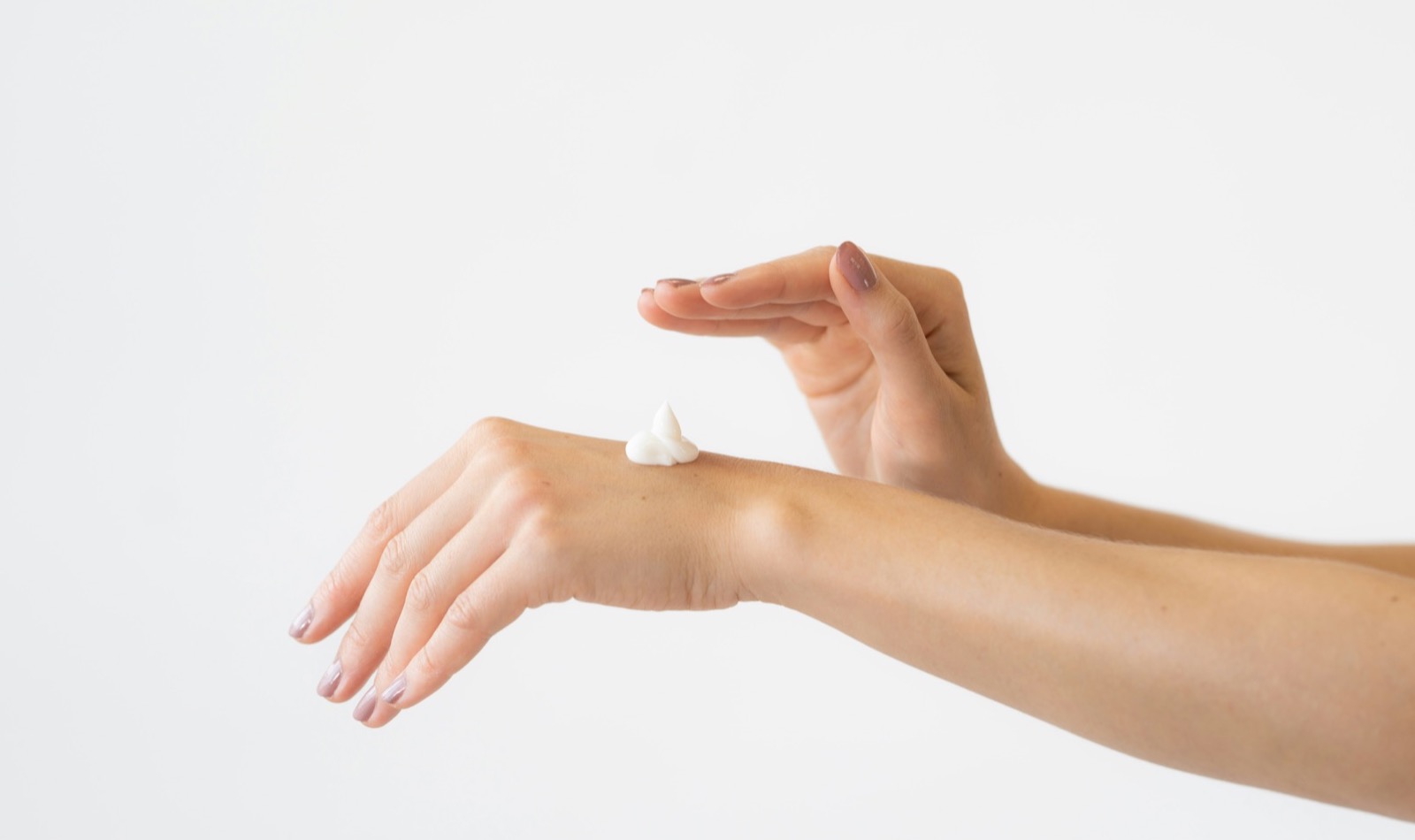
Dispense a Rice-Grain Portion: Squeeze a tiny, rice-grain-sized dot of eye cream onto the pad of your ring finger. Because the peri-orbital area is compact, using too much product can lead to eyelid puffiness or product migration into eyes.
Warm Between Both Ring Fingers: Gently press your two ring fingertips together for 2 to 3 seconds. Body heat softens emollient lipids, ensuring effortless glide.
Map Along the Orbital Bone: Tap small dots of cream along the lower orbital rim—the bone beneath your eye—starting from the inner corner near your nose and moving outward toward your temple.
Featherlight Tapping (Piano Touch): Using only the pad of your ring finger, tap softly in a light, rhythmic motion as if playing delicate piano keys. Never rub, pull, or drag the skin laterally.
Sweep the Eyebrow Arch: With the sheer remaining residue on your fingertip, lightly trace along the upper brow bone beneath your eyebrow arch. Avoid applying rich creams directly onto the mobile upper eyelid to prevent eye stinging.
Maintaining overall skin hydration also supports the eye area indirectly. According to clinical guidance from the American Academy of Dermatology, DO apply moisturizer after cleansing. Although you have oily skin, it is still important to apply moisturizer to keep your skin hydrated[2]. Keeping your entire face balanced prevents dry zones around the cheeks from pulling moisture out of the neighboring peri-orbital skin.
Morning vs Night Eye Cream Layering
Your eye area encounters completely different environments between daytime activity and overnight sleep, requiring thoughtful layering adjustments.
Conclusion: Wear fast-absorbing, non-greasy eye creams under daytime sunscreen to prevent concealer slippage, reserving richer retinol and ceramide formulas for overnight renewal.
Daytime Morning Routine
During the day, your eye cream must hydrate without causing liquid concealer or mascara to smudge.
Ideal Formulation: Lightweight fermented soymilk creams or water-gel eye essences that absorb fully in under 60 seconds.
Sun Protection is Mandatory: Ultraviolet rays rapidly break down collagen fibers in thin peri-orbital skin. Always follow morning eye cream with a dedicated, non-stinging broad-spectrum sunscreen displaying SPF 50+ and PA++++.
Nighttime Evening Routine
Nighttime is the window when cellular turnover accelerates and trans-epidermal water loss peaks. In product layering guidance, Hada Labo Tokyo notes that layering in the morning can be lighter: cleanser, hydrator, and SPF, while at night a more intense skin care regimen is recommended to treat and nourish your skin while you sleep[3].
Ideal Formulation: Richer, lipid-dense creams formulated with stabilized retinol, quasi-drug niacinamide, or pseudo-ceramides. Apply as the final step of your evening ritual, allowing the emollient veil to seal in moisture until morning.
Signs to Stop and When to See a Doctor
While authentic Japanese eye creams are formulated to be exceptionally mild, ophthalmologically mindful, and non-clogging to pores, the thin skin around the eyes is uniquely sensitive to adverse reactions.
Discontinue Use If You Notice:
Persistent stinging, watering, or burning sensations inside or around the eyes.
Sudden swelling, puffiness, or redness along the upper or lower eyelids.
Clusters of tiny, hard white bumps known as milia (small keratin cysts that occur when overly rich creams trap dead cells under thin skin).
Flaking, scaling, or intense itching characteristic of peri-orbital contact allergic dermatitis.
When to Consult a Board-Certified Dermatologist or Ophthalmologist:
If swelling, redness, or burning sensations fail to improve within 48 hours of discontinuing the cream.
If you experience blurred vision, severe ocular pain, or persistent conjunctival redness.
If you have an active skin condition affecting the face, such as ocular rosacea, eczema, or blepharitis, which requires prescription medical management rather than cosmetic skincare.
Always conduct a 24-hour patch test on your jawline or behind your ear before introducing any new eye formulation near your eyes.
Summary: Key Principles for Japanese Eye Creams
Prioritize Tested Formulations: Look for Japanese products carrying the official efficacy rating "makes fine lines from dryness less conspicuous."
Nourish with Essential Lipids: Choose creams containing human-type ceramides, fermented soymilk isoflavones, squalane, or stabilized retinol.
Zero Mechanical Friction: Always apply with the pad of your ring finger, using gentle piano-like tapping along the orbital bone instead of rubbing.
Use Only a Rice-Grain Portion: A tiny amount provides complete hydration without overloading thin skin or causing milia.
Distinguish Day from Night: Wear lightweight, fast-absorbing hydrators beneath daytime SPF, and richer, restorative ceramide balms before sleep.
FAQ
Q1. Can I just use my regular face moisturizer around my eyes instead of an eye cream?
A. While standard facial lotions and emulsions provide basic hydration, dedicated Japanese eye creams are specifically formulated for 0.5 mm thin skin. (Details)
While standard facial lotions and emulsions provide basic hydration, dedicated Japanese eye creams are specifically formulated for 0.5 mm thin skin. They feature specialized non-migrating emulsifiers that prevent the cream from creeping into your eyes, contain zero irritating fragrance or volatile alcohols, and provide the exact lipid-to-water ratio needed to keep concealer smooth.
Q2. Will retinol eye cream cause peeling or flaking around my eyes?
A. Japanese retinol eye creams typically use stabilized, encapsulated retinol or gentle retinol palmitate paired with soothing humectants to minimize irritation. (Details)
Japanese retinol eye creams typically use stabilized, encapsulated retinol or gentle retinol palmitate paired with soothing humectants to minimize irritation. However, if your skin is new to retinoids, start by applying the cream every other evening for the first two weeks, gradually increasing to nightly use once your skin tolerates the formula comfortably.
Q3. At what age should I start using an eye cream?
A. Starting in your early to mid-20s is ideal. (Details)
Starting in your early to mid-20s is ideal. Because the eye area lacks oil glands, environmental exposure to air conditioning, smartphone screen squinting, and UV radiation causes fine dehydration crinkles early on. Hydrating early preserves elasticity and prevents temporary dry lines from becoming deeply etched.
Q4. Can a Japanese eye cream reduce the appearance of dark circles?
A. If your dark circles are caused by thin, parched skin that casts micro-shadows, hydrating the area with an eye cream containing niacinamide and ceramides will visibly plump the tissue and brighten under-eye shadows. (Details)
If your dark circles are caused by thin, parched skin that casts micro-shadows, hydrating the area with an eye cream containing niacinamide and ceramides will visibly plump the tissue and brighten under-eye shadows. However, if dark circles are hereditary (due to natural bone structure or visible venous pooling), topical cosmetics can only provide subtle cosmetic softening.
Q5. Should I apply eye cream directly onto my upper eyelids?
A. Generally, no. As you blink, natural facial warmth causes skincare products to migrate upward. (Details)
Generally, no. As you blink, natural facial warmth causes skincare products to migrate upward. Applying rich creams directly onto mobile upper lids can lead to product seeping into eyes, blurred vision, or eyelid puffiness. Instead, apply along the bony orbital rim underneath your eye and across the brow bone above your eyelid arch.
Disclaimer: This article is for general information and education about Japanese cosmetics and their labels. It is not a substitute for professional medical advice, diagnosis, or treatment. Skincare results vary from person to person. Product formulas, availability, prices, and regulations change, and products sold in Japan can differ from versions sold elsewhere, so always check the current label. Do a patch test before introducing a new product, and consult a doctor or dermatologist if you have a skin condition or specific concerns.