Multi-Molecular Hyaluronic Acid in Japanese Lotions Guide
IngredientsBy Miho Tanaka
title: Multi-Molecular Hyaluronic Acid in Japanese Lotions Guide
meta_description: Discover how Japanese lotions blend multi-molecular hyaluronic acids. Learn high, low, and fermented HA science for non-sticky stratum corneum hydration.
affiliate: false
Multi-Molecular Hyaluronic Acid in Japanese Lotions Guide
Hyaluronic acid is hailed across the global skincare industry as the ultimate humectant, capable of binding up to 1,000 times its molecular weight in water. Yet many consumers who buy standard Western hyaluronic acid serums experience a frustrating dilemma: the formula either leaves a tacky, suffocating film on the surface or dries out the skin in arid winter air. Japanese cosmetic science solved this riddle by pioneering Multi-Molecular Hyaluronic Acid Formulations. By orchestrating a symphony of macro, micro, acetylated, and fermented hyaluronic acid variants into ultra-light watery lotions (kesho-sui), J-beauty delivers dimensional hydration across every level of the stratum corneum with zero stickiness.
Quick answer:Multi-molecular hyaluronic acid in Japanese lotions is an advanced formulating method that combines multiple molecular weights and chemical modifications of hyaluronic acid (typically 3 to 7 types) in a single watery base. High-molecular weights seal surface moisture and reduce water evaporation, medium weights hydrate upper skin layers, low-molecular nano-particles migrate into deeper stratum corneum channels, and acetylated or fermented variants anchor into intercellular lipids to prevent dryness.
The J-Beauty Breakthrough: Beyond Single-Weight Hyaluronic Acid
Conclusion: Japanese cosmetic chemists moved past heavy single-weight hyaluronic acid to create multi-tiered watery formulas that hydrate without tackiness.
Until the early 2000s, most cosmetic hyaluronic acid was sourced from animal tissues (such as rooster combs) in high-molecular-weight polymers measuring between 1,500 and 2,000 kilodaltons (kDa). While these giant polysaccharide chains hold copious amounts of water, their physical size prevents them from passing beyond the outermost skin surface. When applied in thick gels, standard high-molecular HA often forms a tight, rubbery glaze that can peel under makeup or pull water outward from the skin in low humidity.
Japanese biotechnology laboratories transformed this landscape. In the 1990s and early 2000s, Japanese pharmaceutical researchers developed non-animal microbial fermentation technologies using Streptococcus zooepidemicus, enabling high-purity production at diverse molecular weights.
In 2004, Japanese formulators introduced the world's first mass-market multi-molecular hydrating lotions. Instead of relying on a single large polymer, Japanese chemists blended high-molecular barrier film-formers with enzymatically cleaved nano-polymers and bio-engineered acetylated molecules. The result was a water-light liquid that absorbs in seconds, leaving skin plump, supple, and non-tacky.
Molecular Anatomy: The Spectrum of Hyaluronic Acid in Japanese Lotions
Conclusion: Blending macro, nano, acetylated, and fermented hyaluronic acids creates a three-dimensional moisture network across the stratum corneum.
A contemporary Japanese hyaluronic acid lotion typically orchestrates several distinct molecular variants:
Scroll horizontally to view full table
HA Variant
Molecular Mass (kDa)
Key Structural Feature
Cutaneous Performance
Standard Sodium Hyaluronate
1,500 – 2,000+ kDa
Long, linear high-molecular polysaccharide chain
Forms a protective surface moisture shield; minimizes transepidermal water loss (TEWL)
Medium-Molecular HA
100 – 300 kDa
Intermediate polymer length
Hydrates upper corneocyte layers, improving epidermal flexibility and suppleness
Nano / Hydrolyzed HA
< 10 – 50 kDa
Enzymatically cleaved into short-chain oligomers
Migrates into deeper intercellular lipid channels of the stratum corneum for internal plumping
Super / Acetylated HA
Variable (~100 kDa)
Chemically modified with hydrophobic acetyl groups
Amphiphilic structure; binds twice the moisture of standard HA and anchors tightly into skin lipids
Fermented HA (Lactococcus)
Micro-cleaved
Bio-fermented with lactic acid bacteria
Replenishes deep moisture while supporting a calm, balanced surface microbiome
Skin-Adsorbing (Cationic) HA
Modified charge
Positively charged (hydroxypropyltrimonium)
Electrostatically clings to negatively charged skin proteins, resisting rinse-off even after washing
By layering these distinct molecular architectures into a single formula, Japanese lotions ensure that hydration is not stranded solely on the surface.
The 4 Core Hydration Benefits of Multi-Tier Formulations
Conclusion: Multi-weight formulations deliver multi-depth hydration, minimize tacky residue, prevent rebound dryness, and buffer against friction.
Multi-Depth Moisture Delivery: Nano and fermented fractions hydrate deeper within the stratum corneum, while macro-polymers seal the surface, creating lasting plumping from inside out.
Zero Stickiness or Pilling: By reducing reliance on single high-viscosity thickeners, Japanese lotions absorb smoothly, layering smoothly under serums, oils, and makeup without balling up.
Guard Against "Reverse Dehydration": Acetylated and cationic HA anchor firmly into epidermal lipids, ensuring water remains bound within the skin even in dry, heated indoor environments.
Friction-Reducing Cushion: The fluid viscosity provides a smooth slip across facial contours, preventing physical dragging during daily application.
Dermatologists stress that protecting delicate facial skin requires minimizing abrasive physical rubbing. The American Academy of Dermatology (AAD) recommends:
"Use a gentle, non-abrasive cleanser that does not contain alcohol."[1]
"Resist the temptation to scrub your skin because scrubbing irritates the skin."[1]
The cushiony glide of Japanese multi-weight lotions allows generous hydration application with minimal mechanical friction.
How to Apply Japanese Hyaluronic Lotion for Optimal Absorption
Conclusion: Apply hyaluronic lotion onto damp skin using gentle pressing motions, building multiple layers to achieve plump resilience.
In Japan, applying hydrating lotion is an intentional ritual known as hadazui:
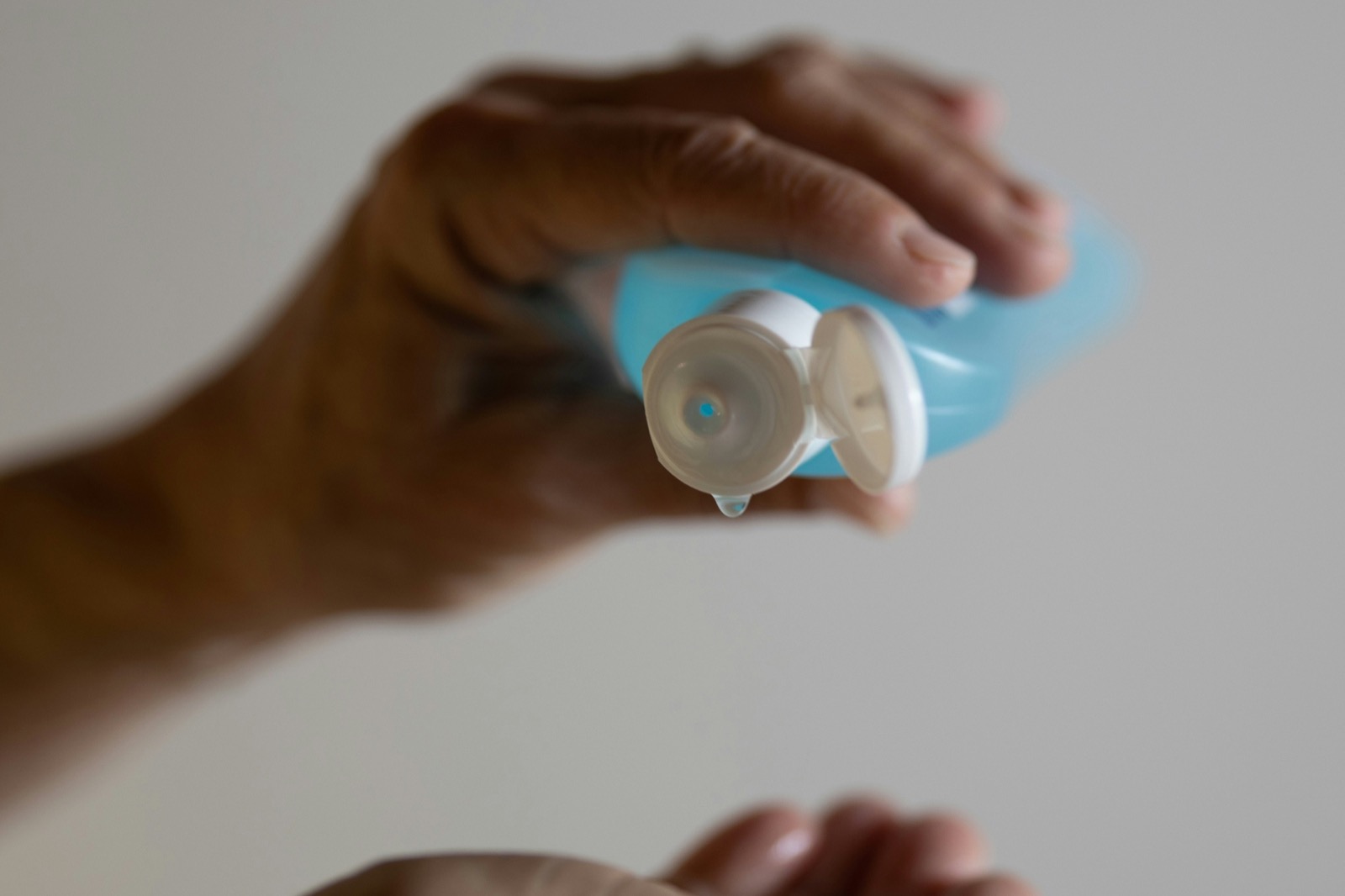
Dispense: Pour a nickel-sized pool of lotion into cupped palms.
Press, Do Not Rub: Warm the liquid between your hands and gently press your palms across your cheeks, forehead, chin, and neck. The warmth of your palms assists molecular absorption without stretching the skin.
The Bounce Test: Continue gently pressing until the watery slip transitions into a slight, soft bounce—the classic indicator in Japanese skincare that the stratum corneum is fully saturated.
Build Layers (Nanatsu no Hada): For parched skin, repeat with a second or third light layer rather than applying one heavy, suffocating coat.
Mindful water temperature during pre-cleansing is critical for skin comfort. As emphasized by the AAD:
"Rinse with lukewarm water and pat dry with a soft towel."[1]
Lukewarm water prepares the stratum corneum to absorb water-soluble humectants without stripping essential intercellular lipids.
Avoiding the "HA Rebound Dryness" Trap in Arid Environments
Conclusion: In dry climates, always apply hyaluronic acid over damp skin and immediately seal it with an emollient milk or [barrier cream](/en/hydration/rich-japanese-barrier-cream-winter).
A common complaint regarding hyaluronic acid in dry western climates is that it makes skin feel tighter. Hyaluronic acid is purely a humectant—it binds water, but it cannot produce water or oil. If you apply high-molecular HA onto bone-dry skin in an arid environment (such as an air-conditioned office or heated winter room), the polymer may draw water outward from the deeper epidermis into the thirsty air.
To prevent this phenomenon:
Apply Over Damp Skin: Never apply hyaluronic lotion to a completely dry face. Apply immediately after cleansing or misting.
Timing your moisturizer application is critical to prevent rapid evaporation. The American Academy of Dermatology highlights:
"When you finish your shower or bath, gently pat your skin dry and immediately apply your fragrance-free moisturizer."[2]
"Be sure to apply your moisturizer when your skin is still damp after taking a shower or bath, after washing your hands, and when your skin feels dry."[2]
"DO apply moisturizer after cleansing. Although you have oily skin, it is still important to apply moisturizer to keep your skin hydrated."[3]
Precautions, Ingredient Interactions, and Patch Testing
Conclusion: Pure hyaluronic acid is non-allergenic, but companion preservatives or botanical extracts warrant a 24-hour patch test.
While hyaluronic acid is naturally present throughout the human body and virtually non-allergenic, consider these practical precautions:
Check Companion Ingredients:Japanese drugstore lotions are often formulated with minimal additives, but some feature botanical essences, ethanol, or paraben preservatives. If you have hyper-reactive skin, select alcohol-free, fragrance-free formulations labeled for sensitive skin (mutenka).
Synergy with Active Ingredients: Multi-molecular HA pairs exceptionally well with retinol, vitamin C, and exfoliating acids. Layering a soothing HA lotion before active serums helps buffer against flaking and surface irritation.
Perform a 24-Hour Patch Test: Apply a dime-sized amount of lotion to your inner forearm. Check after 24 hours to ensure you experience no sensitivity to the formulation before applying it across your entire face.
Signs to Stop and When to Consult a Doctor
Conclusion: Discontinue use if persistent stinging, hives, or swelling develops, and seek dermatological guidance.
Discontinue use of any topical hydrating product and consult a board-certified dermatologist if you experience:
Stinging, prickling, or burning sensations that worsen after application.
Widespread itching, localized hives, or swelling around the eyes or mouth.
Cracking, weeping dermatitis that does not resolve with simple emollients.
Cosmetic hyaluronic lotions provide daily comfort and hydration; severe eczematous flares require clinical evaluation by a medical doctor.
Summary: The Dimensional Hydration of Japanese Hyaluronic Lotions
Conclusion: Multi-molecular Japanese lotions deliver non-sticky, multi-depth hydration that keeps the skin plump and resilient in any season.
Multi-Tier Molecular Architecture: Blends macro, medium, nano, acetylated, and fermented hyaluronic acid variants into one lightweight fluid.
Deep Stratum Corneum Hydration: Nano-molecules hydrate deeper levels while macro-polymers seal the surface against transepidermal water loss.
Zero Tackiness: Fast-absorbing watery textures avoid the sticky, pilling film common in single-weight hyaluronic serums.
Gentle Patting Ritual: Press gently onto damp skin with cupped palms, building light layers to restore a soft, bouncy texture (mochi-hada).
Always Seal While Damp: Lock in humectant water molecules by following immediately with an emulsion or barrier cream.
FAQ
Q1. Why do some hyaluronic acid serums feel sticky while Japanese HA lotions feel like water?
A. Traditional Western serums often use a high concentration of a single high-molecular-weight hyaluronic acid thickened with synthetic gelling polymers, which leaves a film on the surface. (Details)
Traditional Western serums often use a high concentration of a single high-molecular-weight hyaluronic acid thickened with synthetic gelling polymers, which leaves a film on the surface. Japanese lotions use multi-molecular technology, blending low-molecular nano-particles and acetylated HA that absorb into the stratum corneum alongside a lighter concentration of surface polymers, yielding a featherlight, water-like finish.
Q2. Can hyaluronic acid dry out my skin in winter or low-humidity climates?
A. Yes, if applied incorrectly. (Details)
Yes, if applied incorrectly. As a pure humectant, hyaluronic acid binds water from its environment. In dry air, high-molecular HA on bare skin can draw water outward from deeper layers. To prevent this, always apply your Japanese HA lotion onto damp skin and seal it immediately with an emulsion or cream to trap the moisture.
Q3. What is "Super Hyaluronic Acid" (Sodium Acetylated Hyaluronate)?
A. Super Hyaluronic Acid is a chemically modified variant where acetyl groups are attached to the hyaluronic acid backbone. (Details)
Super Hyaluronic Acid is a chemically modified variant where acetyl groups are attached to the hyaluronic acid backbone. This modification gives the molecule amphiphilic properties, meaning it bonds with both water and skin lipids. It holds roughly double the water of standard hyaluronic acid and anchors firmly into the stratum corneum's lipid matrix.
Q4. Is fermented hyaluronic acid better than regular hyaluronic acid?
A. Fermented hyaluronic acid is created by fermenting hyaluronic acid with probiotic strains like Lactococcus. (Details)
Fermented hyaluronic acid is created by fermenting hyaluronic acid with probiotic strains like *Lactococcus*. This process breaks the polymer into ultra-small fragments that easily migrate between surface skin cells, while introducing beneficial postbiotics that help comfort sensitive skin and support the natural cutaneous microbiome.
Q5. Can oily or acne-prone skin use multi-molecular hyaluronic acid lotions?
A. Yes. Multi-molecular hyaluronic acid lotions provide oil-free, non-greasy hydration that is ideal for oily and blemish-prone complexions. (Details)
Yes. Multi-molecular hyaluronic acid lotions provide oil-free, non-greasy hydration that is ideal for oily and blemish-prone complexions. Oily skin is frequently dehydrated from harsh cleansers, triggering compensatory sebum production. Watery HA lotions replenish essential hydration without clogging follicular openings.
Disclaimer: This article is for general information and education about Japanese cosmetics and their labels. It is not a substitute for professional medical advice, diagnosis, or treatment. Skincare results vary from person to person. Product formulas, availability, prices, and regulations change, and products sold in Japan can differ from versions sold elsewhere, so always check the current label. Do a patch test before introducing a new product, and consult a doctor or dermatologist if you have a skin condition or specific concerns.