Arbutin vs Alpha-Arbutin in J-Beauty: Science & Guide
IngredientsBy Miho Tanaka
title: Arbutin vs Alpha-Arbutin in J-Beauty: Science & Guide
meta_description: Compare Arbutin (Beta) and Alpha-Arbutin in Japanese skincare. Learn tyrosinase inhibition science, Quasi-Drug standards, and spot prevention criteria.
affiliate: false
Arbutin vs Alpha-Arbutin in J-Beauty: Science & Guide
Achieving an even, luminous complexion without inducing redness or irritation is the foundation of Japanese brightening philosophy (bihaku). Unlike aggressive peeling methods that strip the moisture barrier, J-beauty relies on cellular enzyme moderation. Among the most respected actives in this category is Arbutin. First introduced to the cosmetic world by Japanese dermatological researchers in 1989, arbutin has evolved into two distinct molecular forms: standard Beta-Arbutin (naturally sourced or bio-identical) and laboratory-synthesized Alpha-Arbutin. Understanding how these sister molecules differ in stereochemistry, enzyme affinity, and regulatory approval helps you choose the right formula for your skin.
Quick answer:Beta-Arbutin (standard Arbutin) is a plant-derived or synthesized glycoside approved in Japan by the Ministry of Health, Labour and Welfare as a Quasi-Drug active ingredient for preventing sun spots. Alpha-Arbutin is an enzymatically synthesized isomer featuring an alpha-glucoside bond that exhibits higher binding affinity for tyrosinase in laboratory models. While Alpha-Arbutin delivers faster in-vitro enzyme suppression, Beta-Arbutin remains the time-tested gold standard in Japanese Quasi-Drug formulations due to its proven long-term barrier tolerance and official regulatory backing.
The Tyrosinase Connection: Managing Pigment Pathways
Conclusion: Arbutin acts as a safe, reversible competitive inhibitor of tyrosinase, preventing excess melanin without harming pigment cells.
To understand how arbutin works, one must look at melanogenesis—the biological process by which skin cells generate pigment. When skin is exposed to ultraviolet sunlight or localized irritation, melanocyte cells activate the rate-limiting enzyme tyrosinase. Tyrosinase oxidizes the amino acid L-tyrosine into dopaquinone, initiating the cascade that produces brown melanin granules.
In conventional Western dermatology, prescription hydroquinone is sometimes used to suppress pigmentation. However, hydroquinone operates through cytotoxic mechanisms that can damage melanocytes, risking lasting mottled discoloration (hypopigmentation) or ochronosis with prolonged use.
Arbutin provides an elegant, biocompatible solution. Structurally, arbutin consists of a hydroquinone core capped by a protective D-glucose sugar molecule. This glycosidic bond prevents cytotoxic reactions.
Instead of destroying pigment cells, arbutin acts as a competitive inhibitor: it mimics the structure of tyrosine, reversibly binding to the active catalytic pocket of tyrosinase. By occupying this site, arbutin prevents the enzyme from synthesizing excess pigment, helping avoid new dark spots and evening overall tone while keeping melanocyte cells intact and healthy.
Molecular Showdown: Beta-Arbutin vs. Alpha-Arbutin
Conclusion: The difference lies in the stereochemical anomeric bond, determining enzymatic potency, synthesis origins, and cosmetic regulatory status.
While both forms share the identical chemical formula ($C_{12}H_{16}O_7$), their three-dimensional spatial architectures differ fundamentally:
Scroll horizontally to view full table
Comparison Parameter
Standard Arbutin (Beta-Arbutin)
Alpha-Arbutin
Chemical Identity
Hydroquinone-β-D-glucopyranoside
Hydroquinone-α-D-glucopyranoside
Molecular Bond
Beta-anomeric linkage (equatorial orientation)
Alpha-anomeric linkage (axial orientation)
Origin & Synthesis
Botanical extraction (bearberry, pear) or synthetic
Enzymatic transglycosylation via microbial enzymes
In-Vitro Potency
Steady, moderate tyrosinase inhibition
Up to 9–10 times higher tyrosinase binding affinity
Japanese Regulatory Classification
Approved Quasi-Drug Active Ingredient (*Iyakubugaihin*)
Cosmetic Functional Ingredient (*Keshohin*)
Formula Stability
High thermal stability at neutral pH (pH 5.0–7.0)
Sensitive to extreme heat and acidic pH below 4.5
Ideal Skin Profile
Sensitive, reactive, or dry barriers seeking daily spot prevention
Normal to resilient skin targeting stubborn visible sun marks
1. Beta-Arbutin (The Classic Botanical Form)
Beta-Arbutin occurs naturally in the leaves of bearberry (Arctostaphylos uva-ursi), cranberries, and pear trees. Its beta-glycosidic linkage is equatorial, providing structural stability in aqueous solutions. In the skin, beta-arbutin releases its inhibitory action steadily, making it remarkably well-tolerated by delicate complexions prone to flaking or redness.
2. Alpha-Arbutin (The High-Affinity Isomer)
Alpha-Arbutin does not occur in meaningful quantities in nature; it is biosynthesized by transferring a glucosyl unit to hydroquinone using bacterial alpha-amylase enzymes. The resulting alpha-linkage fits snugly into human tyrosinase binding sites. Laboratory trials show that Alpha-Arbutin inhibits tyrosinase activity at substantially lower concentrations than Beta-Arbutin, providing focused tone-clarifying action.
The Japanese Quasi-Drug Standard: Why Beta-Arbutin Dominates J-Beauty
Conclusion: Backed by decades of domestic safety data, Beta-Arbutin remains the primary government-cleared Quasi-Drug active in Japan.
In Japan's beauty sector, ingredient adoption is shaped by the rigorous Pharmaceutical and Medical Devices Act (PMD Act). Products are divided into standard Cosmetics and Quasi-Drugs (iyakubugaihin, often marked Medicated or Yakuyo).
In 1989, Japanese researchers at Shiseido completed extensive clinical research on arbutin, demonstrating its safety and efficacy. Following this breakthrough, the Japanese Ministry of Health and Welfare officially recognized Beta-Arbutin as a Quasi-Drug Active Ingredient (yuukou seibun).
When Japanese formulations incorporate approved levels of Beta-Arbutin (typically 2% to 3%), they carry the legal authorization to claim:
"Suppresses the generation of melanin, preventing sun-induced dark spots and freckles" (melanin no seisei wo osae, shimi, sobakasu wo fusegu).
Because Alpha-Arbutin emerged later through modern biotechnology, most established Japanese skincare lines continue to feature Beta-Arbutin in their core Quasi-Drug lotions and essences. Meanwhile, Alpha-Arbutin is frequently chosen for specialized cosmetic serums and booster drops aimed at consumers desiring higher in-vitro potency.
Selection Criteria and Layering in a J-Beauty Routine
Conclusion: Choose based on barrier resilience and target concerns, layering your arbutin product between watery lotion and daytime sunscreen.
To decide which form suits your individual routine, evaluate your skin against these objective criteria:
Barrier Sensitivity: If you experience occasional stinging or reactivity, choose Beta-Arbutin in a certified Quasi-Drug lotion. Its gentle release profile respects sensitive lipid barriers.
Specific Pigment Focus: If you have resilient skin with distinct post-sun blemishes, an Alpha-Arbutin concentrated essence provides higher binding affinity to target stubborn localized discoloration.
Product Texture: Beta-Arbutin excels in watery conditioning lotions (kesho-sui), whereas Alpha-Arbutin is often formulated in targeted dropper serums and spot creams.
Daily Application Routine
Step 1: Gentle Cleansing: Wash without disturbing cutaneous barrier lipids. The American Academy of Dermatology highlights:
"Use a gentle, non-abrasive cleanser that does not contain alcohol."[1]
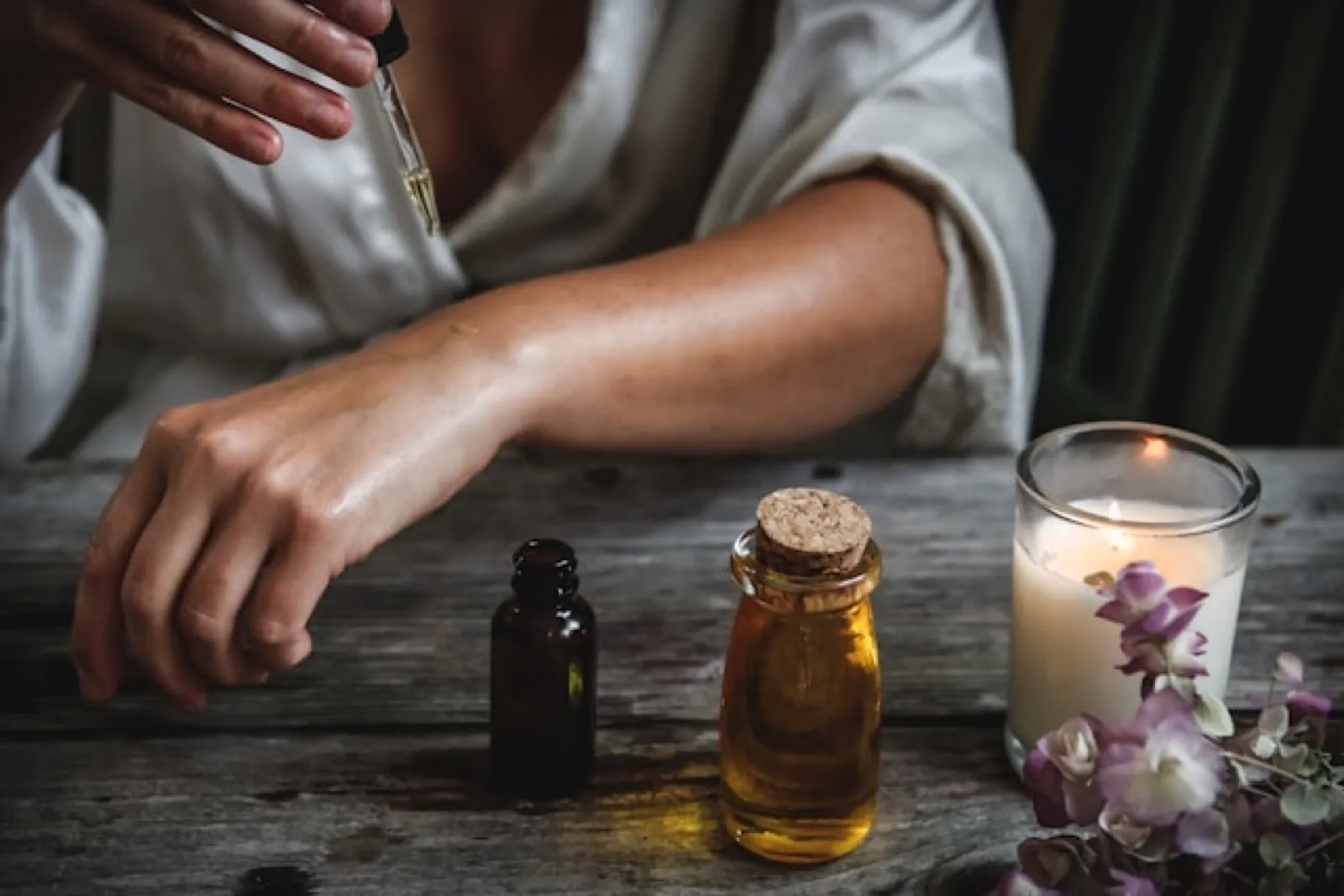
Step 2: Hydrating Conditioning: Pat an arbutin watery lotion into damp skin to encourage even hydration throughout the stratum corneum.
Step 3: Moisture Sealing: Follow with a lightweight emulsion (nyueki) or cream to lock in moisture. Even oily skin types require this step to prevent rebound dryness. The American Academy of Dermatology highlights:
"DO apply moisturizer after cleansing. Although you have oily skin, it is still important to apply moisturizer to keep your skin hydrated."[2]
Step 4: Broad-Spectrum UV Defense: Arbutin prevents new melanin formation, but unprotected solar radiation will trigger fresh pigment synthesis. Always shield your skin with daily sunscreen. The American Academy of Dermatology highlights:
"Apply a broad-spectrum, water-resistant sunscreen with an SPF of 30 or higher to all skin not covered by clothing."[3]
Signs to Stop and When to See a Doctor
Conclusion: Discontinue use immediately if burning, itching, or persistent redness appears, and seek dermatological guidance.
Both Beta-Arbutin and Alpha-Arbutin maintain strong cutaneous safety records. However, individual sensitivities to formulation bases, preservatives, or active combinations can occasionally occur.
Immediate Signs to Discontinue Use:
Prickling sensation that escalates into prolonged heat or burning.
Formation of localized hives, tiny bumps, or contact itching.
Worsening dryness accompanied by visible flaking or patchiness.
When to Consult a Dermatologist:
If irritation, swelling, or redness persists longer than 24 hours after discontinuing the product.
If dark spots exhibit irregular borders, changing pigmentation colors, or asymmetrical enlargement. Any evolving pigmented lesion requires professional medical evaluation rather than cosmetic brightening care.
FAQ
Q1. Is Alpha-Arbutin better than standard Arbutin in Japanese skincare?
A. Alpha-Arbutin exhibits higher laboratory potency, while Beta-Arbutin offers certified Quasi-Drug stability. (Details)
Alpha-Arbutin shows approximately 9 times higher tyrosinase inhibition in test-tube studies, making it potent for targeted spots. However, standard Beta-Arbutin holds official Quasi-Drug active ingredient clearance in Japan, backed by over three decades of documented domestic safety, making it the preferred choice for daily whole-face care.
Q2. Does Arbutin thin the skin or cause sun sensitivity?
A. No, Arbutin does not exfoliate the stratum corneum or increase photosensitivity. (Details)
Unlike chemical exfoliants like glycolic acid or strong retinoids, Arbutin does not peel skin cells or thin the barrier. It works strictly by modulating tyrosinase enzyme activity inside melanocytes. It is entirely safe for daytime use when paired with daily broad-spectrum SPF 30+ sunscreen.
Q3. Can I combine Arbutin with Vitamin C or Niacinamide?
A. Yes, Arbutin pairs exceptionally well with Vitamin C derivatives and Niacinamide. (Details)
Combining these actives creates a multi-pathway brightening synergy. Arbutin inhibits tyrosinase activity, Vitamin C provides antioxidant defense to reduce pigment oxidation, and Niacinamide moderates the transfer of melanosomes to keratinocytes. Japanese formulators frequently blend these ingredients in single serums.
Q4. Can Arbutin be used on diverse skin tones?
A. Yes, Arbutin is well-tolerated across diverse skin tones because it does not kill melanocyte cells. (Details)
Because Arbutin is a competitive, non-cytotoxic inhibitor, it does not alter normal skin pigment or trigger patchy hypopigmentation. It simply moderates excess melanin synthesis induced by UV exposure or past blemishes, promoting uniform clarity across diverse skin complexions.
Q5. How long does it take to see visible results from an Arbutin routine?
A. Consistent twice-daily application typically yields noticeable tone clarity within 8 to 12 weeks. (Details)
Because Arbutin prevents new pigment from forming rather than stripping existing skin cells, results correspond with your natural epidermal turnover cycle (roughly 28 to 45 days). With regular morning and evening use alongside strict UV protection, visible improvement in tone uniformity appears within two to three months.
Summary
Conclusion: Both Arbutin variants offer gentle, proven pigment moderation without compromising cutaneous barrier health.
Targeted Enzyme Action: Arbutin moderates pigment synthesis by competitively inhibiting tyrosinase without destroying melanocytes, making it a safe alternative to harsh hydroquinone.
Isomer Differences: Beta-Arbutin offers stable, steady release for whole-face conditioning, while Alpha-Arbutin delivers higher in-vitro binding affinity for concentrated spot care.
Quasi-Drug Authority: In Japan, Beta-Arbutin carries decades of regulatory clearance as an approved Quasi-Drug active for preventing sun-induced spots and freckles (shimi-sobakasu).
Daily Sun Protection Essential: Pair your arbutin lotion with daily broad-spectrum SPF 30+ sunscreen to defend against solar-induced melanin production and preserve radiant skin clarity.
Disclaimer: This article is for general information and education about Japanese cosmetics and their labels. It is not a substitute for professional medical advice, diagnosis, or treatment. Skincare results vary from person to person. Product formulas, availability, prices, and regulations change, and products sold in Japan can differ from versions sold elsewhere, so always check the current label. Do a patch test before introducing a new product, and consult a doctor or dermatologist if you have a skin condition or specific concerns.