Minimalist Japanese Skincare Routine: Essential 3-Step Guide
RoutinesBy Miho Tanaka
While global beauty trends often associate Asian skincare with elaborate 10-step or 12-step routines, authentic daily Japanese skincare (J-Beauty) is grounded in intentional minimalism. Piling on multiple overlapping essences, ampoules, and heavy creams can overwhelm the skin barrier, increase product buildup, and subject the epidermis to unnecessary physical friction.
In Japan, the philosophy of subtraction (hikizan no bi) values skin independence. Rather than forcing the skin to rely on dozens of competing formulas, a minimalist Japanese regimen focuses on supporting the skin's natural moisture mantle through three core physiological steps: cleansing without stripping, infusing deep water hydration, and locking in lipids.
Quick answer: A minimalist Japanese skincare routine condenses daily care into three essential pillars: gentle cleansing, liquid hydration with a watery lotion (keshosui), and moisture sealing with an emulsion (nyuueki) or cream, finished with sunscreen in the morning. By stripping away redundant steps, this streamlined ritual protects natural barrier ceramides, reduces physical friction, and delivers calm, resilient skin with maximum efficiency.
Why Japanese Skincare Favors Minimalist Principles
The modern Japanese approach to skincare prioritizes long-term barrier health over vanity-shelf complexity. Japanese cosmetic dermatologists frequently observe that the primary cause of sudden sensitivity and barrier breakdown is not under-caring for the skin, but over-manipulating it.
Every additional product introduced into a daily routine brings three hidden risks:
Mechanical Friction: Rubbing, patting, and smoothing five or six separate layers repeatedly across delicate facial skin creates continuous micro-shearing forces that irritate the stratum corneum.
Ingredient Overload: Combining complex multi-ingredient formulas increases the likelihood of ingredient conflicts, contact sensitization, and clogged pores.
Barrier Dependency: Smothering the skin in excessive heavy occlusives can diminish its natural lipid-regulating responsiveness.
Kao Corporation’s sensitive-skin brand Curél highlights the efficiency of intentional care on its facial milk documentation, noting that: "Japanese skincare is rooted in two-step cleansing and moisturizing rituals that work gently to prepare skin for hydration, while preserving its natural ceramides."[2] By focusing on foundational ceramide protection rather than excessive steps, a lean routine allows the skin barrier to maintain natural equilibrium.
The Core 3-Step Japanese Routine: Morning vs Evening
A minimalist Japanese routine adapts smoothly between day and night, adjusting lipid richness and protective shields to match environmental demands.
Scroll horizontally to view full table
Step
Morning Minimalist Ritual
Evening Minimalist Ritual
Step 1: Cleanse
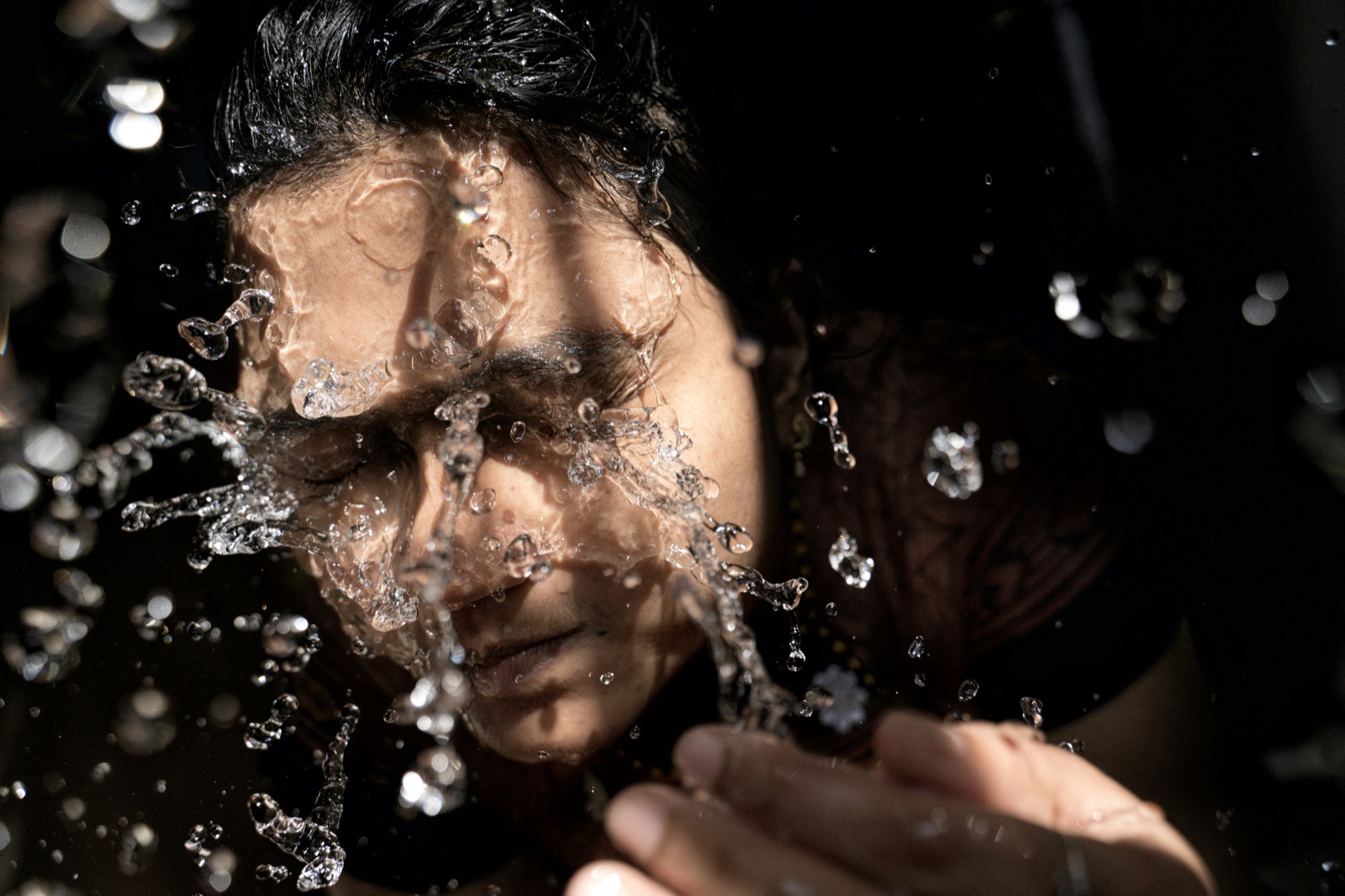
Lukewarm water splash or mild, non-stripping foaming wash
Gentle oil or milk cleanser to dissolve sunscreen and daily airborne dust
Step 2: Hydrate
Watery hydrating lotion (*keshosui*) patted into clean skin
Watery hydrating lotion (*keshosui*) layered once or twice for deep moisture
Step 3: Seal & Protect
Lightweight milky emulsion (*nyuueki*) followed by broad-spectrum SPF 30+
Nourishing emulsion (*nyuueki*) or barrier cream to lock in overnight moisture
Rohto Hada Labo Tokyo officially validates this morning streamlining in its regimen instructions, explaining that: "Layering in the morning can be lighter: cleanser, hydrator, and SPF"[1]. In the evening, the routine transitions to gentle cleansing and barrier replenishment while the body rests.
Step-by-Step: Mastering the Essential 3 Steps
Executing a minimalist routine requires paying close attention to application technique and formula selection.
Step 1: Gentle, Low-Friction Cleansing
The goal of cleansing in a minimalist Japanese routine is to lift away sweat, oxidized sebum, and environmental debris without disturbing intercellular lipids.
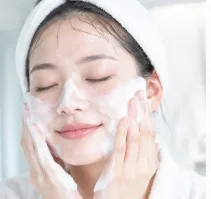
Choose a gentle, pH-balanced cleanser that foams into an airy cushion. Lather the cleanser thoroughly between your palms before applying it to your face, allowing the bubbles—not your fingers—to contact the skin. Rinse thoroughly with lukewarm water. Hot water strips away essential fatty acids, while icy water can cause unnecessary thermal shock.
In Western routines, toners are often viewed as astringent cleansers. In Japanese skincare, this second step belongs to keshosui—a watery, humectant-dense fluid designed to flood the stratum corneum with moisture.
Dispense a nickel-sized puddle of lotion into your palms, press your hands together, and gently pat the liquid across your face and neck. The watery humectants instantly soften the outer skin cells, enhancing skin pliability and preparing the surface to absorb subsequent lipids. To understand how these fluids function differently from clarifying formulas, read our comparison of Japanese lotion vs Western toner.
Step 3: Balanced Lipid Sealing (Nyuueki or Cream)
Water evaporates rapidly unless secured by an emollient lipid veil. The third foundational step is applying a light emulsion (nyuueki) or face cream.
Curél recommends its facial milk to complete this protective step, stating: "Complete your double-moisturising Japanese skincare ritual with Curél Moisture Facial Milk designed for dry, sensitive skin."[2] Dispense 2 to 3 pumps of milky fluid into your palms and smooth gently from the center of the face outward. If your skin is exceptionally dry or exposed to winter heating, swap or layer a richer cream, as the American Academy of Dermatology (AAD) confirms that: "Ointments and creams add more moisture to skin and are more effective than lotions."[4] To explore whether an emulsion or cream ideally matches your barrier needs, consult our guide on Japanese emulsion vs moisturizer.
Mandatory Daytime Shield: Sun Protection
In the morning, your third step concludes with broad-spectrum UV protection. Rohto Hada Labo instructs users to structure routines by "starting with the lightest weight product."[1] The brand emphasizes: "Always end with applying a sunscreen lotion to protect the skin from premature aging and help prevent skin cancer."[1]
The AAD reinforces this daily necessity, advising that: "Your skin is exposed to the sun's harmful UV rays every time you go outside, even on cloudy days and in the winter. So whether you are on vacation or taking a brisk walk in your neighborhood, remember to use sunscreen."[3]
Who Benefits Most from a Minimalist Routine?
While a streamlined routine works for nearly anyone, certain skin conditions thrive dramatically when product clutter is removed:
Reactive and Sensitive Skin: Fewer products mean fewer preservatives, fragrances, and emulsifiers contacting delicate nerve endings, significantly reducing flare-up risks.
Over-Exfoliated Barriers: When skin is raw or stinging from excessive active cycling, stripping back to gentle cleansing, hydration, and lipid sealing allows natural ceramides to recover.
Breakout-Prone Skin: Heavy multi-layer routines frequently cause cosmetic congestion. A minimalist routine delivering high water content and light lipids keeps pores clear.
Busy Lifestyles: Completing an intentional 3-step routine takes under three minutes, making it sustainable 365 days a year without routine fatigue.
Furthermore, Japanese consumers often select multi-functional quasi-drugs (yakuyou) licensed by the Pharmaceuticals and Medical Devices Agency (PMDA), where: "products contain active ingredients are generally classified as quasi-drugs in Japan"[5]. A single quasi-drug emulsion containing tranexamic acid or dipotassium glycyrrhizate can deliver both brightening and soothing benefits without adding dedicated serum steps.
Signs to Stop and When to See a Doctor
Adopting a minimalist routine should leave your skin feeling calm, soft, and balanced. Watch for these signals to calibrate your approach:
Signs your routine is too stripped down: If your skin feels uncomfortably tight several hours after moisturizing or develops persistent dry flaking around the mouth, your lipid seal may be too light. Consider switching from a light emulsion to a richer ceramide cream at night.
Signs of product sensitivity: If you experience persistent redness, burning, itching, or contact hives after introducing a new cleanser or lotion, discontinue use immediately. Consult a board-certified dermatologist or healthcare professional if symptoms persist beyond a few days.
Patch testing guidelines: Before adding any new product to your minimalist setup, apply a dime-sized amount to your inner forearm or behind your ear for 48 hours to confirm tolerability.
Summary
Three essential pillars: A minimalist Japanese skincare routine focuses on non-stripping cleansing, watery lotion hydration (keshosui), and lipid sealing (nyuueki or cream), completed with daily morning sunscreen.
Protection over overload: Stripping away redundant steps protects natural ceramides, reduces physical friction, and avoids ingredient conflicts that trigger sensitivity.
Morning streamlining: As demonstrated by leading Japanese brands, morning care can be condensed to cleanser, hydrator, and broad-spectrum SPF for effortless daily consistency.
Sustainable skin resilience: Healthy, radiant skin does not require dozens of products; consistent daily execution of foundational steps supports long-term barrier vitality.
FAQ
Q1. Is a 3-step Japanese routine really enough for dry skin?
A. Yes, provided your products supply adequate water-binding humectants and rich sealing lipids.(Details)
In Japanese skincare, moisture is built through hydration depth rather than the quantity of products. Layering a generous amount of [hydrating lotion](/en/hydration/how-to-use-japanese-hydrating-lotion) (*keshosui*) twice to saturate the stratum corneum, followed by a nourishing ceramide cream, delivers comprehensive barrier moisture without needing separate essences or oils.
Q2. Where do serums fit if I want to keep my routine minimalist?
A. Targeted serums can be inserted optionally between your lotion and moisturizer when addressing specific concerns.(Details)
If you have a specific concern like persistent dark spots or loss of elasticity, you can insert a single concentrated serum directly after your watery lotion. However, in a strict minimalist routine, many users opt for multi-tasking quasi-drug emulsions that combine active ingredients with barrier lipids in a single bottle.
Q3. Can I skip morning cleanser and just use water?
A. Yes, rinsing with lukewarm water in the morning works well for normal-to-dry and sensitive skin types.(Details)
If you thoroughly cleansed your face the night before and applied clean bedding, a gentle splash of lukewarm water is often sufficient to rinse away nighttime dust while keeping native sebum intact. Oily or breakout-prone skin types may still benefit from a mild foaming wash on the T-zone.
Q4. Is a minimalist routine suitable for acne-prone skin?
A. Minimalist routines are ideal for acne-prone skin because they prevent cosmetic congestion and excess friction.(Details)
Layering multiple heavy skincare formulas can trap sebum and dead cells inside follicular openings. A lean routine featuring a gentle cleanser, lightweight humectant lotion, and an oil-free or fluid emulsion supplies necessary barrier hydration without triggering clogged pores.
Q5. How do I know if my skin is overloaded from too many products?
A. Overloaded skin frequently presents as sudden sensitivity, product pilling, or stubborn micro-congestion.(Details)
When the skin receives more lipids and actives than it can absorb, products will pill under sunscreen, small bumps may appear across the forehead and jawline, and mild formulas may begin to sting upon contact. Transitioning to a minimalist 3-step routine for two to three weeks allows the barrier to reset.
Disclaimer: This article is for general information and education about Japanese cosmetics and their labels. It is not a substitute for professional medical advice, diagnosis, or treatment. Skincare results vary from person to person. Product formulas, availability, prices, and regulations change, and products sold in Japan can differ from versions sold elsewhere, so always check the current label. Do a patch test before introducing a new product, and consult a doctor or dermatologist if you have a skin condition or specific concerns.