Kojic Acid in Japanese Brightening Serums: Science Guide
IngredientsBy Miho Tanaka
title: Kojic Acid in Japanese Brightening Serums: Science Guide
meta_description: Discover how Kojic Acid brightens skin in Japanese serums. Learn koji fermentation origins, tyrosinase inhibition, safety clearance, and daily layering.
affiliate: false
Kojic Acid in Japanese Brightening Serums: Science Guide
Walk through a traditional Japanese sake brewery (kura) in winter, and you will notice an intriguing sight: elderly brewmasters whose weathered faces contrast sharply with remarkably smooth, spotless, and porcelain-toned hands. This timeless observation inspired Japanese cosmetic chemists in the 1970s to investigate the microbial byproducts of rice fermentation. The breakthrough discovery was Kojic Acid, a natural organic compound that has become one of Japan's most prestigious government-approved Quasi-Drug (Iyakubugaihin) brightening actives.
Quick answer:Kojic acid is a fungal fermentation active produced during the malting of steamed rice by Aspergillus oryzae (koji-kin). In Japanese skincare serums, it functions by chelating the copper ions required by the tyrosinase enzyme, halting the formation of melanin at its source. It reduces the appearance of stubborn sun spots, post-blemish discoloration, and dullness without the cytotoxicity or harshness of hydroquinone.
Fermentation Heritage: The Sake Brewery Origins of Kojic Acid
Conclusion: Discovered in traditional sake breweries, kojic acid is a natural fermentation byproduct celebrated for brightening performance.
The story of kojic acid begins with koji, the filamentous fungus Aspergillus oryzae used across Japan for thousands of years to ferment steamed rice, soybeans, and barley into sake, miso, and soy sauce.
In the 1970s, dermatological researchers observing master sake brewers (toji) noticed that even after decades of manual labor in freezing winter breweries, their hands remained virtually free of age spots and hyperpigmentation. Chemical analysis revealed that as the koji mold metabolizes carbohydrates in steamed rice, it secretes a chelation agent named 5-hydroxy-2-(hydroxymethyl)-4-pyrone—commonly known as Kojic Acid.
Recognizing its potential to address uneven skin tone, Japanese skincare laboratories spent a decade refining its extraction and purification. In 1988, Japan's Ministry of Health, Labour and Welfare (MHLW) formally approved Kojic Acid as an active Quasi-Drug (Iyakubugaihin) ingredient, certifying its ability to suppress melanin production and prevent sun-induced dark spots.
Tyrosinase Chelation: How Kojic Acid Halts Melanin Production
Conclusion: Kojic acid binds catalytic copper ions inside tyrosinase, disarming the rate-limiting enzyme that synthesizes melanin.
Melanogenesis—the biological process of pigment creation—relies on an essential enzyme called tyrosinase. Tyrosinase is a metalloenzyme whose catalytic core requires two vital copper ions (Cu2+) to oxidize the amino acid L-tyrosine into dopaquinone, the direct precursor to dark eumelanin pigment.
Kojic acid operates as a potent copper chelating agent:
Molecular Docking: Kojic acid enters the enzymatic pocket of tyrosinase.
Copper Chelation: Its pyrone ring captures and coordinates the bound copper ions.
Enzymatic Inactivation: Stripped of copper coordination, tyrosinase can no longer oxidize tyrosine.
Pigment Reduction: Melanin synthesis ceases at the cellular level, allowing existing surface pigment to naturally shed through normal cellular turnover.
Scroll horizontally to view full table
Brightening Active
Primary Mechanism of Action
Safety & Cytotoxicity Profile
Formulation Stability
Kojic Acid
Chelates copper ions at tyrosinase active catalytic site
Non-cytotoxic; preserves healthy melanocytes
Requires antioxidant stabilizers to prevent yellowing
Hydroquinone
Cytotoxic to melanocytes; produces toxic free-radical quinones
Banned in Japan and EU over-the-counter cosmetics due to ochronosis risks
Blocks upstream plasminogen/plasmin pathway and inflammatory PGE2
Extremely gentle, non-irritating, soothing
Highly photostable across light and temperature shifts
Unlike hydroquinone, which kills pigment-producing cells and carries significant safety hazards, kojic acid temporarily suppresses enzymatic activity without destroying melanocyte viability.
The Regulatory Chronicle: The 2003 Pause and 2005 Safety Clearance
Conclusion: After a proactive 2003 review, Japan's health ministry confirmed topical kojic acid is completely safe for human cosmetics.
Consumers researching kojic acid often discover that Japan briefly suspended the ingredient in the early 2000s. Understanding this regulatory chronicle reveals the exceptional rigor of Japanese cosmetic safety oversight:
The 2003 Precautionary Pause: In 2003, rodent experiments where mice were fed massive oral doses of kojic acid (equivalent to consuming pounds of pure powder daily) suggested potential liver cell changes. Demonstrating extreme precaution, Japan's MHLW asked cosmetic manufacturers to voluntarily pause production of kojic acid quasi-drugs while formal safety evaluations were completed.
The Exhaustive 2005 Clearance: Over the next two years, the Food Safety Commission and the Ministry's pharmaceutical evaluation council conducted comprehensive dermal absorption and toxicology trials. The findings were definitive: topical application of kojic acid does not enter the bloodstream at meaningful levels, exhibits zero genotoxicity or carcinogenicity on human skin, and is completely safe when applied topically in cosmetics. In November 2005, the MHLW officially lifted the suspension and reaffirmed kojic acid's Quasi-Drug approval.
Global Reaffirmation: In 2022, the European Commission's Scientific Committee on Consumer Safety (SCCS) published an updated opinion confirming that kojic acid is safe for use in cosmetic face and neck products at concentrations up to 1%.
Today, kojic acid stands as one of the most thoroughly examined and safety-validated brightening actives in modern J-beauty.
The 4 Core Skincare Benefits of Kojic Acid
Conclusion: Kojic acid diminishes the look of sun spots, softens post-blemish marks, and enhances translucency without harsh peeling.
Targeting Stubborn Sun Spots: Daily UV exposure triggers focal melanin clusters. By shutting down tyrosinase, kojic acid helps diffuse existing spots and prevents new clusters from forming.
Softening Post-Blemish Dark Marks (PIH): Following acne flare-ups, residual dark marks can linger for months. Kojic acid accelerates the return to an even, clear complexion.
Restoring Skin Translucency: Beyond spot care, all-over application addresses diffuse, muddy dullness, creating the luminous, glass-like clarity prized in Japanese beauty (toumeikan).
Selective Pigment Moderation: Kojic acid does not alter your natural skin undertone. It selectively tempers hyperactive pigment pathways, restoring natural balance.
When managing hyperpigmentation, avoid aggressive physical friction that can worsen micro-inflammation. The American Academy of Dermatology (AAD) recommends:
"Use a gentle, non-abrasive cleanser that does not contain alcohol."[1]
"Resist the temptation to scrub your skin because scrubbing irritates the skin."[1]
Gentle application ensures active ingredients perform optimally without triggering reactive redness.
Modern Japanese Formulation Science: Stability and Bio-Availability
Conclusion: Japanese cosmetic laboratories use micro-encapsulation and antioxidant stabilization to keep kojic acid potent and fresh.
Pure kojic acid is sensitive to air and light, historically causing early cosmetic serums to turn amber or lose potency over time. Premium Japanese brands have resolved these formulation challenges through advanced delivery systems:
Liposomal Micro-Encapsulation: By encapsulating kojic acid within phospholipid spheres, formulators shield the molecule from oxygen while facilitating smooth delivery into the stratum corneum.
Antioxidant Synergists: Formulations blend kojic acid with stable vitamin C derivatives, green tea polyphenols, or vitamin E to preserve clarity and shelf life.
Protective Packaging: Japanese brightening serums are packaged in opaque, UV-shielded amber glass bottles or vacuum-sealed dropper vials.
When washing off cleansers and preparing skin for serums, gentle temperature control is critical. As highlighted by the AAD:
"Rinse with lukewarm water and pat dry with a soft towel."[1]
Lukewarm water cleanses effectively without stripping the lipid matrix that supports serum absorption.
How to Incorporate Kojic Acid into Your Daily Routine
Conclusion: Apply kojic acid serum after hydrating lotion, seal with moisturizer, and complete morning care with broad-spectrum sunscreen.
To achieve optimal results with a Japanese kojic acid serum, follow this structured layering sequence:
Gentle Cleansing: Begin with an oil-based makeup remover followed by a mild foaming wash. Follow our detailed steps in the Japanese double cleansing method.
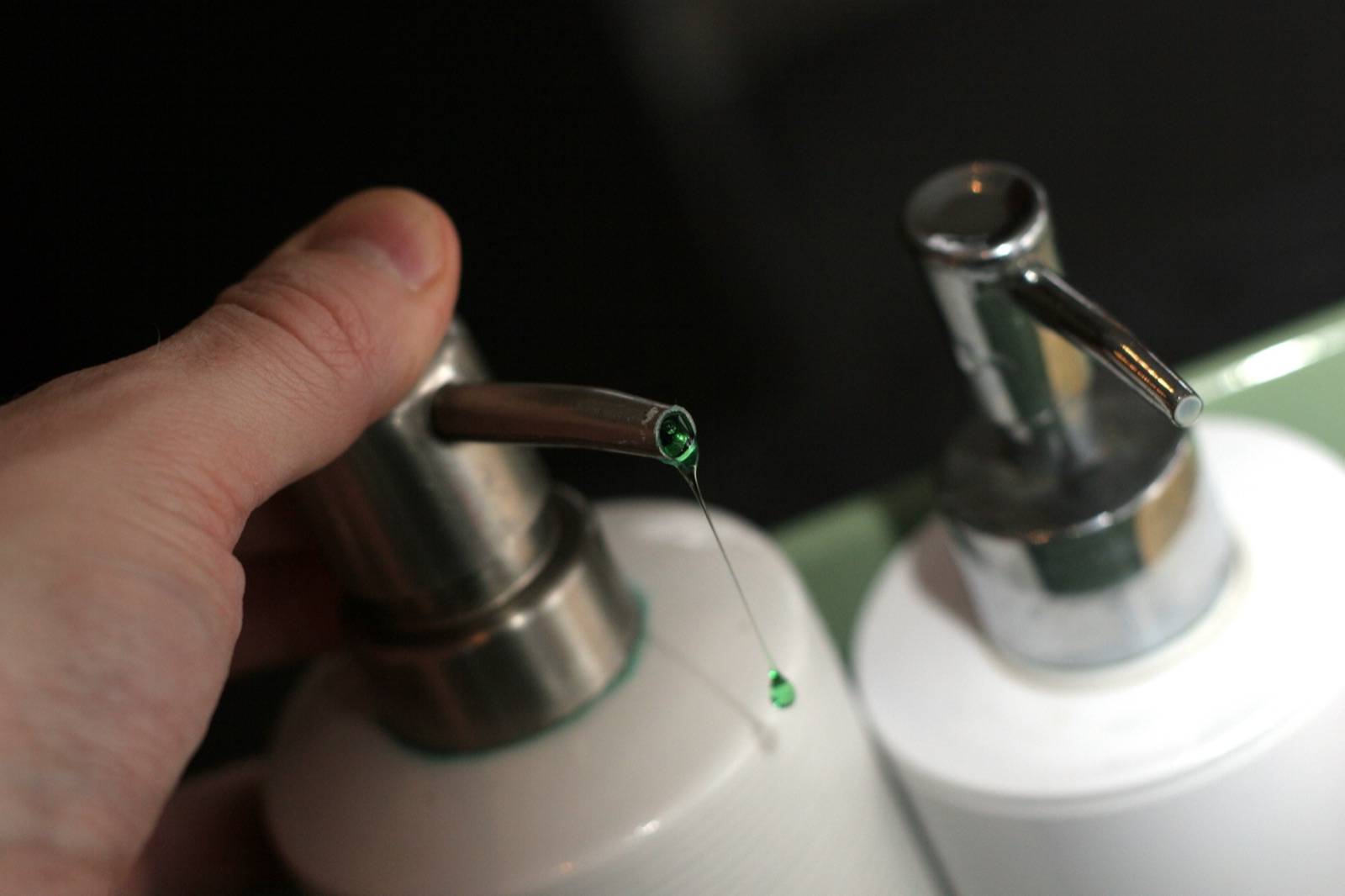
Kojic Acid Serum: Dispense 3 to 4 drops into your palms and press into areas with dark spots and uneven tone.
Lock in Hydration: Follow immediately with a lightweight barrier milk (nyueki) or nourishing cream.
Daytime Sun Protection: Always apply broad-spectrum SPF 50+ sunscreen every morning.
Applying moisturizers over damp skin prevents transepidermal water loss. The American Academy of Dermatology highlights:
"When you finish your shower or bath, gently pat your skin dry and immediately apply your fragrance-free moisturizer."[2]
"Be sure to apply your moisturizer when your skin is still damp after taking a shower or bath, after washing your hands, and when your skin feels dry."[2]
"DO apply moisturizer after cleansing. Although you have oily skin, it is still important to apply moisturizer to keep your skin hydrated."[3]
Precautions, Concentration Limits, and Patch Testing
Conclusion: Keep cosmetic concentrations at or below 1 percent, perform a 24-hour patch test, and wear daily sunscreen.
To ensure safe, comfortable daily use, observe these practical guidelines:
Approved Concentration Levels: In Japanese Quasi-Drugs and international cosmetic guidelines, kojic acid is formulated at safe concentrations between 0.5% and 1.0%. Do not attempt to formulate DIY high-strength powders at home, as concentrations above 2% can cause localized contact dermatitis.
Perform a 24-Hour Patch Test: Apply a dime-sized amount of serum to your inner wrist or behind your ear. Check after 24 hours for any redness, itching, or tingling before applying it across your entire face.
Mandatory Sun Protection: Kojic acid suppresses protective melanin synthesis, leaving developing cells more receptive to UV damage. Daily broad-spectrum SPF 30 or higher is non-negotiable.
Signs to Stop and When to Consult a Doctor
Conclusion: Discontinue use if persistent itching or redness occurs, and consult a dermatologist for irregular pigment changes.
Discontinue using your serum and consult a board-certified dermatologist if you observe:
Stinging, prickling, or contact erythema that does not resolve after rinsing.
Clusters of itchy red papules indicative of allergic contact dermatitis.
Dark spots with irregular borders, uneven colors, or rapid changes in size (which require clinical screening to rule out melanoma).
Cosmetic serums refine everyday surface clarity; complex or suspicious pigmentary lesions require professional medical diagnosis.
Summary: Precision Brightening with Japanese Kojic Acid
Conclusion: Kojic acid combines centuries of sake brewing heritage with copper-chelating science for clear, luminous skin.
Fermentation Heritage: Discovered from the koji-kin (Aspergillus oryzae) fungus used in traditional Japanese sake breweries.
Copper Chelation Science: Disarms the tyrosinase enzyme at its catalytic core, stopping melanin synthesis before dark spots develop.
Rigorous Safety Validation: Comprehensively evaluated and safety-cleared by Japan's MHLW in 2005 and reaffirmed by the EU SCCS in 2022.
Selective Spot Fading: Softens the appearance of sun spots and blemish marks without altering surrounding skin tone.
Daily Sunscreen Essential: Pair kojic acid with damp skin hydration and mandatory broad-spectrum sunscreen for lasting clarity.
FAQ
Q1. Is Kojic Acid safe for long-term daily use?
A. Yes. When formulated at standard cosmetic concentrations (between 0.5% and 1.0%), topical kojic acid is recognized as safe for daily morning and evening use by both Japan's MHLW and the European Union's SCCS. (Details)
Yes. When formulated at standard cosmetic concentrations (between 0.5% and 1.0%), topical kojic acid is recognized as safe for daily morning and evening use by both Japan's MHLW and the European Union's SCCS. It does not cause systemic toxicity or unwanted pigment loss.
Q2. Why did Japan temporarily suspend Kojic Acid in 2003, and was it cleared?
A. In 2003, Japan's MHLW enacted a precautionary voluntary pause after high-dose oral feeding experiments in rodents suggested possible liver risks. (Details)
In 2003, Japan's MHLW enacted a precautionary voluntary pause after high-dose oral feeding experiments in rodents suggested possible liver risks. Following two years of intensive dermatological testing by the Food Safety Commission, researchers proved that topical cosmetic application does not cause systemic absorption or health risks. In 2005, the MHLW officially reaffirmed its Quasi-Drug safety clearance.
Q3. Can I use Kojic Acid alongside Vitamin C or Niacinamide?
A. Yes. Kojic acid pairs exceptionally well with vitamin C and niacinamide. (Details)
Yes. Kojic acid pairs exceptionally well with vitamin C and niacinamide. While kojic acid chelates copper in tyrosinase, vitamin C scavenges free radicals, and niacinamide blocks melanosome transfer to surface skin cells. Together, they provide multi-pathway brightening.
Q4. Does Kojic Acid alter or lighten natural baseline skin tone?
A. No. Kojic acid does not damage melanocyte cells or alter natural pigmentation. (Details)
No. Kojic acid does not damage melanocyte cells or alter natural pigmentation. It temporarily pauses hyperactive melanin production, allowing sun spots and discoloration to soften as the skin renews itself. Your natural genetic skin tone remains unaffected.
Q5. How quickly can I expect to see improvements in dark spots with Kojic Acid?
A. Visible improvements typically emerge after 8 to 12 weeks of consistent daily application, aligning with the skin's natural epidermal turnover cycle. (Details)
Visible improvements typically emerge after 8 to 12 weeks of consistent daily application, aligning with the skin's natural epidermal turnover cycle. Applying daily broad-spectrum sunscreen is essential to prevent new UV exposure from reigniting pigment production.
Disclaimer: This article is for general information and education about Japanese cosmetics and their labels. It is not a substitute for professional medical advice, diagnosis, or treatment. Skincare results vary from person to person. Product formulas, availability, prices, and regulations change, and products sold in Japan can differ from versions sold elsewhere, so always check the current label. Do a patch test before introducing a new product, and consult a doctor or dermatologist if you have a skin condition or specific concerns.