Japanese Micellar Cleansing Water: Low-Friction Guide
CleansingBy Miho Tanaka
title: Japanese Micellar Cleansing Water: Low-Friction Guide
meta_description: Discover how Japanese micellar cleansing water clears makeup gently. Learn low-friction cotton pad techniques, hydrating formulas, and rinsing advice.
affiliate: false
Japanese Micellar Cleansing Water: Low-Friction Guide
When evening arrives and energy runs low, the idea of a multi-step sink cleanse can feel daunting. Micellar waters offer swift convenience, but incorrect cotton pad technique often leads to surface irritation, redness, and micro-tears. In Japan, cleansing waters (fukitori kousui) are formulated not as harsh makeup strippers, but as cushion-rich hydrating lotions that dissolve surface residue with minimal mechanical friction.
Quick answer: A Japanese micellar cleansing water (fukitori kousui) uses mild surfactant spheres suspended in humectant-rich water to capture makeup and sebum without harsh friction. By saturating a plush cotton pad and pressing it gently against the skin for 5 to 10 seconds before gliding outward, you remove impurities while protecting your delicate moisture barrier.
What Makes Japanese Micellar Cleansing Water Unique?
Conclusion: Japanese cleansing waters function as humectant-infused lotions, prioritizing barrier comfort over rapid stripping.
In Western skincare, micellar water gained fame primarily as a no-rinse backstage shortcut. In contrast, Japanese beauty formulations approach cleansing water as an extension of hydrating lotion (keshosui). Known natively as fukitori (wipe-off) cleansing lotion, these formulas balance surfactant action with deep moisture retention.
Key characteristics of Japanese micellar formulations include:
Lotion-Like Texture: Rather than feeling like plain tap water, Japanese formulas often contain a slight cushiony slip provided by glycerin, hyaluronic acid, or polyols, which reduces physical drag between the cotton fiber and the epidermis.
Gentle Non-Ionic Surfactants: Formulators select mild, skin-compatible surfactants like PEG-6 caprylic/capric glycerides or polyglyceryl esters that lift makeup without dissolving intercellular lipids.
Barrier-Supportive Additives: Many formulas incorporate soothing botanical extracts, dipotassium glycyrrhizate, or ceramides to leave skin calm rather than tight.
Alcohol-Free Bases: Formulations avoid drying ethanol to protect sensitive and reactive complexions from moisture loss.
The Mechanics of Micelles: How Spheres Trap Dirt
Conclusion: Micelle spheres encase makeup and excess oil inside their hydrophobic cores, lifting them without harsh scrubbing.
Micelles are microscopic clusters formed by surfactant molecules dispersed in purified water. Each molecule possesses a dual nature:
Hydrophilic Head: Attracted to water and repelled by oil.
Lipophilic Tail: Attracted to oil, sebum, waxes, and makeup pigments.
When resting in a bottle, these molecules assemble into tiny spheres with their water-loving heads facing outward and their oil-loving tails tucked inside. When poured onto a cotton pad, the hydrophilic heads cling to the absorbent cellulose fibers, leaving the oil-attracting tails pointed outward.
As the pad touches your face, the tails magnetically bond with facial sebum, foundation pigments, and environmental grime. As the American Academy of Dermatology highlights in its cleansing guidance: "Use a gentle, non-abrasive cleanser that does not contain alcohol"[1].
Because the micelles encapsulate debris within their microscopic structures, they pull sebum away from the skin without requiring aggressive mechanical scrubbing.
Key Ingredients to Seek in Japanese Formulations
Conclusion: Selecting a micellar water matched to your skin type ensures thorough cleansing without barrier compromise.
Japanese cosmetic laboratories formulate varied micellar waters tailored to specific skin profiles. Reviewing ingredient listings helps you match your skin condition to the optimal formula.
Ceramides NP/AP/EOP, dipotassium glycyrrhizate, hot spring water
Weightless, calming liquid with minimal friction slip
Light makeup, non-waterproof mineral formulas
Oily & Acne-Prone
Green tea extract, houttuynia cordata, witch hazel leaf extract
Crisp, refreshing feel that clarifies surface shine
Excess sebum, daytime sweat, light foundation
Dull or Uneven
Fermented rice filtrate (*sake* extract), vitamin C derivatives
Lightweight, skin-smoothing clarifying fluid
Daily foundation, sunscreen, oxidized sebum
Step-by-Step: The "Soak & Press" Low-Friction Protocol
Conclusion: Soaking thick cotton pads and pressing gently prevents the surface friction that triggers inflammation.
The single greatest risk of micellar cleansing is not the liquid itself, but the mechanical friction (masatsu) created by wiping rough cotton across delicate skin. Dermatologists advise against harsh friction: "Resist the temptation to scrub your skin because scrubbing irritates the skin"[1].
To reap the full benefits of Japanese cleansing waters, adopt the mindful Soak & Press method:
1. Fully Saturate a Multi-Layered Cotton Pad
Never skimp on product. Pour 3 to 4 generous pumps until the pad is entirely soaked through to the reverse side. An under-saturated pad leaves dry cotton fibers that scratch and pull across the epidermal layer.
2. Press and Hold (5 to 10 Seconds)
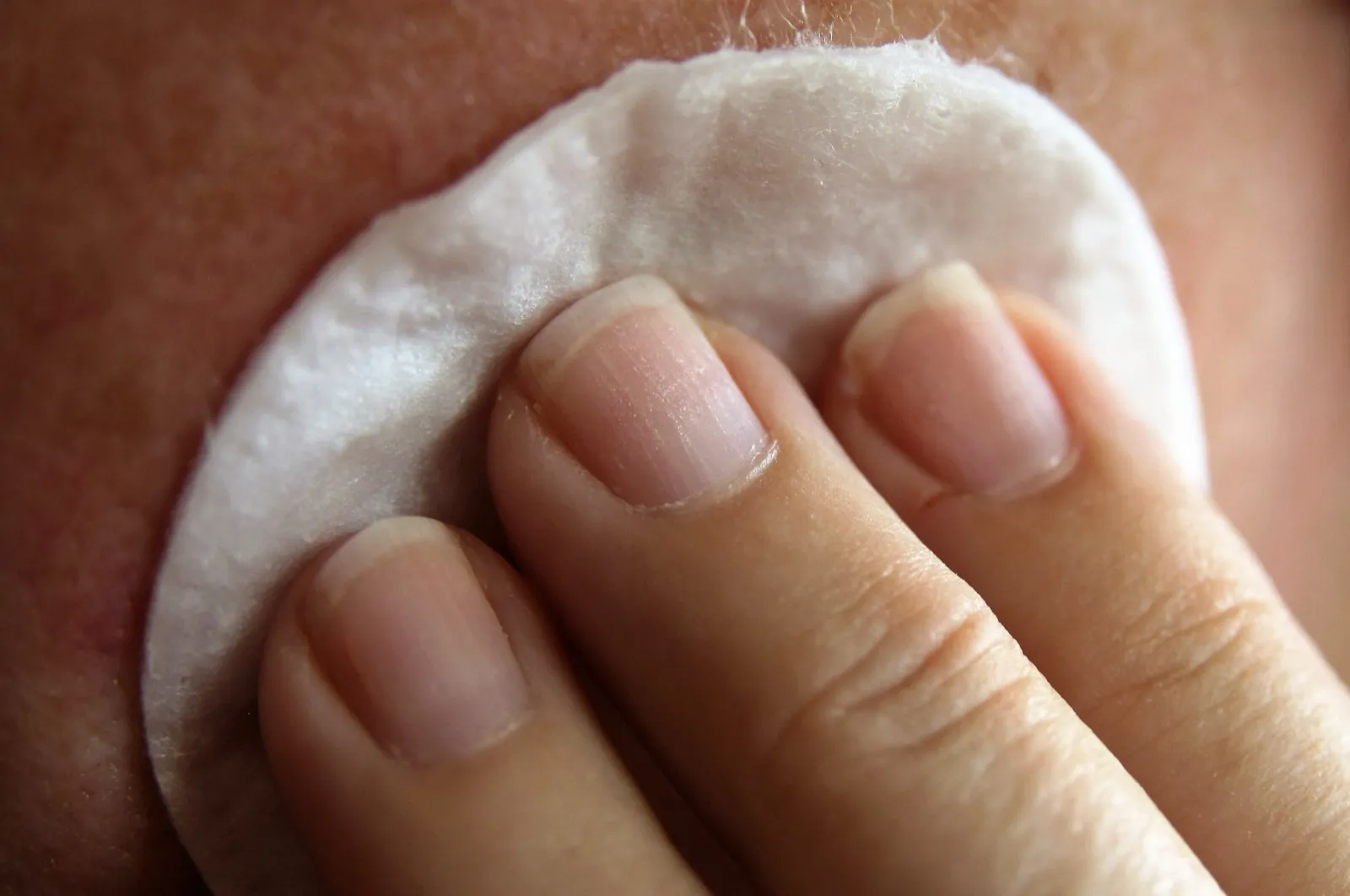
Place the wet pad directly over the target zone—such as eye makeup or forehead. Hold it firmly in place for 5 to 10 seconds without rubbing. This dwell time allows the micellar fluid to dissolve stubborn sebum and cosmetic binders before movement begins.
3. Glide Outward Featherlight
Sweep the pad outward following facial contours using zero downward pressure. Let the slip of the liquid cushion the pass. Flip the pad to a clean section or use a second fresh pad until no residue transfers.
4. Optional Water Refresh
While Japanese cleansing waters are labeled no-rinse, those with hyper-sensitive or clog-prone skin often benefit from a gentle splash. For sensitive complexions, board-certified dermatologists advise: "Rinse with lukewarm water and pat dry with a soft towel"[1].
To Rinse or Not to Rinse? The Japanese Dermatologist View
Conclusion: Splashing with lukewarm water after micellar cleansing helps prevent surfactant buildup on sensitive skin.
A common dilemma is whether micellar water requires water rinsing. Packaging frequently claims rinsing is unnecessary, making it appealing after exhausting work shifts or during flights.
However, Japanese dermatologists suggest balancing convenience with barrier health:
When No-Rinse Is Safe: Late-night quick routines, travel environments without clean tap water, or refreshing mid-day makeup. The moisturizing humectants keep skin comfortable temporarily.
Why Rinsing Is Often Preferred: Even mild surfactants left sitting on the stratum corneum for hours can eventually break down intercellular lipid bilayers in sensitive complexions. A quick rinse with lukewarm water removes dissolved impurities and lingering surfactants.
For heavy, long-wearing foundations or water-resistant sunscreens, consider following the full Japanese double cleansing method with an oil or balm cleanser followed by a foaming wash. After cleansing, always proceed to apply hydration. Learn how to use Japanese hydrating lotion to lock in moisture while skin remains receptive.
According to the American Academy of Dermatology's dry skin guidelines: "Be sure to apply your moisturizer when your skin is still damp after taking a shower or bath, after washing your hands, and when your skin feels dry"[2].
Even oily complexions require post-cleansing hydration support: "DO apply moisturizer after cleansing. Although you have oily skin, it is still important to apply moisturizer to keep your skin hydrated"[3].
What to Avoid: 4 Common Micellar Water Mistakes
Conclusion: Avoiding common cotton pad and moisture mistakes ensures your skin barrier remains healthy and calm.
Using Dry or Under-Drenched Pads: Applying a sparingly moistened pad forces dry cotton fibers to drag roughly across skin, weakening the barrier and causing micro-abrasions.
Aggressive Scrubbing Back and Forth: Rubbing pads vigorously across pores creates friction heat and irritation. Always stroke outward in one fluid direction.
Yanking at Waterproof Mascara: Heavy waterproof polymer mascaras rarely dissolve completely with water-based micelles. Forcing the pad across eyelashes snaps fragile lashes. Use a specialized biphasic eye makeup remover instead.
Skipping Subsequent Moisturizer: Even though Japanese micellar waters feel conditioning, they are not a full moisturizer. Neglecting emulsion or cream allows surface water to evaporate, leading to rebound dehydration.
Signs to Stop and When to Consult a Doctor
Conclusion: Cease micellar cleansing and consult a medical professional if you develop persistent redness, burning, or flaking.
While Japanese micellar waters emphasize skin tolerance, individual sensitivities to botanical extracts or surfactant systems can occur. Discontinue use immediately if you notice:
Persistent stinging or burning sensation during or after application
Diffuse facial redness or hot sensations across cheekbones
Sudden breakouts of tiny, itchy contact pustules
Flaking, tightness, or exacerbated eczema patches
If severe irritation, swelling around the eyelids, or rash persists beyond 48 hours after discontinuation, consult a board-certified dermatologist for formal evaluation and patch testing.
Summary: Essential Rules for Micellar Cleansing
Conclusion: Mastering the soak-and-press method with plush cotton lets you enjoy swift cleansing with zero barrier stress.
Prioritize Cushion: Select Japanese cleansing lotions packed with hyaluronic acid, ceramides, and non-ionic surfactants that glide effortlessly over skin.
Press, Never Rub: Hold pads in place for 5 to 10 seconds to loosen cosmetic pigments before gliding outward.
Rinse When Sensitive: Splash with lukewarm water if you experience reactive skin or wear daily layers of sunscreen.
Lock In Moisture: Follow immediately with hydrating lotion and a nourishing moisturizer while the skin surface remains receptive.
FAQ
Q1. Can Japanese micellar water replace my regular evening cleanser?
A. For light makeup, non-waterproof sunscreen, or busy evenings, high-quality Japanese micellar water serves as an effective standalone cleanser. (Details)
For light makeup, non-waterproof sunscreen, or busy evenings, high-quality Japanese micellar water serves as an effective standalone cleanser. However, if you wear thick long-wear foundation or heavy waterproof mascara, a double cleanse using an oil-based cleanser followed by a foam wash provides more thorough dissolution without excess wiping.
Q2. Is it safe to leave micellar water on my face overnight without rinsing?
A. Japanese cleansing waters contain humectants that allow safe leave-on convenience during travel or late evenings. (Details)
Japanese cleansing waters contain humectants that allow safe leave-on convenience during travel or late evenings. However, for sensitive or rosacea-prone skin types, rinsing with lukewarm water minimizes the chance of surfactant buildup disrupting delicate barrier lipids over prolonged hours.
Q3. Can micellar water remove waterproof Japanese mascara and sunscreen?
A. Standard micellar water effectively removes daily sunscreen and light makeup, but struggles with heavy waterproof polymers. (Details)
Standard micellar water effectively removes daily sunscreen and light makeup, but struggles with heavy waterproof polymers. Forcing cotton pads over waterproof mascara causes eyelash breakage and eyelid irritation. Use a dedicated biphasic eye makeup remover or [cleansing oil](/en/cleansing/japanese-cleansing-oil-for-sensitive-skin) for stubborn waterproof cosmetics.
Q4. Why do my cheeks get red after using micellar water with cotton pads?
A. Cheek redness is almost always caused by physical friction (masatsu) rather than the liquid formula. (Details)
Cheek redness is almost always caused by physical friction (*masatsu*) rather than the liquid formula. If the cotton pad is insufficiently damp, coarse fibers abrade the skin. Fully drench the pad with 3 to 4 pumps and gently press rather than rubbing back and forth.
Q5. Can I use micellar water as a morning cleanser instead of water?
A. Yes. Using Japanese cleansing water on a cotton pad in the morning is popular in Japan for clearing overnight sebum and sweat without stripping natural moisture, leaving skin fresh and hydrated for smooth daytime makeup application. (Details)
Yes. Using Japanese cleansing water on a cotton pad in the morning is popular in Japan for clearing overnight sebum and sweat without stripping natural moisture, leaving skin fresh and hydrated for smooth daytime makeup application.
Disclaimer: This article is for general information and education about Japanese cosmetics and their labels. It is not a substitute for professional medical advice, diagnosis, or treatment. Skincare results vary from person to person. Product formulas, availability, prices, and regulations change, and products sold in Japan can differ from versions sold elsewhere, so always check the current label. Do a patch test before introducing a new product, and consult a doctor or dermatologist if you have a skin condition or specific concerns.