Gentle Japanese Peeling Gel Exfoliator: Care Guide
CleansingBy Miho Tanaka
title: Gentle Japanese Peeling Gel Exfoliator: Care Guide
meta_description: Discover how gentle Japanese peeling gels exfoliate without abrasion. Learn polymer clumping chemistry, safe weekly frequency, and smooth skin routines.
affiliate: false
Gentle Japanese Peeling Gel Exfoliator: Care Guide
For anyone who has experienced the harsh sting of high-percentage acid peels or the micro-scratches left behind by abrasive physical scrubs, finding a truly gentle exfoliator can feel like an impossible task. In Western skincare, chemical exfoliation often relies on low pH acids that burn through dead cell layers, while physical scrubs use gritty walnut shells or sugar crystals that drag across sensitive epidermal tissue.
Japanese skincare offers an innovative, friction-conscious alternative: the gentle Japanese peeling gel exfoliator (pi-ringu jeru). Formulated with lightweight water-based polymers and gentle botanical extracts, peeling gels transform under your fingertips into soft, rubbery pills. Rather than scouring your skin, these pliable clumps gently bind to loose, dead keratinocytes and lift them away like microscopic erasers. Understanding how Japanese peeling gels work, debunking common myths about their clumps, and following proper weekly frequency allows you to achieve a smooth, glowing canvas while preserving moisture barrier integrity.
Quick answer: A gentle Japanese peeling gel exfoliator is a water-based gommage formula that relies on polymer chemistry rather than abrasive grit or harsh acids. When massaged onto clean, dry skin, the polymer reacts with surface skin lipids to form soft, rubbery clumps. These clumps roll across facial contours, physically collecting loosened dead skin cells and oxidized sebum without scratching delicate stratum corneum lipids. Use it 1 to 2 times weekly on completely dry skin for optimal smoothness.
What Is a Japanese Peeling Gel? (Debunking the Clump Myth)
Conclusion: Peeling gel clumps are polymer complexes formed upon skin contact, acting as soft rubbery cushions that pick up loose surface debris without abrasion.
When people first try a Japanese peeling gel, they are often astonished by the immediate appearance of soft white beads rolling across their cheeks within seconds of application. This phenomenon has given rise to a persistent beauty myth: that every visible white clump is a rolled-up ball of your own dead skin.
In reality, the chemistry is far more elegant:
Polymer Chemistry: Japanese peeling gels typically combine cross-linked polymers (such as acrylates/C10-30 alkyl acrylate crosspolymer or carbomer) with cationic surfactants (like steartrimonium bromide). In the bottle, these polymers are dissolved in a clear, watery gel base.
The Clumping Reaction: When smoothed over dry skin, the gel meets natural surface skin oils and ambient warmth. This triggers a phase separation: the polymers instantly bind together and precipitate out of the liquid, creating soft, elastic white clumps.
The Micro-Eraser Action: While the clumps themselves are primarily polymer material, they perform a crucial mechanical function. As these soft, bouncy beads roll across your contours, they exert gentle surface friction that catches and lifts away desquamated, loose dead keratinocytes and excess sebum.
Comparing Peeling Gels vs. Physical Scrubs vs. Chemical Acids
Conclusion: Peeling gels operate at neutral skin pH without jagged granules, providing effective dead cell clearance while preventing acid stinging and physical micro-tears.
Understanding how peeling gels differ from other common exfoliating formats helps you choose the right approach for your skin barrier.
Scroll horizontally to view full table
Exfoliation Method
Exfoliating Mechanism
Operating pH Level
Barrier Friction & Irritation Risk
Ideal For
Japanese Peeling Gels
Soft polymer clumps rolling across skin to catch loose dead cells
Skin-friendly neutral (pH 5.5 to 7.0)
Minimal; rubbery polymer beads cushion skin from direct finger pressure
Sensitive, dry, and combination skin prone to redness
Physical Granular Scrubs
Hard particles (walnut shells, apricot seeds, sugar) scouring skin
Neutral (pH 6.0 to 7.0)
High; jagged particle edges create micro-fissures and corneal tears
Resilient body skin (elbows, heels) only; rarely suited for facial skin
Moderate to high; low pH can induce chemical stinging and redness
Thick, oily, or sun-damaged skin without active barrier sensitivity
Because Japanese peeling gels operate near your skin's natural pH and lack sharp, rigid particles, they deliver the visual and textural benefits of physical exfoliation without mechanical trauma.
Step-by-Step: The Correct Frictionless Application Method
Conclusion: Applying peeling gel to thoroughly dry skin using light circular motions allows polymer beads to form properly without friction damage.
To ensure maximum effectiveness without dragging your moisture barrier, follow this four-step application protocol:
Step 1: Start with Clean, Completely Dry Skin
Double cleanse your face first to remove sunscreen and makeup. Once your skin is clean, pat thoroughly dry with a soft towel. The most common mistake is applying peeling gel to damp skin. Residual water dilutes the formula, preventing polymers from clumping and turning the gel into a useless watery fluid. Ensure both your face and palms are completely dry.
Step 2: Dispense and Distribute (2 Pumps)
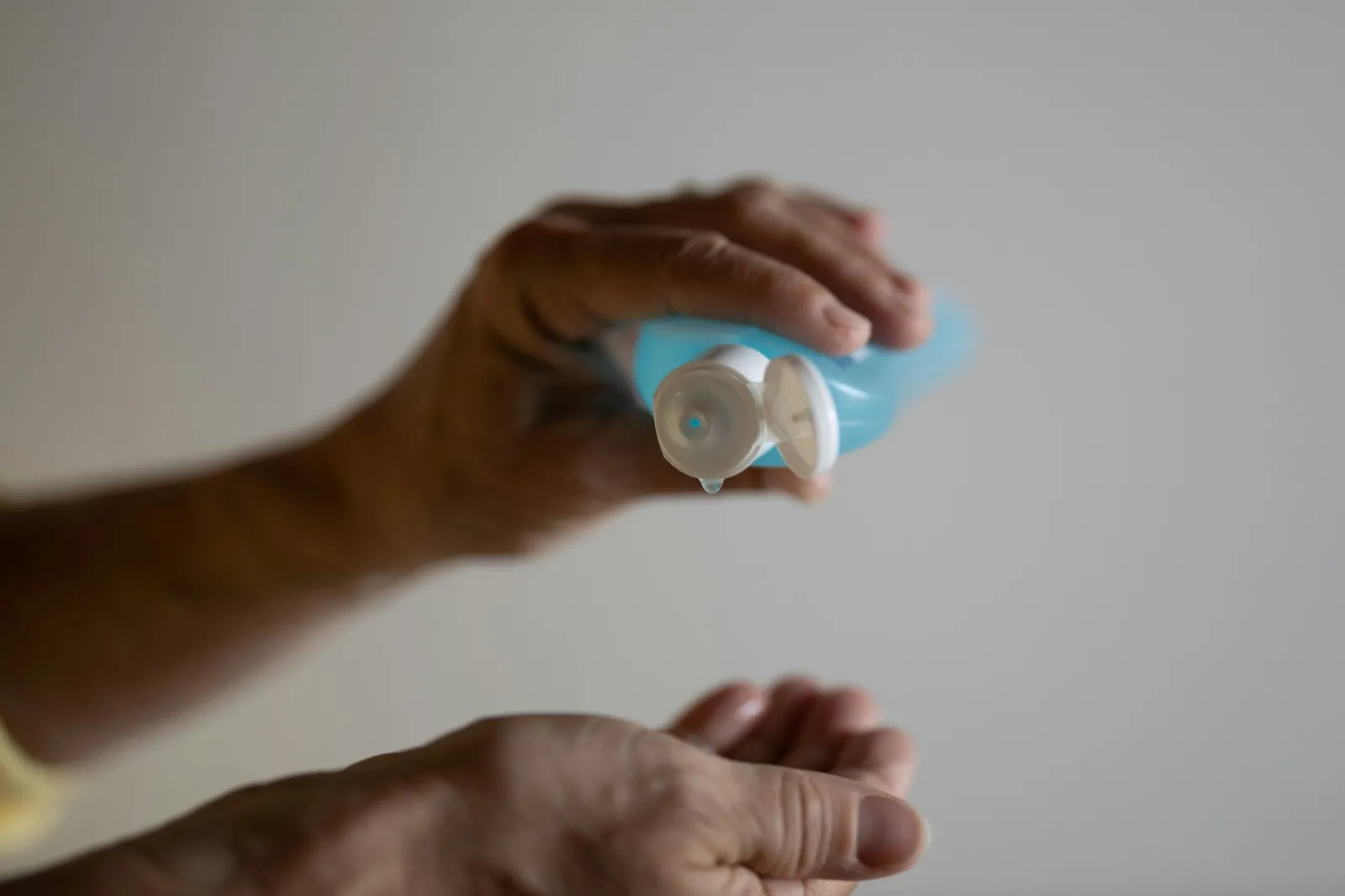
Dispense 2 to 3 pumps of clear gel onto your dry fingertips. Dot the gel across your forehead, nose, chin, and cheeks.
Using the soft pads of your middle and ring fingers, glide in small circular motions. Within 5 to 10 seconds, the clear liquid will begin curdling into soft white beads. Gently roll these beads across your skin for an additional 15 to 20 seconds.
Dermatologists offer strict guidance against aggressive rubbing. Guidelines from the American Academy of Dermatology emphasize: "Resist the temptation to scrub your skin because scrubbing irritates the skin"[2]. Never push downward against facial bone structure; let the rolling beads glide lightly over your skin.
Step 4: Rinse Thoroughly with Lukewarm Water
Splash your face with lukewarm water (32°C to 34°C) 10 to 15 times until all polymer beads have washed away cleanly. As highlighted by the American Academy of Dermatology, "Rinse with lukewarm water and pat dry with a soft towel"[2]. Gently press a clean cotton towel against your face to absorb water droplets without wiping.
Recommended Weekly Frequency by Skin Type
Conclusion: Restricting peeling gel use to once or twice weekly clears surface buildup while preserving the skin's protective lipid barrier.
Because peeling gels leave the skin feeling extraordinarily soft and silk-like immediately after rinsing, many people are tempted to use them several times a week. However, even gentle exfoliation must be practiced with discipline to avoid depleting stratum corneum lipids.
Dermatologists define this balance carefully. As stated by the American Academy of Dermatology, "Exfoliation is the process of removing dead skin cells from the outer layer of your skin"[1]. Furthermore, the American Academy of Dermatology cautions: "Be careful not to over-exfoliate, as this could lead to skin that is red and irritated"[1].
Follow these skin-tailored frequencies:
Normal and Combination Skin: 1 to 2 times per week. Focus primarily on the oily T-zone (nose wings, forehead center, and chin crease).
Oily and Blemish-Prone Skin: 2 times per week. Clears dead keratin buildup that can trap sebum and lead to microcomedones.
Dry and Sensitive Skin: Once every 10 to 14 days. Limit massage duration to 15 seconds, focusing exclusively on rough texture patches.
Post-Peel Hydration: Locking in Fresh Smoothness
Conclusion: Applying watery hydrating lotions and barrier emulsions immediately after peeling locks in essential moisture for newly uncovered skin cells.
The moments directly following exfoliation represent a vital protective window. By removing loosened, desquamated surface cells, your skin becomes dramatically more receptive to topical hydration, but also more vulnerable to rapid water evaporation.
The American Academy of Dermatology highlights the necessity of prompt moisturization: "Apply moisturizer immediately after exfoliating to keep your skin healthy and hydrated"[1].
Replenish with Hydrating Lotion: Immediately pat 2 to 3 generous splashes of a humectant-rich Japanese hydrating lotion containing hyaluronic acid and amino acids into damp skin. For proper hand-patting application, refer to how to use Japanese hydrating lotion.
Seal with Ceramides: Finish with a lightweight emulsion or ceramide barrier cream to reinforce the intercellular lipid matrix and seal in hydration.
What to Avoid: 4 Common Peeling Gel Mistakes
Conclusion: Avoiding wet skin application, extended facial massage, use over active breakouts, and harsh acid layering prevents unexpected barrier distress.
To maintain radiant skin without irritation, steer clear of these four common mistakes:
Applying to Wet Skin in the Shower: Peeling gels require dry contact with surface lipids to precipitate into beads. If applied to soaking-wet skin, the formula dilutes and fails to clump properly.
Massaging for Too Long (>60 Seconds): Some users continue rubbing until the beads dry out and crumble against the face. Prolonged friction after beads have formed causes mechanical redness. Stop massaging within 30 seconds.
Using Over Active Inflamed Acne: Rolling polymer beads over open acne pustules, inflamed cysts, or broken skin can spread bacteria and cause mechanical micro-tearing.
Layering with Strong Chemical Acids: Avoid applying high-strength AHA/BHA serums or prescription retinoids on the same evening you use a peeling gel.
Signs to Stop and When to Consult a Doctor
Conclusion: Discontinue peeling gel use immediately if you develop burning, persistent erythema, or swelling, and seek advice from a dermatologist.
While Japanese peeling gels are among the gentlest exfoliators available, reactive barriers can still experience sensitivities:
Immediate Stinging or Flushing: If the gel produces a sharp burning or prickling sensation, your stratum corneum is compromised. Rinse immediately with cool water and pause all exfoliation.
Persistent Scaling or Redness: If your cheeks appear red, dry, or feel tight days after peeling, you are over-exfoliating. Scale back frequency or discontinue use.
Active Rosacea, Eczema, or Severe Dermatitis: Never use exfoliating gels over active eczema flare-ups, cracked skin, or rosacea pustules. These inflammatory conditions require clinical medical care from a board-certified dermatologist.
Always perform a 24-hour patch test on your jawline or inner forearm before introducing a new peeling gel to your routine.
Summary: Key Rules for Japanese Peeling Gels
Gentle Japanese peeling gels offer a smooth, non-abrasive path to glowing skin when used with proper understanding:
Polymer Clumping Chemistry: The visible clumps are water-insoluble polymers that bind with surface oils to sweep away loose dead skin cells like soft micro-erasers.
Always Apply to Dry Skin: Thoroughly dry your face and palms before application so polymers can form beads properly.
Lightweight Circular Motion: Glide gently for 20 to 30 seconds using featherlight fingertip circles without downward pressure.
Sensible Weekly Frequency: Use 1 to 2 times weekly for normal or combination skin, and once every 10 to 14 days for dry or sensitive complexions.
Hydrate Immediately: Pat on humectant-rich Japanese lotions and ceramide moisturizers right after towel patting.
FAQ
Q1. Are the white clumps really all dead skin?
A. No. The white clumps are primarily water-insoluble polymer complexes (typically acrylates and cationic surfactants) that precipitate when exposed to surface skin lipids. (Details)
No. The white clumps are primarily water-insoluble polymer complexes (typically acrylates and cationic surfactants) that precipitate when exposed to surface skin lipids. However, as these soft rubbery beads roll across your contours, they catch and lift away loose dead keratinocytes and excess sebum.
Q2. Can I use a peeling gel on damp skin in the shower?
A. No. Peeling gels require completely dry skin to function. (Details)
No. Peeling gels require completely dry skin to function. Excess water dilutes the formulation and prevents the polymers from binding into beads. Always towel-dry your face and hands completely before applying the gel.
Q3. Is a Japanese peeling gel safe for sensitive skin?
A. Yes. Unlike abrasive walnut or sugar scrubs that have sharp edges, peeling gels utilize soft, flexible polymer clumps that cushion your fingers from direct contact with the skin. (Details)
Yes. Unlike abrasive walnut or sugar scrubs that have sharp edges, peeling gels utilize soft, flexible polymer clumps that cushion your fingers from direct contact with the skin. Furthermore, they operate at a neutral skin pH, preventing the stinging sensations often associated with strong chemical acid peels.
Q4. Can I use peeling gels on other parts of my body?
A. Yes. Japanese peeling gels work wonderfully on rough body areas prone to dead skin accumulation, such as elbows, knees, décolleté, and feet. (Details)
Yes. Japanese peeling gels work wonderfully on rough body areas prone to dead skin accumulation, such as elbows, knees, décolleté, and feet. Simply apply to completely dry skin before showering and rinse away thoroughly.
Q5. How often should I use a Japanese peeling gel?
A. For most skin types, using a peeling gel once or twice weekly is ideal. (Details)
For most skin types, using a peeling gel once or twice weekly is ideal. Those with dry or easily irritated skin should limit use to once every 10 to 14 days to prevent barrier fatigue.
Disclaimer: This article is for general information and education about Japanese cosmetics and their labels. It is not a substitute for professional medical advice, diagnosis, or treatment. Skincare results vary from person to person. Product formulas, availability, prices, and regulations change, and products sold in Japan can differ from versions sold elsewhere, so always check the current label. Do a patch test before introducing a new product, and consult a doctor or dermatologist if you have a skin condition or specific concerns.